








ShenZhen E-BON Industrial Co..Ltd
-Professional manufacturer for the stainless steel products

A French shaker seals with nothing but two pieces of steel — no threads, no lugs, no gasket. That means only two things can go wrong: it leaks while you shake, or it locks shut after you do. Both come from the same set of dimensions. This is the engineering behind that joint: why it has to be a shallow cone rather than a press fit, the four values E-BON sets before cutting tooling (8–12 mm engaged length, 2°–3° taper per side, 0.10–0.25 mm interference, 0.5–1.0 mm axial clearance), why roundness rather than diameter is what buyers feel, why the mouth needs a separate sizing die after springback, and why a plated version cannot share the same mouth dimension as an unplated one.
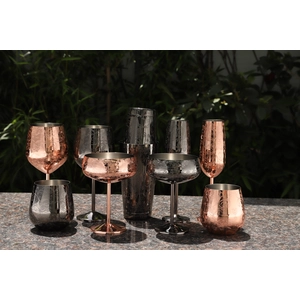
Consolidates the etched-tumbler cluster from the 40-topic pool (production checklist, artwork requirements, defect prevention) into one buyer-facing guide: what etching is and how it differs from printing/debossing/embossing, artwork file requirements before quoting, defect-prevention checkpoints specific to etched surfaces (etching depth, edge deburring, pattern registration, cross-finish consistency), and MOQ/packaging using the real egg-shaped 20oz 304 stainless tumbler as a reference spec.
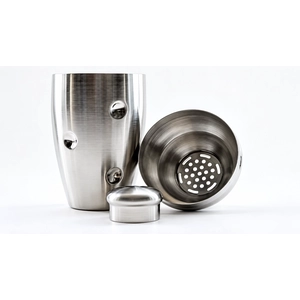
Explains the material difference between 304 and 201 stainless steel, why 201 shows up in aggressively priced barware quotes, where the difference actually shows up after an order ships (corrosion, finish stability, the unreliable magnet-test shortcut), and gives buyers a concrete way to confirm grade in writing before comparing supplier quotes.

Gives B2B barware buyers a practical way to tell a manufacturer from a trading company, explains what ISO 9001, Sedex 4-Pillar, and BSCI audits actually verify, and covers third-party testing and export documentation to confirm before sending an RFQ.
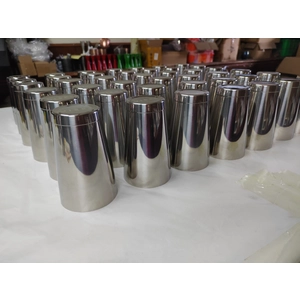
A bulk-order guide to etched stainless steel tumblers: how etching differs from printing, debossing and embossing, what artwork to prepare before quoting, the defect checkpoints specific to etched surfaces (etching depth, edge deburring, pattern registration, finish consistency), and MOQ and packaging, using a 20 oz egg-shaped 304 tumbler as the example.
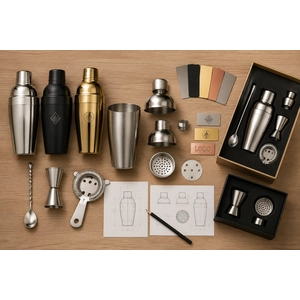
For private label barware brands: how to specify, sample and quote a custom cocktail shaker set, and how to keep its components, finish, branding, packaging and repeat orders consistent as one product.

A BOFU guide for private label barware brands defining how to specify, sample and quote a custom cocktail shaker set while keeping its components, finish, branding, packaging and repeat orders under one product system.

French press sediment does not come from one cause. This article separates normal metal-filter silt from excess sludge and visible grounds, then shows how grind distribution, mesh fineness, filter layers, edge fit and plunger resistance help identify the source.
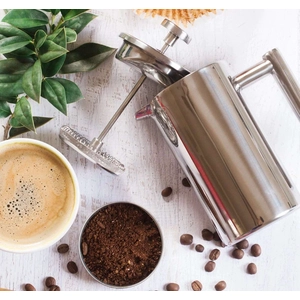
A practical French press answer page with an interactive ratio calculator, water-based ratio chart, six-step daily method, ratio and brew-time adjustments, grind guidance, and direct fixes for bitter, weak, sour, muddy, or sediment-heavy coffee.
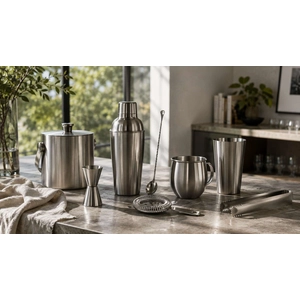
A practical framework for turning multiple shakers, jiggers, strainers, mugs and accessories into one recognizable barware collection through shared design anchors, controlled variation and range-level sample approval.

At E-BON, we will not release a custom barware order for mass production while the material, capacity, markings, finish, logo, function or packaging remains unclear. The pre-production sample, or PPS, must represent the product that the production line is expected to reproduce.
This is where the buyer turns a developed product into an inspectable production standard. A useful pre-production sample checklist connects the physical sample with measurable specifications, final artwork, functional expectations and packaging files, so production and later inspection follow the same version.
A development sample helps us test whether the proposed construction, dimensions, finish, branding and packaging can work. It may reveal that a logo is too wide for a curved shaker, a lid needs adjustment or an insert does not hold the product securely. Changes are still expected at this stage.
The PPS comes after those decisions. It is the final confirmation sample before mass production. By this point, the buyer and factory need to know which material, dimensions, capacity, finish, logo file and packaging version will control production.
If the PPS differs from an earlier sample, the latest changes need to be reflected in the current product specification. Production should not have to choose between an old sample, a new drawing and an email attachment. Buyers still developing the product can use our custom barware design guide to organize those decisions before PPS review.
We apply the checklist to the actual product. A jigger needs a different functional review from a shaker or ice bucket, but every relevant line below needs a clear reference before production starts.
| Item | What to check on the PPS | What to lock for production |
|---|---|---|
| Material | Review the material specified for the body, food-contact surface and relevant components, together with the documents requested for the order. | Material description, component scope and document list. |
| Dimensions | Measure the points that affect use, fit, assembly or packaging. | Current drawing, critical dimensions and order-specific tolerances. |
| Weight | Check product or component weight where it affects hand feel, strength, set consistency or shipping. | Target weight and the tolerance agreed for the product. |
| Capacity | Identify the exact fill reference and verify the result. At E-BON, we can use the water-weight method. | Fill point, measured result and order tolerance. |
| Measurement markings | Read the scale from the normal angle of use and check that each line corresponds to its intended capacity. | Final marking artwork, position and visible result. |
| Surface finish | Review polishing or brushing direction, plating or coating coverage, color, gloss, scratches, dents and visible variation. | Physical finish reference and any agreed color standard. |
| Logo | Review the final artwork, size, position, orientation, contrast and appearance on the real product surface. | Artwork version, dimensions, placement and application method. |
| Fit and function | Operate the item as intended. Depending on the product, this may include lid fit, release, sealing, spring action, handle clearance, joints or moving parts. | Product-specific functions and the accepted physical result. |
| Packaging | Review product protection, set contents, inserts, labels, barcodes, individual packing, carton information and movement inside the pack. | Final packaging files and complete packed arrangement. |
At the sample and PPS stages, we check the stated material requirement, marking clarity and capacity accuracy where they apply. Other checks follow the product. A three-piece shaker needs its lid and strainer assembly reviewed as one item. A bar tool set needs a complete packing review even when its individual tools have already been checked.
The fill reference comes first. Depending on the specification, it may be the rim, a measurement line or another clearly identified point. Filling two samples to different visual levels makes the results impossible to compare.
In routine checks, the net weight of water in grams approximately corresponds to the volume in milliliters. This makes the method practical for comparing the sample with the stated capacity. The result is judged against the tolerance set for the order; we do not apply one universal tolerance to every product.
Capacity and markings need to be read together. A scale line can look sharp and remain easy to read while sitting at the wrong volume. Our jigger buying guide covers the wider sourcing decisions behind jigger capacity, construction and markings.

Once the sample passes, the buyer should keep a physical reference and connect it to the current specification, drawing, artwork and packaging version. Buyers often call this an approved or golden sample. The important point is that everyone can identify which version production must follow.
A practical approval note can list the item number, sample version, material, critical dimensions, weight or capacity target, finish, logo file, functional points, packaging files and approval date. Photographs help with logo position and packing arrangement, although they cannot replace measurements or a physical finish reference.
Changes that alter the product received by the buyer need another review. Examples include material substitution, revised dimensions, weight or capacity, a moved scale line, a new finish or color, changed logo artwork or position, adjusted product fit, and packaging changes affecting protection, labeling or set contents.
If the PPS does not pass, we identify the difference against the agreed reference and correct the affected feature. The revised result is checked before production release. Where one correction can influence another feature, those connected points are reviewed together. A body-dimension change, for example, may also affect lid fit, logo position and packaging.
E-BON can arrange third-party testing when it is requested by the buyer or needed for the destination market, retailer or product claim. The request needs to identify the product or component, required test, destination market and sample version being submitted.
Testing is most useful after the relevant material, construction or surface process has been fixed, while there is still time to respond to the result. If the tested material, food-contact surface, coating or construction changes afterward, the new version may need another assessment. The PPS notes should also show whether the test result is needed before production or before shipment.
The PPS sets the production target. Sampling inspection after production checks whether the completed lot follows it. The sample quantity depends on the batch size, inspection level, agreed Acceptance Quality Limit and product risk rather than one fixed percentage.
Under a commonly used General Inspection Level II example, a 500-piece batch normally maps to a 50-piece sample, while a 5,000-piece batch normally maps to a 200-piece sample. These are sample-size examples only. Acceptance and rejection numbers depend on the AQL values agreed for the relevant defect classes.
The selected goods are compared with the PPS and current order files. If the sampled bulk goods do not meet the confirmed requirements, the affected goods are held and reworked. We inspect the corrected batch again and release it only after it reaches the agreed requirements.
A useful PPS gives production one clear target and gives the buyer a reference for checking the finished order. If material, capacity, finish, artwork or packaging is still open to interpretation, we resolve it before releasing mass production.
Send E-BON your product specification, logo files, target quantity, destination market and packaging requirements. We will use them to prepare the sampling steps, confirmation points and production-release plan for your private-label barware project.