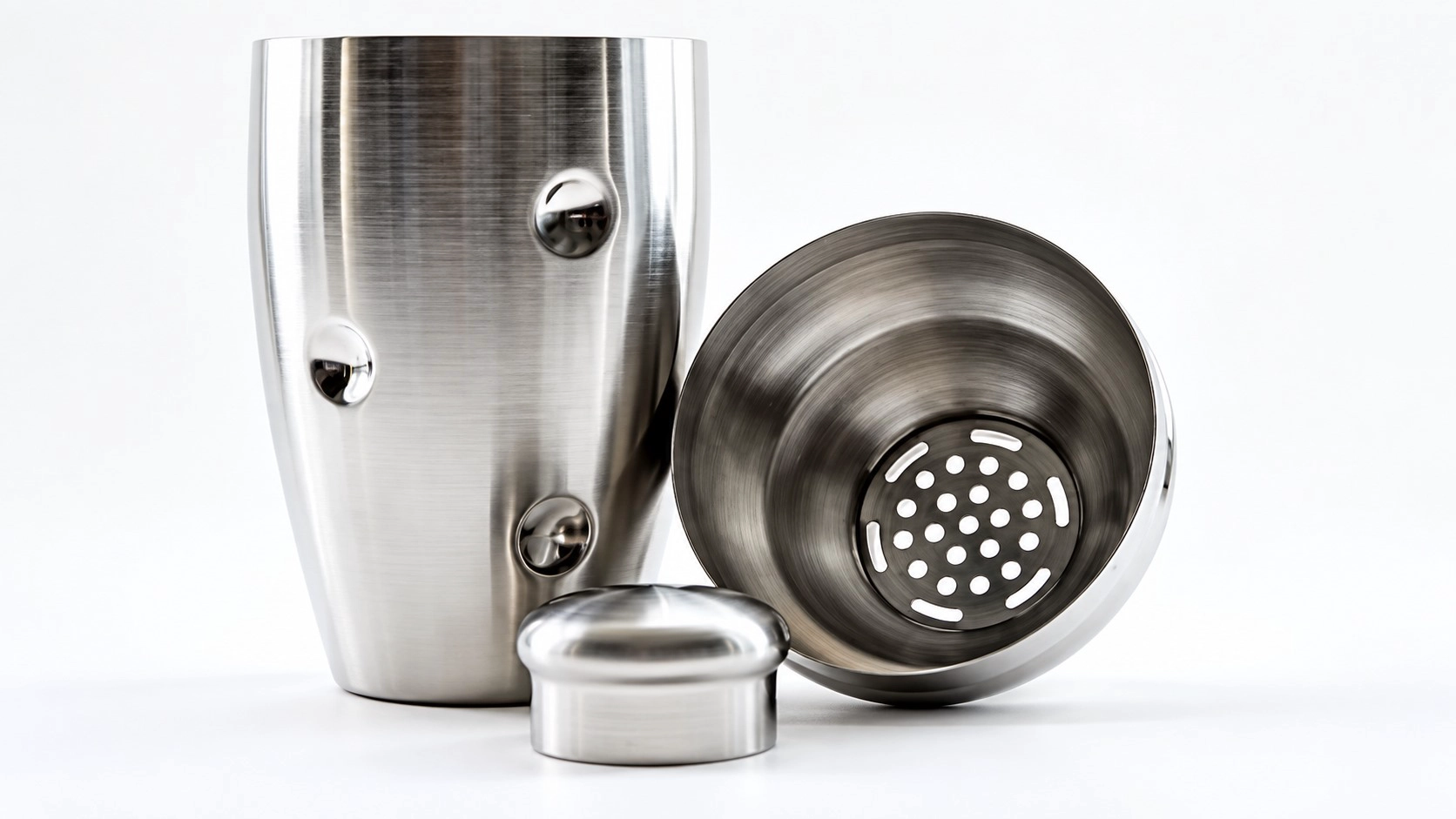
Two barware quotes can list the same product name, the same finish, even the same photo — and still be quoting two different materials. The line that usually gets left off a fast quote is the steel grade, and that single line can explain a 20–30% price gap between two suppliers who otherwise look identical on paper. Most of that gap traces back to one substitution: 201 stainless steel standing in for 304.
Neither grade is "fake" stainless steel, and 201 isn't automatically the wrong choice. But if your RFQ doesn't specify the grade, you're not actually comparing two quotes for the same product — you're comparing two different products that happen to have the same name on the invoice.
What 304 and 201 Actually Are
304 stainless steel is a chromium-nickel alloy, typically around 18% chromium and 8% nickel (the reason it's often labeled "18/8"). Nickel is what gives 304 its strong resistance to corrosion and staining over repeated use.
201 stainless steel cuts cost by reducing nickel content and replacing part of it with manganese. It still contains chromium and still qualifies as "stainless," but the lower nickel content makes it meaningfully more prone to corrosion and surface staining over time, especially with repeated exposure to salt, citrus, or acidic mixers — all common in bar and drinkware use.
Why 201 Shows Up in Low-Ball Quotes
Nickel is the expensive input in either alloy, and its market price moves independently of everything else in a barware quote. When a factory needs to hit an aggressive price point — for a promotional run, a big-box retail bid, or a buyer who only asked for "stainless steel" without naming a grade — switching to 201 is the easiest lever to pull, because it doesn't change the tooling, the shape, or the finish. The part looks identical. The spec sheet is what's different.
This is why two quotes for what looks like the same cocktail shaker or tumbler can sit far apart in price without either supplier doing anything dishonest — they may simply be quoting different grades because the RFQ never asked for one.
Where the Difference Actually Shows Up After the Order Ships
The gap between 304 and 201 rarely shows up on inspection day. Both grades can look identical straight out of the mold or off the polishing line. The difference shows up months later, in ways that are hard to trace back to a material substitution unless you already know to look for it:
- Corrosion resistance: 201 is more likely to develop surface rust spotting or pitting with repeated exposure to salt rims, citrus juice, or commercial dishwasher cycles — the exact conditions barware sees constantly.
- Long-term finish stability: plating and etching adhesion can behave differently on 201 versus 304 over time, which matters more for products marketed on their surface finish (etched tumblers, plated hip flasks, mirror-polished shakers).
- Magnetic response: this one is a common but unreliable shortcut — 201 is generally more magnetic than annealed 304, but cold-working during manufacturing can make 304 parts weakly magnetic too. A magnet test can flag an obvious 201 substitution, but it isn't proof of 304, and it should never replace a material certificate.
None of these show up in a pre-shipment photo. They show up in a customer's kitchen, after the order has already been paid for and received.
How to Actually Confirm What You're Ordering
The only reliable way to confirm grade is documentation, not appearance:
- Put the grade in writing on the RFQ itself — "304 stainless steel" or "201 stainless steel," not just "stainless steel."
- Ask the supplier to confirm the grade on the proforma invoice, not only in a chat message.
- For orders where corrosion resistance matters — hospitality, food-contact, or anything that will see repeated washing — request a mill test certificate or material declaration rather than relying on a verbal confirmation.
- If a quote comes back noticeably cheaper than others for the same spec, ask directly whether the grade changed. It usually has.
Does the Grade Matter for Every Type of Order?
Not equally. A one-time promotional giveaway that's expected to have a short useful life may reasonably prioritize price over long-term corrosion resistance, and 201 can be an acceptable, disclosed trade-off in that context. A hospitality buyer stocking a bar program, or a brand putting its name on a product that customers will use for years, has much less room for that trade-off — a batch that starts showing rust spots six months in becomes a returns problem and a reputation problem, not just a material cost.
The mistake isn't choosing 201. It's not knowing which one you ordered.
What to Put in Your RFQ
Before comparing prices across suppliers, confirm the same four things on every quote: material grade (304, 201, or another spec, stated explicitly), wall thickness, surface finish, and whether the grade will be confirmed on the proforma invoice or backed by a mill certificate. Two quotes that don't match on all four aren't comparable, no matter how close the unit prices look.
We confirm material grade in writing on every quote before production, and we can provide a mill certificate or material declaration on request — the same verification we'd recommend asking any supplier for. If you're earlier in the process and still confirming whether you're dealing with an actual manufacturer versus a trading company, our guide to evaluating a barware supplier covers that step first. If you're assembling a full RFQ, our custom bar supplies manufacturer checklist lays out the other specs to confirm alongside material grade.
You can review our current stainless steel barware range or send us your specification through our inquiry page.