Most problems with a bulk etched tumbler order don't come from bad manufacturing. They come from an artwork file that wasn't built for etching, a finish that wasn't confirmed before tooling started, or a defect standard nobody wrote down until after a batch was already flagged at inspection. By the time any of that surfaces, you're usually looking at a reprint, a delayed sample round, or a rejected shipment — all of which cost more than the extra day it takes to confirm these details upfront.
Etched tumblers are also a private-label-friendly product for a reason: the curved metal surface takes a logo or pattern well, and at bulk quantities the per-unit cost of customization drops fast. But that same customization is where most of the back-and-forth happens between buyer and factory, so it's worth knowing what to confirm before the RFQ goes out.
What "Etched" Actually Means, and Why It's Not the Only Option
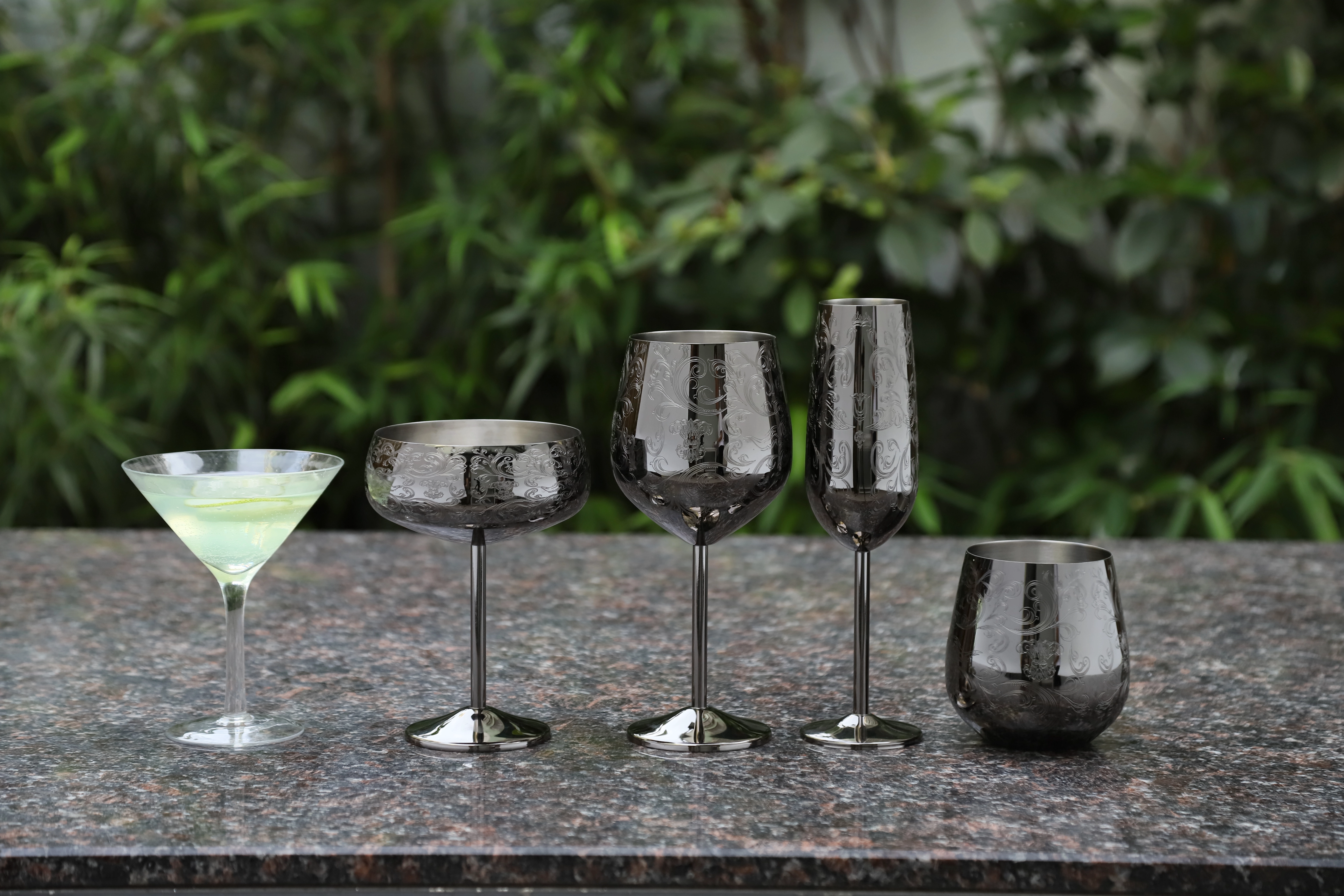
Etching forms the pattern directly into the metal surface rather than sitting on top of it as ink. That's the practical reason etched decoration holds up better over time than printed graphics: there's no coating layer to scratch off or peel with repeated washing and handling. For a 20 oz stainless steel tumbler, that durability difference matters more than it does on a display item, because tumblers get handled, stacked, and run through dishwashers.
Etching isn't the only customization method available on the same tumbler body — laser marking, printing, debossing, and embossing are all options, and each one has different artwork requirements and a different look. Printing can reproduce full color and gradients; etching and laser marking work best as clean vector line art or single-tone patterns; debossing and embossing create a raised or pressed texture rather than a surface pattern. Confirm which method your design actually needs before assuming "etched" is what you want — a full-color brand logo, for example, usually isn't a good candidate for etching and prints better instead.
What Your Artwork File Needs Before It Can Be Quoted
A logo that looks fine on a business card or a website can fail on an etched surface if it wasn't built for it. Before sending artwork, confirm with your supplier:
- Whether the file needs to be vector format (most etching and laser processes require this rather than a raster image).
- The minimum line thickness the etching process can render cleanly — fine detail that looks sharp on screen can blur or drop out entirely once etched into curved metal.
- Whether your design is single-tone or needs to be simplified from a multi-color original, since etching itself doesn't reproduce color the way printing does.
- How the pattern will wrap around a curved, tapered, or egg-shaped body — a design proofed flat doesn't always sit the same way once it's applied to the actual tumbler shape.
Getting these answered before the first sample round is faster than discovering a design doesn't etch cleanly after tooling has already started.
Confirm the Base Tumbler Spec Before Talking About Artwork
Artwork sits on top of a physical product, and that product's spec should be locked first. A reference point: our egg-shaped stainless steel wine tumbler runs 20 oz, in 304 stainless steel, at roughly 6.7 × 21 × 7 cm. Confirm the same basics for whatever tumbler shape you're ordering — capacity, material grade, and dimensions — in writing before artwork discussions go further, since a shape or size change later usually means redoing the artwork proof too.
Defect Prevention Specific to Etched Surfaces
Etched tumblers fail inspection for reasons that don't apply to a plain polished piece. Worth specifying in your quality standard before production, not after:
- Etching depth consistency: a pattern etched too shallow can look faded or patchy; too deep can create sharp edges. Ask what depth tolerance the factory works to.
- Edge deburring: laser and etching processes can leave sharp micro-edges around the pattern. This should be a standard deburring step, not an optional one, since it affects both feel and safety.
- Pattern registration on curved surfaces: on an egg-shaped or tapered body, confirm the pattern is centered and proportional consistently across the batch, not just on the approved sample.
- Finish consistency across plating colors: if you're ordering the same etched pattern across multiple finishes (for example black-plated and copper-plated versions), confirm the etching reads clearly on each finish rather than assuming one approved sample covers every color option.
MOQ, Packaging, and Sample Timeline
For reference, MOQ on our stainless steel tumblers runs 100 pieces, with a 3–7 day sample lead time and standard T/T payment terms. Packaging defaults to a white box, with custom packaging available for private-label and retail orders. Confirm these same figures for your specific tumbler shape and order size — MOQ and lead time can shift with customization complexity, so treat these as a starting point to verify rather than a fixed number across every product.
What to Put in Your RFQ
Before sending a quote request for bulk etched tumblers, confirm in writing: base spec (capacity, material grade, dimensions), customization method (etched, laser, printed, debossed, or embossed — matched to your actual artwork), artwork file requirements for that method, defect standard for etching depth and edge finish, and packaging. Two quotes that don't match on all of these aren't really quotes for the same product, even if the tumbler photo looks identical.
Our factory operates under ISO 9001 quality management, and Sedex 4-Pillar and BSCI audits, the same certifications shown on our tumbler product listings. If you're still confirming that a supplier is an actual manufacturer rather than a trading company reselling someone else's production, our guide to evaluating a barware supplier covers that step. If material grade is also part of your comparison across quotes, our 304 vs 201 stainless steel guide explains what to confirm there. For the full RFQ beyond artwork and material, our custom bar supplies manufacturer checklist covers the rest.
You can review our current stainless steel tumbler and drinkware range or send your artwork and specification through our inquiry page.