






ShenZhen E-BON Industrial Co..Ltd
-Professional manufacturer for the stainless steel products
A French shaker seals with nothing but two pieces of steel — no threads, no lugs, no gasket. That means only two things can go wrong: it leaks while you shake, or it locks shut after you do. Both come from the same set of dimensions. This is the engineering behind that joint: why it has to be a shallow cone rather than a press fit, the four values E-BON sets before cutting tooling (8–12 mm engaged length, 2°–3° taper per side, 0.10–0.25 mm interference, 0.5–1.0 mm axial clearance), why roundness rather than diameter is what buyers feel, why the mouth needs a separate sizing die after springback, and why a plated version cannot share the same mouth dimension as an unplated one.
Consolidates the etched-tumbler cluster from the 40-topic pool (production checklist, artwork requirements, defect prevention) into one buyer-facing guide: what etching is and how it differs from printing/debossing/embossing, artwork file requirements before quoting, defect-prevention checkpoints specific to etched surfaces (etching depth, edge deburring, pattern registration, cross-finish consistency), and MOQ/packaging using the real egg-shaped 20oz 304 stainless tumbler as a reference spec.
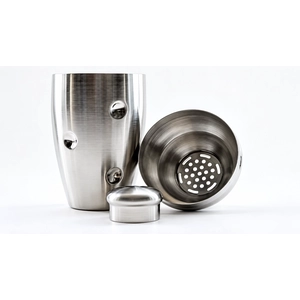
Explains the material difference between 304 and 201 stainless steel, why 201 shows up in aggressively priced barware quotes, where the difference actually shows up after an order ships (corrosion, finish stability, the unreliable magnet-test shortcut), and gives buyers a concrete way to confirm grade in writing before comparing supplier quotes.
Gives B2B barware buyers a practical way to tell a manufacturer from a trading company, explains what ISO 9001, Sedex 4-Pillar, and BSCI audits actually verify, and covers third-party testing and export documentation to confirm before sending an RFQ.
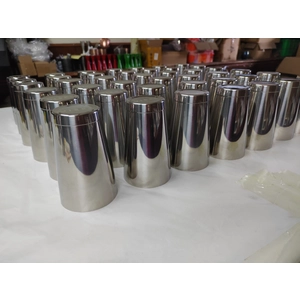
A practical quality control checklist for importers and private label brands inspecting cocktail shaker samples and bulk lots. It covers approved references, Boston and Cobbler fit, leak testing, formed edges, dimensions, capacity, finishes, logos, function, packaging, defect records and lot release.
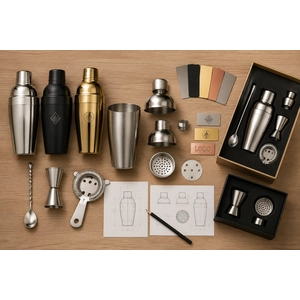
This BOFU comparison helps cocktail shaker buyers choose OEM, ODM or a hybrid route by identifying who owns the product definition, what must be developed, how samples differ and what information a manufacturer needs for an accurate quotation.
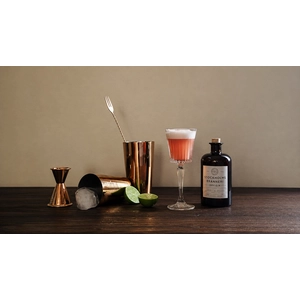
A BOFU guide for private label barware brands defining how to specify, sample and quote a custom cocktail shaker set while keeping its components, finish, branding, packaging and repeat orders under one product system.

French press sediment does not come from one cause. This article separates normal metal-filter silt from excess sludge and visible grounds, then shows how grind distribution, mesh fineness, filter layers, edge fit and plunger resistance help identify the source.
A practical French press answer page with an interactive ratio calculator, water-based ratio chart, six-step daily method, ratio and brew-time adjustments, grind guidance, and direct fixes for bitter, weak, sour, muddy, or sediment-heavy coffee.
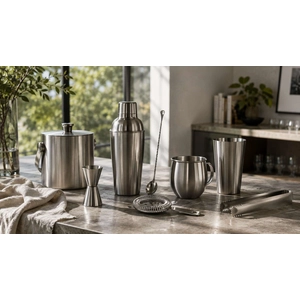
A practical framework for turning multiple shakers, jiggers, strainers, mugs and accessories into one recognizable barware collection through shared design anchors, controlled variation and range-level sample approval.
Choose OEM when your brand already controls the cocktail shaker design, critical dimensions, construction and performance requirements. Choose ODM when you want to begin with a manufacturer's developed structure and adapt the finish, color, logo, packaging or selected details for your market. Neither route is automatically better; the better route is the one that matches where the product definition comes from and how much differentiation the project needs.
E-BON supports both routes. For us, the cocktail shaker OEM vs ODM decision begins by separating what the buyer already owns, what can be selected from an existing product direction, and what still requires design, sampling or mold development. This prevents a project from being priced as a simple branding order when it actually contains new-product work.
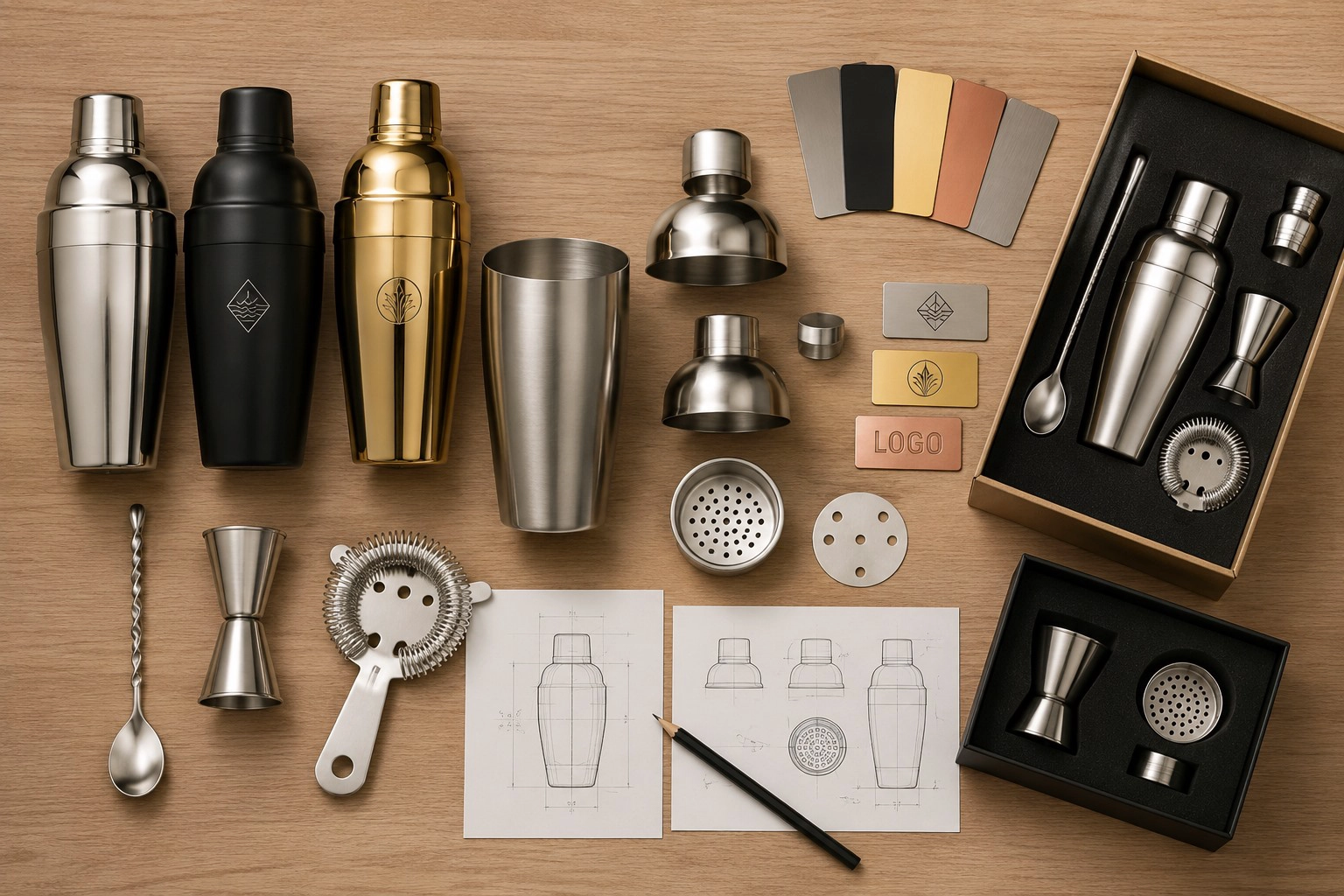
OEM and ODM labels are used inconsistently across supplier websites, so the label alone is not enough for a purchasing decision. The practical distinction is who supplies the product definition and which party is responsible for developing it into an approved production specification.
| Decision point | OEM cocktail shaker project | ODM cocktail shaker project |
|---|---|---|
| Starting input | Buyer-controlled drawing, physical reference, specification or protected product concept | Manufacturer-developed shaker structure or existing product direction |
| Buyer changes | Can extend to geometry, capacity, construction, fitted parts, performance and appearance | Usually concentrates on finish, color, logo, packaging and selected configurable details |
| Development burden | Higher when drawings, tooling, prototypes or repeated functional changes are required | Lower when the base structure is already established and the changes remain within its workable range |
| Primary sample question | Does the new construction work and match the buyer's specification? | Does the selected base product deliver the required brand, finish and market presentation? |
| Best fit | A differentiated hero SKU or a product whose structure is central to the brand promise | A faster private-label launch, range extension or market test using a proven product direction |
| Documents to settle | Drawing control, tooling scope, change approval, performance requirements and ownership terms | Selected model, permitted changes, artwork, finish reference, packaging and reorder identity |
Our default judgment: do not pay for an OEM development route when an existing shaker structure already meets the functional requirement. Do not choose ODM merely to shorten the project when the product's unique geometry or mechanism is the reason customers will buy it.
ODM is usually the stronger route when the brand needs a reliable cocktail shaker category entry rather than a new mechanical proposition. The manufacturer provides the developed product direction; the buyer selects the version and defines how it should appear, sell and fit the brand.
For a stainless steel shaker, that can include an existing Boston or Cobbler structure with a confirmed capacity, then project-specific choices for finish, color, logo treatment, packaging and the components sold with it. The work is still more than attaching a logo. A coating can affect fit. Artwork on a tapered body can distort. A retail insert can expose polished surfaces to rubbing. Those points still need a physical sample and a controlled specification.
ODM is especially useful when launch timing, market testing or range coordination matters more than owning a completely new structure. It also gives the buyer a clearer starting sample. The tradeoff is that the underlying product may not be exclusive unless the commercial agreement, tooling or agreed modifications create a protected difference.
OEM makes sense when the buyer arrives with a controlled design or with requirements that materially change how the shaker is made or used. Examples include a new body profile, unusual capacity, proprietary lid or straining structure, a special connection between fitted parts, a defined weight or balance target, or packaging that depends on a unique product geometry.
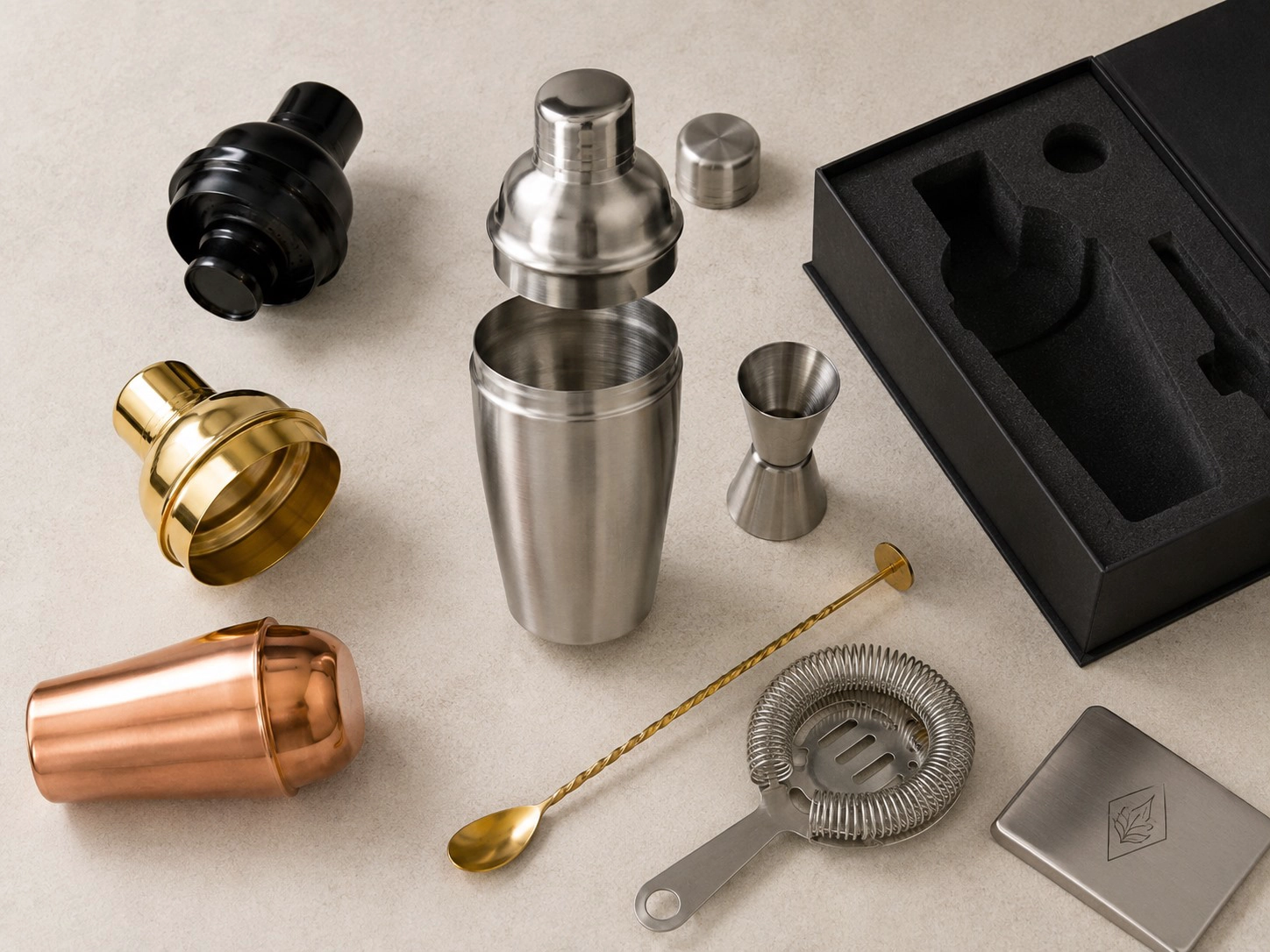
The buyer does not need to arrive with a production-ready drawing in every case. E-BON can assess references, drawings and functional requirements and support design and mold development within the agreed project scope. What makes the route OEM is that the product definition is being developed for the buyer rather than selected mainly from the manufacturer's existing design.
OEM development needs stronger change control. A small body-diameter revision can affect lid fit, sealing, logo position, tool compatibility and the packaging insert. A new surface construction may change both appearance and the testing route. Our custom barware design guide explains how brand intent, construction, finish, markings and packaging become one workable specification.
A project does not become fully OEM because one detail is customized, and it does not remain simple ODM because the supplier began with an existing sample. Many practical projects sit between the two.
A brand may retain an existing shaker body while changing the lid geometry, developing a new finish, adding a coordinated jigger, creating a custom insert and controlling the complete retail presentation. The body may follow an ODM base while the fitted component or packaging requires buyer-specific development. Instead of forcing the project under one label, divide it into work packages:
This scope is more useful than asking a supplier only, “Do you offer OEM/ODM?” It reveals which parts are proven, which parts are configurable and which parts still carry development risk.
OEM does not always mean a high MOQ, and ODM does not guarantee a low one. The commercial result follows the actual change list. A stock structure with standard branding may have a shorter sampling path than a custom color, special plating, new component, molded detail or dedicated retail package. Tooling, material purchasing, process setup and packaging print quantities can each create a different minimum.
For a useful quotation, separate the base order quantity from the quantity per design, finish, color and packaging version. A buyer asking for one total quantity across several combinations may discover that each combination creates its own setup or material requirement.
We would confirm MOQ, sample route and production timing after reviewing the product structure and customization scope. Publishing one universal number for every OEM and ODM cocktail shaker project would hide the very differences the comparison is meant to expose.
An ODM sample should prove that the selected base product and the requested branding can work together. Check the shaker's fit and release, finish reference, logo position and reproduction, packaging protection and the identity required for repeat orders.
An OEM sample has to answer additional development questions. Does the new geometry form correctly? Do fitted parts seal, open and return consistently? Are the critical dimensions and capacity aligned with the drawing? Has a modification introduced a new contact point, sharp edge, cleaning problem or packaging conflict?
Once the product direction is resolved, the pre-production sample should represent the version intended for mass production. Use the barware pre-production sample checklist to connect the physical shaker with current drawings, material requirements, finish references, artwork and packaging files. Third-party testing can be arranged when required by the destination market, retailer or agreed product claim.
A quotation can only distinguish OEM from ODM when the brief shows what already exists and what still needs development. Send:
Buyers comparing production partners can also use our custom bar supplies manufacturer checklist to examine development responsibility, sample control and production evidence. Existing product directions are available in the E-BON cocktail shaker range.
Send E-BON the product reference and identify what must remain unique. We will separate the existing-product, configurable and new-development parts of the project, then propose the appropriate OEM, ODM or hybrid sampling route for quotation.