A French shaker seals with nothing but two pieces of steel — no threads, no lugs, no gasket. That means only two things can go wrong: it leaks while you shake, or it locks shut after you do. Both come from the same set of dimensions. This is the engineering behind that joint: why it has to be a shallow cone rather than a press fit, the four values E-BON sets before cutting tooling (8–12 mm engaged length, 2°–3° taper per side, 0.10–0.25 mm interference, 0.5–1.0 mm axial clearance), why roundness rather than diameter is what buyers feel, why the mouth needs a separate sizing die after springback, and why a plated version cannot share the same mouth dimension as an unplated one.
What to confirm before ordering etched stainless steel tumblers in bulk: how etching compares with printing and laser marking, artwork file requirements, base tumbler specs, etched-surface defect checkpoints, and MOQ, packaging and sample timing.
Explains the material difference between 304 and 201 stainless steel, why 201 shows up in aggressively priced barware quotes, where the difference actually shows up after an order ships (corrosion, finish stability, the unreliable magnet-test shortcut), and gives buyers a concrete way to confirm grade in writing before comparing supplier quotes.
Gives B2B barware buyers a practical way to tell a manufacturer from a trading company, explains what ISO 9001, Sedex 4-Pillar, and BSCI audits actually verify, and covers third-party testing and export documentation to confirm before sending an RFQ.
A step-by-step QC checklist for bulk cocktail shaker orders: fit and seal, leak testing, rims and formed edges, dimensions and capacity, finish and logo, function, and packaging—plus how to record defects and decide whether to release or hold a lot.
For private label barware brands: how to specify, sample and quote a custom cocktail shaker set, and how to keep its components, finish, branding, packaging and repeat orders consistent as one product.
A BOFU guide for private label barware brands defining how to specify, sample and quote a custom cocktail shaker set while keeping its components, finish, branding, packaging and repeat orders under one product system.
French press sediment does not come from one cause. This article separates normal metal-filter silt from excess sludge and visible grounds, then shows how grind distribution, mesh fineness, filter layers, edge fit and plunger resistance help identify the source.
A practical French press answer page with an interactive ratio calculator, water-based ratio chart, six-step daily method, ratio and brew-time adjustments, grind guidance, and direct fixes for bitter, weak, sour, muddy, or sediment-heavy coffee.
A practical framework for turning multiple shakers, jiggers, strainers, mugs and accessories into one recognizable barware collection through shared design anchors, controlled variation and range-level sample approval.
How to Evaluate a Barware Supplier: Factory Visit, Audit Support, Third-Party Testing, and Export Documents
2026-09-07 10:50:09
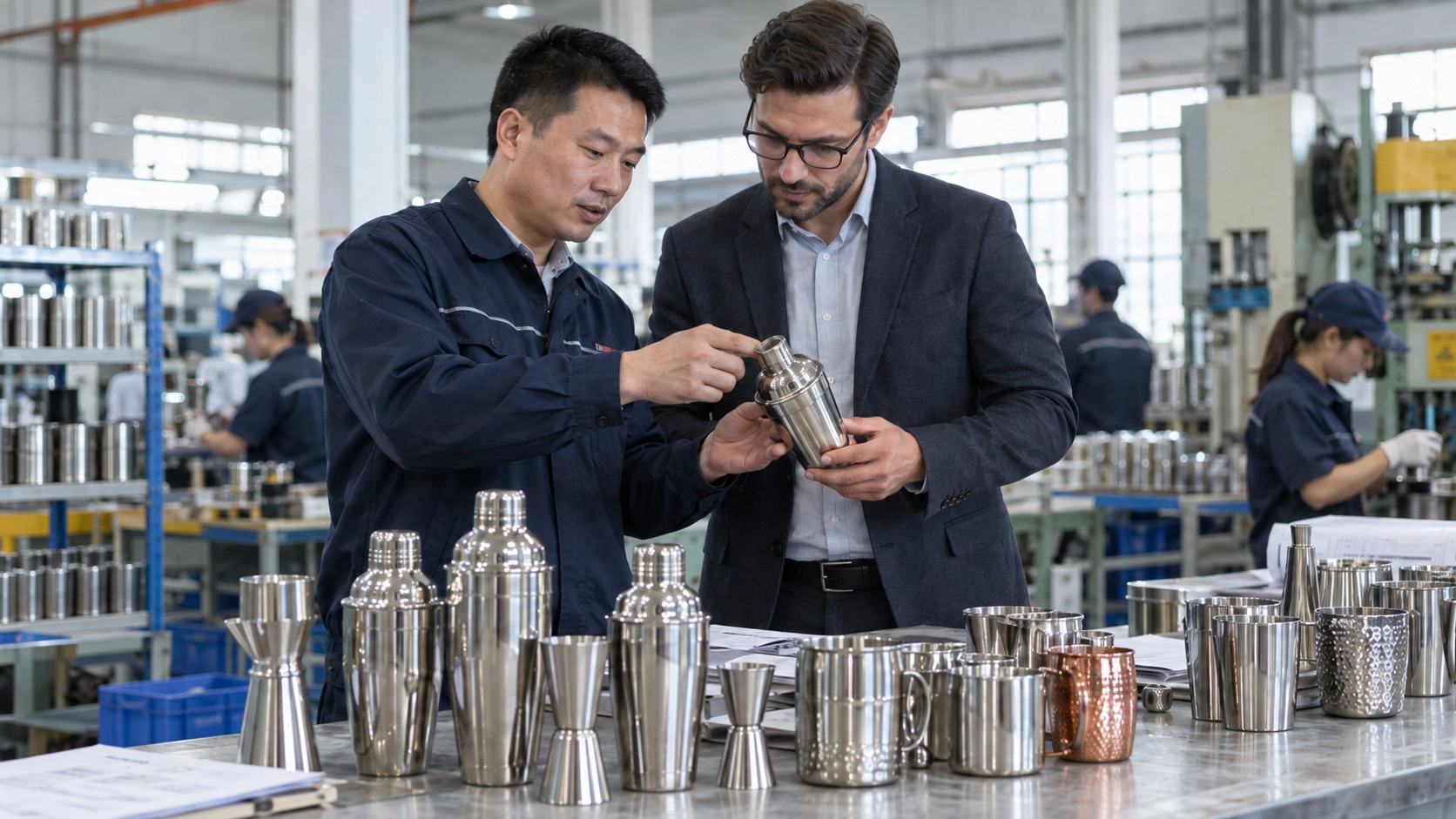
A barware quote that looks good on paper can still fall apart in production if the company behind it isn't the one actually making your product. The most common way buyers get burned isn't price — it's discovering, mid-order, that the "manufacturer" they contracted with is a trading company that subcontracted the job, has no direct control over the production line, and can't answer specific questions about tooling, finishing, or testing because they never had that visibility to begin with.
None of this shows up in a first email or a product catalog. It shows up in how a supplier answers a handful of specific questions — before you commit an RFQ, a deposit, or a shipping schedule.
Why "supplier" and "manufacturer" aren't the same thing
A trading company can offer a lower minimum order quantity, a wider product range, and a fast initial quote, because it isn't constrained by what one factory floor can actually run. That flexibility comes at a cost: if there's a defect, a delay, or a spec change mid-production, the trading company is relaying your issue to a factory it doesn't control, on a timeline it doesn't set. For a one-off gift order, that risk may be acceptable. For a recurring private-label program or a hospitality contract with a fixed launch date, it usually isn't. (If you're still narrowing down which specific bar tools are worth sourcing direct from a manufacturer versus a distributor, our custom bar supplies manufacturer checklist covers that earlier decision.)
Neither model is automatically wrong — the problem is buyers assuming they're dealing with a factory when they're actually dealing with a reseller, and finding out only after a production issue.
How to confirm you're dealing with an actual factory
A few questions filter this out quickly, before any sample is made:
Ask for the factory address and match it to the business license. A manufacturer's registered scope will typically list production activity, not only trading or import-export. A reseller will often be reluctant to share the actual production address at all.
Ask what they can develop in-house. Custom molds, engraving setup, or electroplating lines are capital equipment a trading company doesn't own. If every "custom" request needs to be "checked with the factory" and comes back with a multi-day delay, that's usually the subcontracting relationship showing.
Request a live video walkthrough, not just photos. Stock factory photos get reused across multiple sellers. A short live call showing the actual production line for your product category is difficult to fake and easy for a real manufacturer to arrange.
Compare the MOQ to the claimed capacity. A factory with real production lines will usually hold a consistent MOQ across similar products, because it's set by tooling and batch efficiency. MOQs that swing dramatically between suppliers quoting the "same" product often mean one of them is estimating, not producing.
What audit names actually tell you
Certificate names get listed on websites without much context, so it helps to know what each one is actually checking:
Common barware supplier audits
Audit / Certificate
What it verifies
What it does not verify
ISO 9001
A documented quality management system — consistent processes for production, inspection, and corrective action
Specific product test results, material grade, or worker conditions
Sedex 4-Pillar (SMETA)
Labor standards, health and safety, business ethics, and environmental practices at the audited site
Product quality or that a specific SKU passed testing
BSCI
Social compliance — working conditions and labor practices, similar scope to Sedex
Manufacturing capability or product-specific durability
A supplier naming these audits is a reasonable starting signal. Before relying on it, ask two follow-up questions: which body conducted the audit, and whether a redacted or summary report can be shared. A name alone with no issuing body and no willingness to share any documentation is worth treating as unconfirmed.
Third-party testing: the question that separates real factories from resellers
In-house QC is normal and expected — it is not the same as independent verification. The more useful question is whether the supplier will accommodate a buyer-nominated third-party inspection agency (for example, SGS, Bureau Veritas, or Intertek) at the pre-shipment stage, on your schedule, inspecting against your specification.
A manufacturer with nothing to hide will generally agree to this without much negotiation, because inspectors visit their production sites regularly regardless of who ordered the inspection. A supplier that resists, delays, or insists that only their own internal report is available is a signal worth weighing against everything else in the quote — regardless of how competitive the price looks.
Export documents to confirm before you place an order
Waiting until after production to ask about paperwork causes most of the last-minute shipping delays we see. Confirm upfront:
Commercial invoice and packing list format the supplier normally provides, and whether it matches your customs broker's requirements.
Certificate of origin, and whether it's issued in time for your shipping schedule rather than requested after the goods are ready.
For barware and drinkware that contacts food or beverages directly, whether food-contact compliance documentation (relevant to your destination market) is something the supplier already holds or would need to arrange per order.
Incoterm and port of loading, confirmed in writing rather than assumed from the initial quote.
Before-you-send-RFQ checklist
Quick supplier verification pass
Check
Pass looks like
Warning sign
Business license vs. stated factory address
Address and registered production scope match
Reluctance to share address, or address is a trading office
In-house tooling / customization
Direct answers on mold, engraving, or plating capability
Every custom question needs to be "checked with the factory"
Audit names
Names, issuing body, and a summary report available on request
Names listed with no issuing body or documentation offered
Third-party inspection
Agrees to a buyer-nominated inspector at pre-shipment
Insists only their internal report is available
Export documents
Confirmed in writing before production starts
Discussed only after goods are ready to ship
How E-BON answers each of these
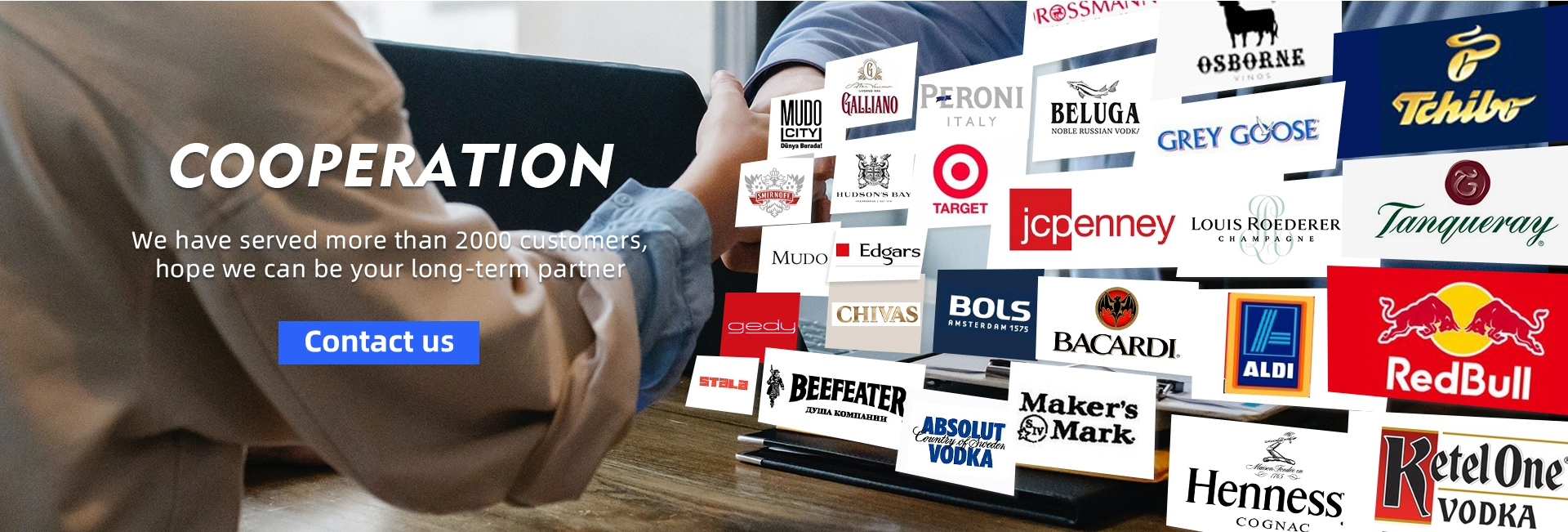
We operate our own factory rather than subcontracting production, which is why factory visits and live video walkthroughs are something we can schedule directly rather than route through a third party. Our quality system is ISO 9001 certified, and our facility has passed both a Sedex 4-Pillar (SMETA) audit and a BSCI audit. On testing, we work with buyer-nominated third-party inspection when the order's specification and timeline are confirmed, rather than asking buyers to rely solely on our internal QC report.
If you're comparing us against another quote, the fastest way to use this article is to run both suppliers through the checklist above side by side.
Once a supplier is qualified, the next decision is usually structural — our OEM vs ODM guide covers how to scope that. After the specification is locked, our pre-production sample checklist covers what to confirm before mass production.
You can arrange a factory visit or request a quote with your product specification through our Request a Quote page, or see our production facility on the factory tour page.