For a custom Moscow Mule mug, settle the construction first, then choose the finish and the logo method as one decision and approve both on a sample in the final finish. The same logo method gives a different result on copper plating and on bare stainless steel: a laser that strips a plated layer shows the metal underneath, while on bare steel it recolors or engraves the surface itself. A logo approved on a photo, or on a different finish, tells you little.
Settle the Mug Construction First
Buyers will meet three constructions: solid copper, stainless steel with a copper-plated exterior, and stainless steel in another finish. What matters most is what touches the drink. The FDA Food Code (section 4-101.14), a model code that state and local jurisdictions adopt, bars copper and copper alloys from contact with foods below pH 6, such as fruit juice. Some solid copper brands, such as Copper Mug Co., leave the interior raw copper and lacquer only the outside.
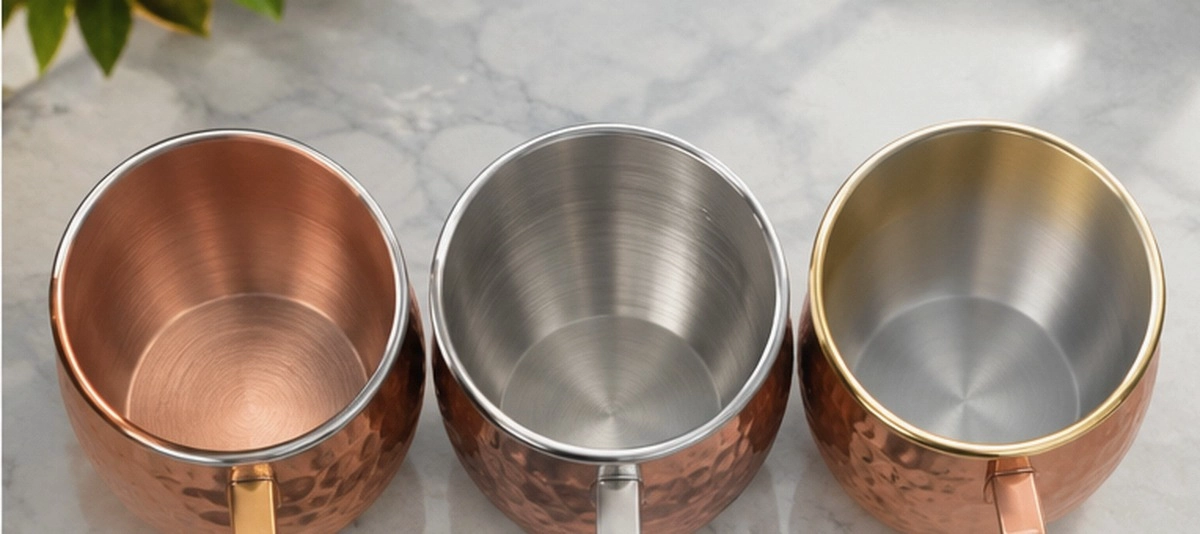
We make stainless steel Moscow Mule mugs only, with a 304 stainless steel body, such as our copper-plated stainless steel Moscow Mule mug. The copper color is electroplated. The rim and interior can be plated in the same color or left as bare 304 stainless steel, as the order specifies, so treat the interior as its own line on the spec sheet. If you want it plated, check the plating against the food-contact rules of your market. For which material to choose in the first place, see copper vs stainless steel Moscow Mule mugs.
Which Finishes Can a Custom Moscow Mule Mug Carry?
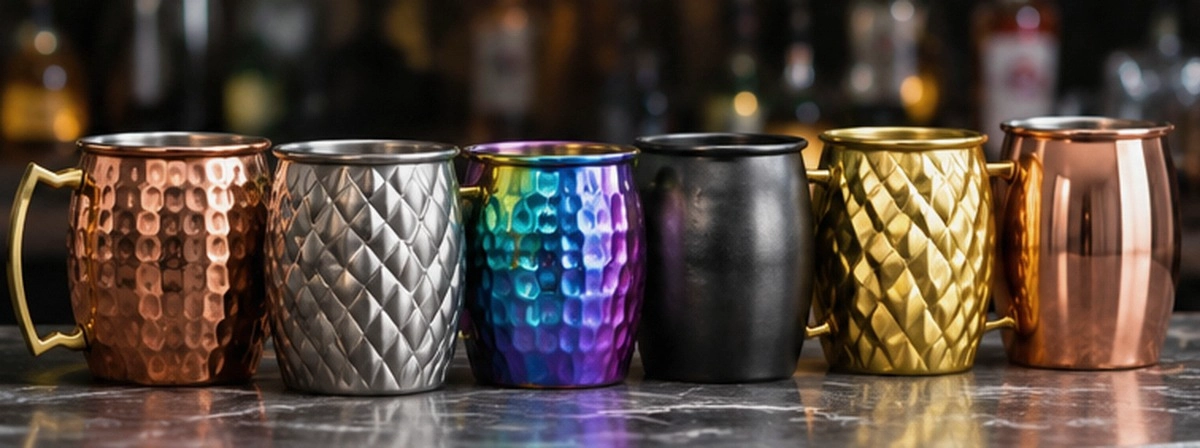
Our Moscow Mule mugs come in copper plating, gold plating, rainbow plating, other colored finishes and etched artwork, on smooth, hammered, diamond-textured or pineapple-textured bodies. When you specify the surface, cover four details:
- Plating method: Standard electroplating covers copper, gold, black and other plated colors. PVD costs more and fewer buyers choose it; we can quote both.
- Rim and interior: The exterior is plated; the rim and interior can be plated to match or left as bare 304 stainless steel. Our Smooth Barrel-Shaped Stainless Steel Moscow Mule Cup, for example, pairs copper or gold plating with a matte-finished interior.
- Etched artwork: Our Etched Stainless Steel Moscow Mule Mug combines etched artwork with copper, black and other custom finishes.
- Body texture: Hammered, diamond-textured and pineapple-textured bodies leave less smooth area for a logo, so choose the logo position together with the texture.
Match the Logo Method to the Surface
The finish decides how each logo method marks the mug and what color the mark takes. Trotec Laser describes three ways a laser marks metal: annealing recolors the metal with low heat and leaves the surface smooth, engraving vaporizes material and leaves a slight depression, and on coated metal the laser removes the top layer.
On our mugs, that is the difference between the two surfaces. On copper-plated steel the laser strips plating, so the logo shows silver, gray or dark depending on which layer it reaches. On bare stainless steel it marks the metal itself. Etching cuts into the surface, and deep etching after the final plating can break the plating, so etched artwork is planned before the mug is plated. Silk printing and decals sit on top of either base and add color. Embossing and debossing shape the metal and keep the mug's color. For the trade-offs between logo methods across barware, see which logo method works best for custom barware.
What each method looks like on the two surfaces we make:
| Logo method |
On copper-plated stainless steel |
On bare stainless steel |
| Laser |
Silver, gray or dark logo, depending on which layer is removed |
Black-gray mark, or a light gray matte engraved mark |
| Etching |
Recessed logo; deep etching after the final plating can break the plating and is not recommended |
Shallow recessed matte gray mark, can be filled black |
| Silk printing |
Black, white or a specified color on the copper-colored base |
Black, white or a specified color on the silver base |
| Decal |
Full-color artwork, copper-colored base kept |
Full-color artwork, stainless base kept |
| Embossing |
Raised logo, the whole mug stays copper-colored |
Silver raised logo |
| Debossing |
Recessed logo, the whole mug stays copper-colored |
Silver recessed logo |
Approve the Finish and Logo Together on the Sample
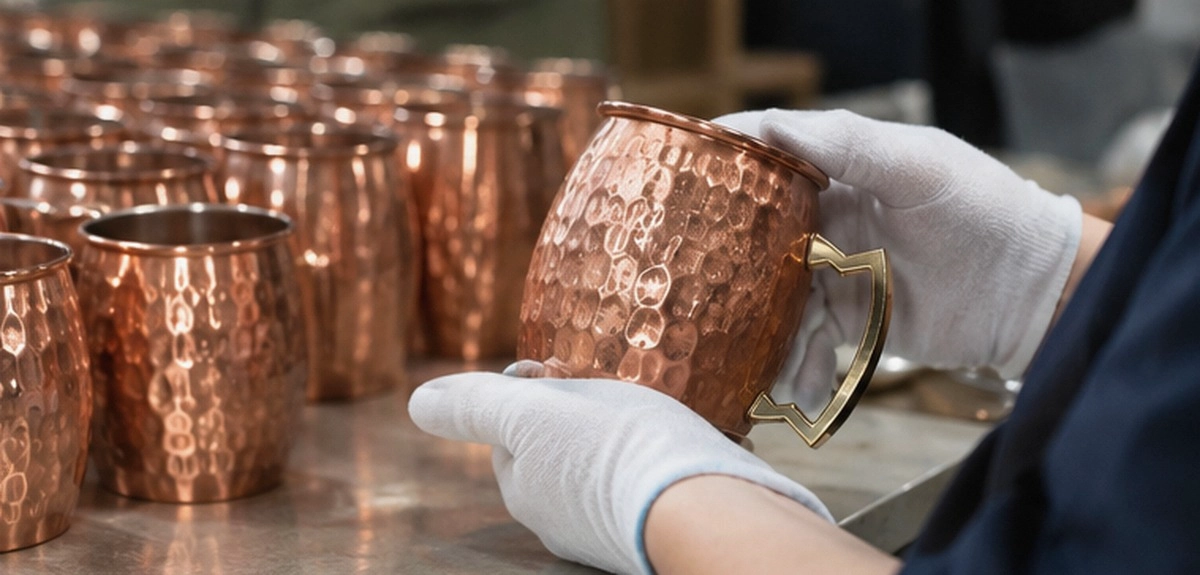
Approve a sample in the final finish with the final logo on it, not a blank mug or a photo. Check four things before bulk production:
- Finish at the edges: Look at the color under the handle, around the base and at the rim, the places The Coppery's wholesale copper mug buyer's guide singles out because polishing there is easy to skip.
- Logo contrast and position: Check that the logo reads clearly on that finish and sits where you planned it. The same guide advises keeping printed ink away from where the hand grips, because ink wears.
- Rim and interior: Confirm they match the spec, plated to match the exterior or bare 304 stainless steel.
- Shipment tests: We check stainless steel and plated products with a 304 reagent drop test (to see whether the metal discolors) and a salt spray test. When a project has strict technical requirements, results are verified by third-party testing to the buyer's specification.
For the full sign-off list, use our pre-production sample checklist.
What to Send for a Custom Moscow Mule Mug Quote
To quote a custom Moscow Mule mug, we need:
- Model or reference photo: a mug from our Moscow Mule mug range, or a reference photo if the shape needs new tooling.
- Finish and color: exterior finish, color, body texture, and whether you want PVD quoted alongside standard electroplating.
- Rim and interior: plated in the same color, or bare 304 stainless steel.
- Capacity and quantity.
- Logo: vector artwork with the method, position, size and color.
- Packaging, target market and tests: the packaging format, where the mugs will be sold, and any third-party testing you need.
For an existing model with a custom finish and logo, the MOQ is 100 pcs, samples take 3–7 days and bulk production 25–35 days; new tooling is quoted separately. Send your spec and logo file to our OEM and customization team, and we will make the first sample in the final finish with your logo applied.


