








ShenZhen E-BON Industrial Co..Ltd
-Professional manufacturer for the stainless steel products
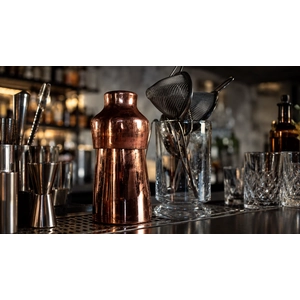
A French shaker seals with nothing but two pieces of steel — no threads, no lugs, no gasket. That means only two things can go wrong: it leaks while you shake, or it locks shut after you do. Both come from the same set of dimensions. This is the engineering behind that joint: why it has to be a shallow cone rather than a press fit, the four values E-BON sets before cutting tooling (8–12 mm engaged length, 2°–3° taper per side, 0.10–0.25 mm interference, 0.5–1.0 mm axial clearance), why roundness rather than diameter is what buyers feel, why the mouth needs a separate sizing die after springback, and why a plated version cannot share the same mouth dimension as an unplated one.

What to confirm before ordering etched stainless steel tumblers in bulk: how etching compares with printing and laser marking, artwork file requirements, base tumbler specs, etched-surface defect checkpoints, and MOQ, packaging and sample timing.
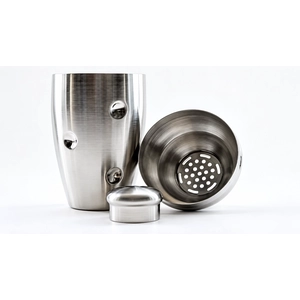
Explains the material difference between 304 and 201 stainless steel, why 201 shows up in aggressively priced barware quotes, where the difference actually shows up after an order ships (corrosion, finish stability, the unreliable magnet-test shortcut), and gives buyers a concrete way to confirm grade in writing before comparing supplier quotes.

Gives B2B barware buyers a practical way to tell a manufacturer from a trading company, explains what ISO 9001, Sedex 4-Pillar, and BSCI audits actually verify, and covers third-party testing and export documentation to confirm before sending an RFQ.
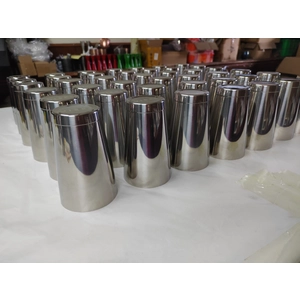
A step-by-step QC checklist for bulk cocktail shaker orders: fit and seal, leak testing, rims and formed edges, dimensions and capacity, finish and logo, function, and packaging—plus how to record defects and decide whether to release or hold a lot.
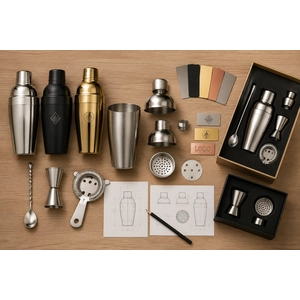
For private label barware brands: how to specify, sample and quote a custom cocktail shaker set, and how to keep its components, finish, branding, packaging and repeat orders consistent as one product.

A BOFU guide for private label barware brands defining how to specify, sample and quote a custom cocktail shaker set while keeping its components, finish, branding, packaging and repeat orders under one product system.

French press sediment does not come from one cause. This article separates normal metal-filter silt from excess sludge and visible grounds, then shows how grind distribution, mesh fineness, filter layers, edge fit and plunger resistance help identify the source.
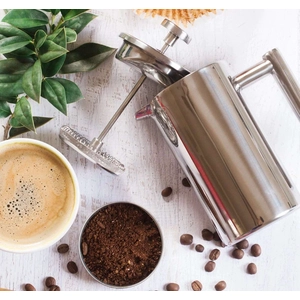
A practical French press answer page with an interactive ratio calculator, water-based ratio chart, six-step daily method, ratio and brew-time adjustments, grind guidance, and direct fixes for bitter, weak, sour, muddy, or sediment-heavy coffee.
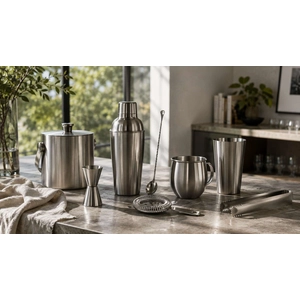
A practical framework for turning multiple shakers, jiggers, strainers, mugs and accessories into one recognizable barware collection through shared design anchors, controlled variation and range-level sample approval.
A commercial bar station works faster when the drink follows a clear path and every tool returns to a known position. Start with the build sequence, then place the tools. If a bartender has to cross another operator, search for a strainer or leave the station to return a dirty tin, adding more tools will not correct the underlying problem.
Our approach to a commercial bar station setup separates four decisions: the production path, each tool's home position, the clean-to-dirty return loop and reset ownership. It also makes fixed constraints such as the ice well, sink and glasswashing route visible. Once the station flows correctly, the station-by-station bar tool buying plan can determine working, rotation and backup quantities.
Take one representative shaken drink and one stirred drink from the menu. On a simple plan of the station, mark where the glass enters, where ingredients are measured, where ice is added, where the drink is shaken or stirred, where it is strained and garnished, and where the finished glass leaves. Then draw a separate return path for used tins, jiggers, strainers and mixing glasses.
Keep the two paths off the same landing space. A clean jigger does not belong beside a used tin waiting to be rinsed, and garnish tools do not belong in the dirty return route. These positions can be changed without moving installed equipment.
Mark every point where the bartender turns away, reaches across a colleague or waits for access. Relocating a tool can solve some marks. Others reveal a fixed constraint: the only sink is beyond another station, two operators share one ice well, or the glass return cuts through production. Keep these constraints on the drawing, but outside the movable barware order.
A useful station map needs named zones. The exact left-to-right order can change, but the drink sequence and the separation of clean and used tools must remain clear.
| Station zone | Typical movable tools | Placement decision | Reset or cleaning rule |
|---|---|---|---|
| Build and measure | Jiggers, pour-control tools, small ingredient tools | Place beside ingredient pickup and keep markings visible. | Return clean jiggers consistently; send sticky or strongly flavored residue to the dirty return. |
| Shake and stir | Shaker tins, mixing glasses, bar spoons, muddlers | Keep a landing surface for the current drink without blocking the next glass. | Separate active and used vessels; reset paired tools together. |
| Strain and finish | Hawthorne, Julep and fine mesh strainers; garnish tools | Keep frequent strainers beside matching vessels; give occasional tools a shared position. | Remove pulp, herbs and ice fragments before return. |
| Clean landing | Rinsed and ready tools returning to service | Reserve a dry, visible point between cleaning and work. | Only service-ready tools enter; this is not overflow storage. |
| Dirty return | Used tins, jiggers, strainers and mixing glasses | Place on the wash route without crossing clean tools. | Assign who clears it and returns clean tools. |
| Replenishment point | Clean backup tools and replacement smallware | Keep off the build surface and outside another station. | Refill from here; never use it as a dirty-tool pile. |
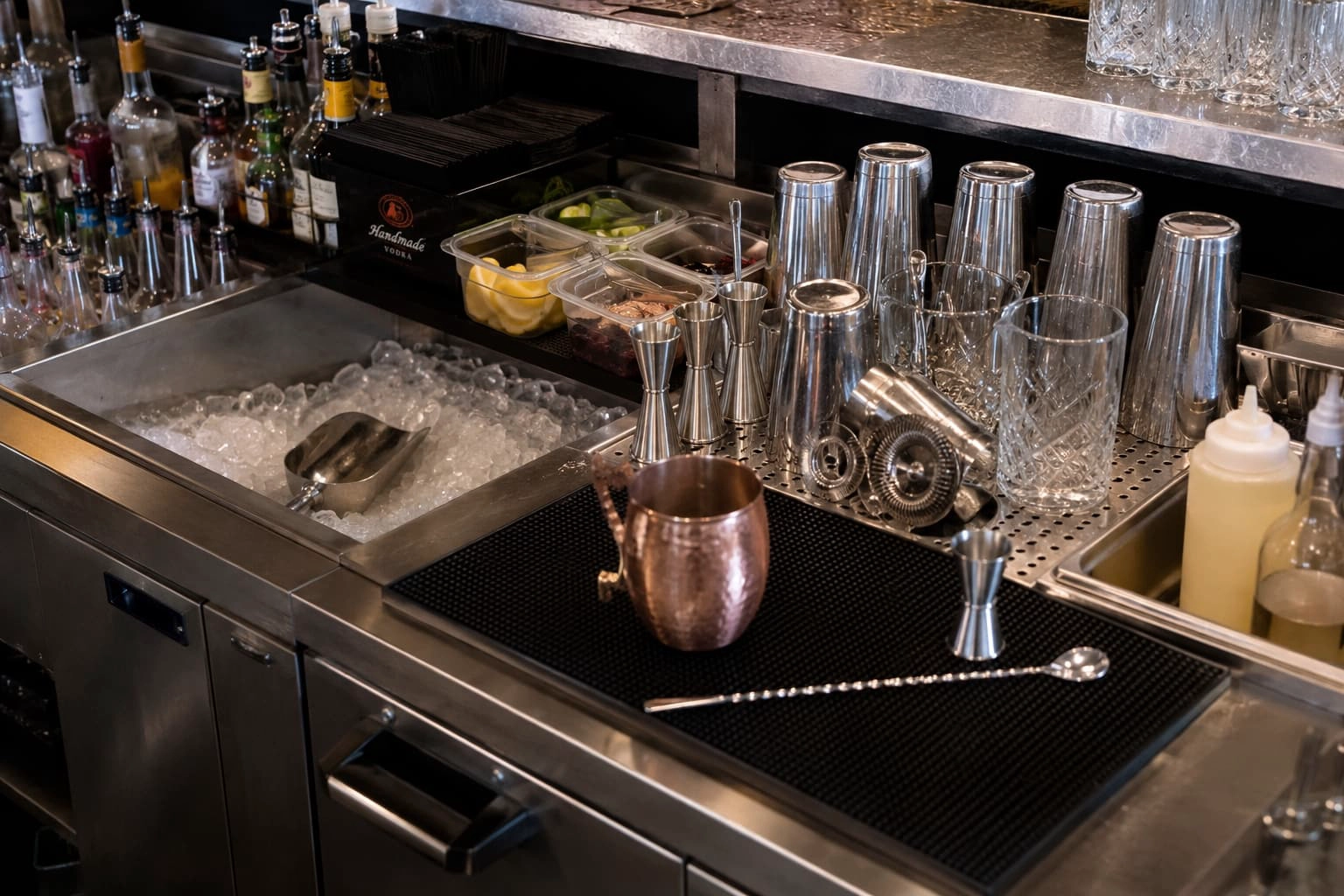
A tool needs a dedicated home position when its absence stops a common drink build. Jiggers, the primary shaker set, the main bar spoon and frequently used strainers normally fall into this group. Keep their positions consistent across comparable stations so a relief bartender can take over without rebuilding the workspace.
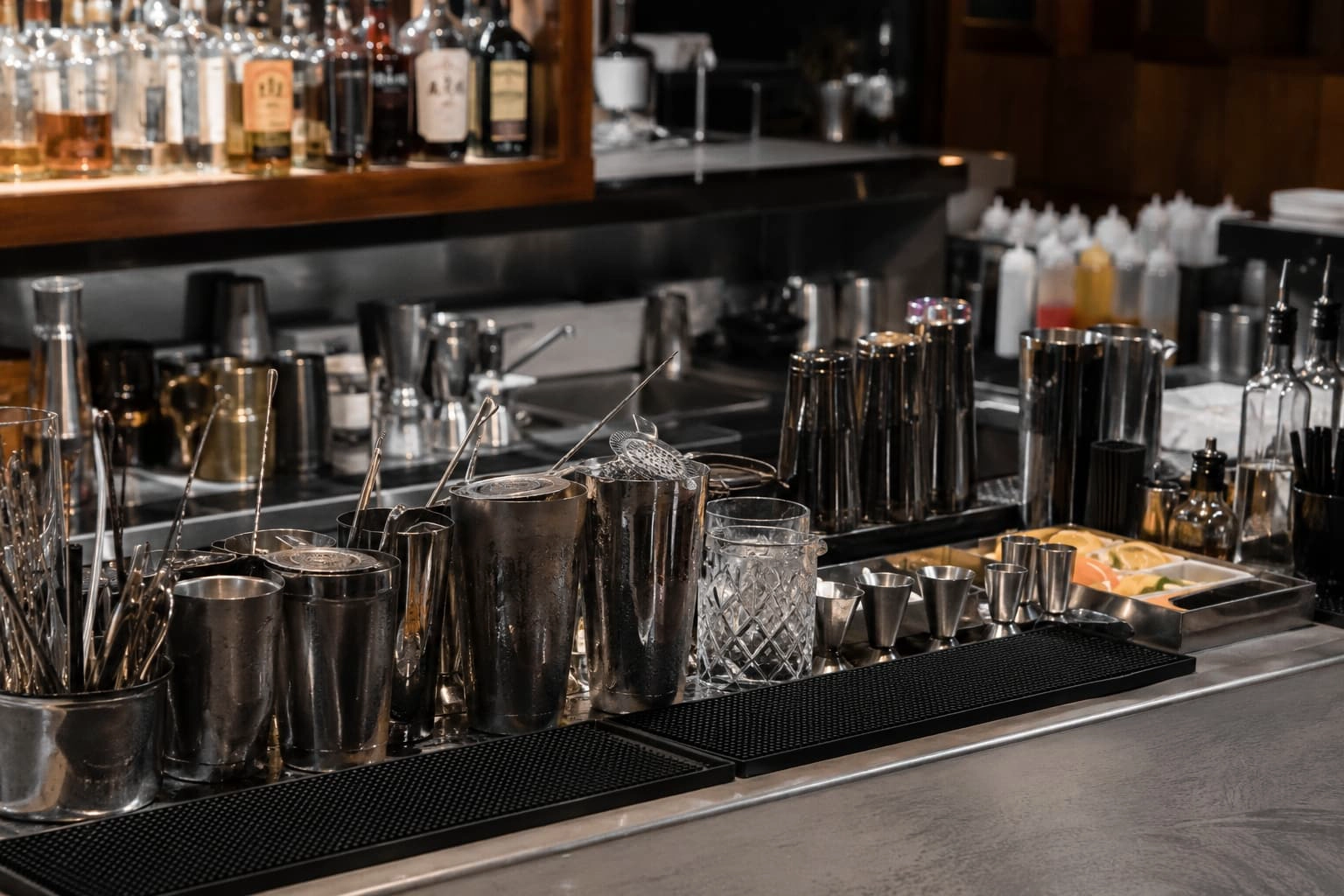
Occasional tools can be shared if the handoff does not cross production. The location needs to be neutral, visible and assigned. A fine mesh strainer placed somewhere between two stations is not a system; a finishing point that both operators return it to is.
Match the measuring tools to the recipe system before fixing their positions. Our jigger buying guide covers capacity, markings and commercial buying decisions. For the finishing zone, the cocktail strainer comparison explains when Hawthorne, Julep and fine mesh strainers perform different jobs. The station map then shows which of those tools deserves a dedicated position and which can be shared.
The working surface has three tool states: ready, active and used. Give each a visible location. Otherwise, a station can appear fully equipped at opening and still lose usable tools as dirty pieces accumulate.
Draw the loop in one line: used tool to dirty return, through the venue's wash process, onto the clean landing, then home. If bartenders rinse their own tools, the route cannot force them through another station. If a barback or dish team handles it, set a pickup point and a clean return point away from the build area.
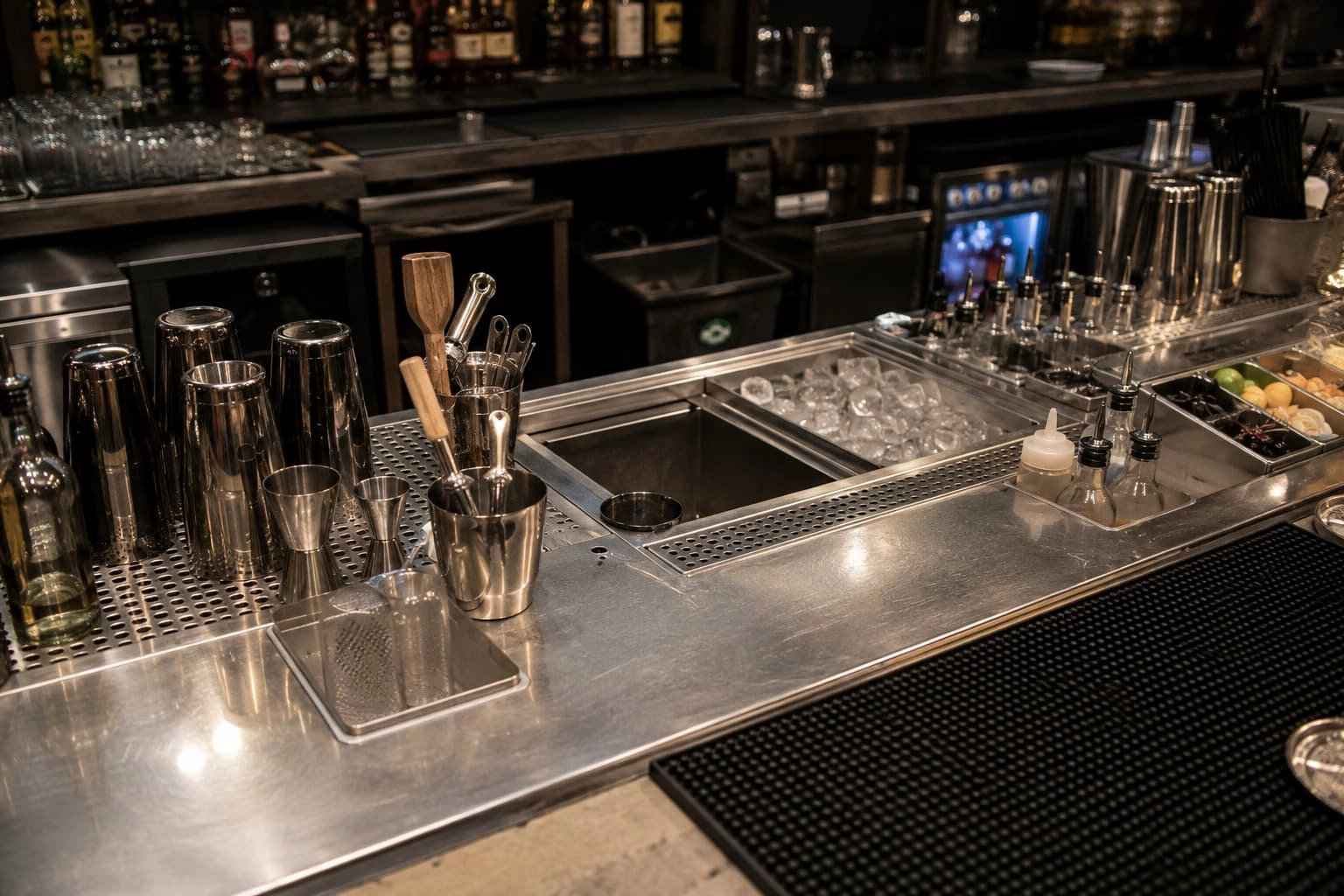
Cleaning behavior changes with the menu. Syrups, purees, dairy, egg, herbs and strong flavors can take a jigger, tin or fine mesh strainer out of immediate rotation. A fine mesh strainer may need more attention than an open Hawthorne or Julep strainer because residue remains in the mesh. The station plan should send these tools into the correct cleaning route immediately instead of leaving them beside clean equipment.
At a single-operator station, place tools in the order they enter the drink. The bartender should be able to move from measurement to mixing and finishing without reversing through the dirty return. The replenishment point can sit outside that immediate sequence because it is used between builds rather than during every drink.
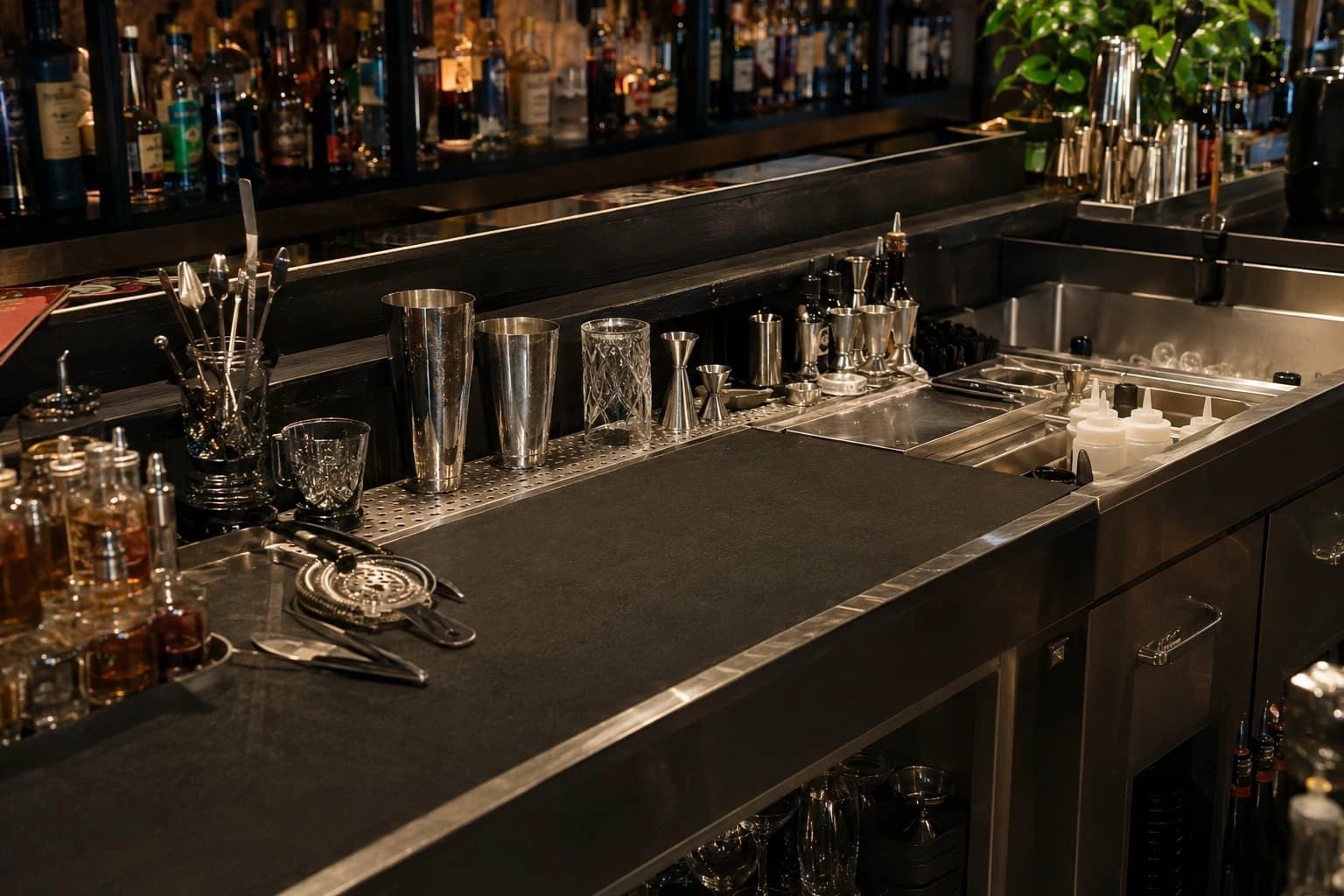
A two-person station needs ownership boundaries. Assign each operator a primary build surface and home positions for the tools used continuously. Put genuinely shared tools in a neutral finishing or replenishment zone. Avoid a layout in which both operators reach through the center for their jiggers, tins or strainers; the center then becomes a collision point and neither person knows who should reset it.
The same rule applies to cleaning. Decide whether each operator clears their own used tools or whether one role manages the return loop during a rush. Either model can work. An undefined handoff cannot: it leaves dirty tools on the shared surface and makes a placement problem look like an inventory shortage.
Before service, compare the physical station with its map. Check that high-frequency tools are in their home positions, jigger capacities match the menu, strainers fit the intended tins or mixing glasses, the clean landing is clear, the dirty return is empty and the replenishment point contains the correct items. A station that starts with tools in random positions will not become standardized during the rush.
During service, reset at natural breaks in the ticket flow or during an operator handoff. Return clean tools, clear the dirty point, restore paired pieces and replenish from the assigned backup location. The purpose is to restore the map before small placement errors spread across the entire station.
At close, note repeated failures. A disappearing strainer points to an ambiguous home. Clean tins waiting at the wash area reveal an ownerless return loop. Repeated crossing for ice or a sink points to the fixed layout.
Quantity shortage: every clean, assigned tool of that type is in active use at the same time, and the production sequence is waiting for the next one. This is the point to revisit the station quantity plan.
Reset failure: the tool exists and is clean, but it is not in its home position when needed. Correct the position, ownership or opening standard before increasing the order.
Cleaning-return failure: usable inventory is trapped as dirty, wet or unreturned stock. Trace the route from the dirty point to the clean landing and identify the missing handoff.
Fixed-equipment layout problem: staff repeatedly cross paths to reach an ice well, sink, glasswasher, refrigeration point or order screen even when movable tools are available and correctly placed. This requires an operational or installed-equipment review. Extra barware can provide rotation, but it cannot remove the crossing path.
When we review a movable barware plan, we want these four causes separated before product selection begins. It prevents buyers from ordering duplicates to compensate for an unclear station and also reveals where dedicated tools, easier-cleaning designs or a different shared-tool rule will help.
A useful sourcing brief starts with the number of active stations, the drink paths used by the menu, the tools assigned to each working zone, the cleaning and return method, and the items that need to be dedicated or shared. Custom finish, logo placement and packaging can then be applied to the tools that belong in the operating plan instead of to a generic set.
Send E-BON your station count, menu production paths, cleaning conditions and the movable bar tools that need custom design or branding. We can use that information to organize a relevant stainless steel barware sample and sourcing plan. Installed sinks, refrigeration, ice machines and utility work remain separate from the movable tool scope.