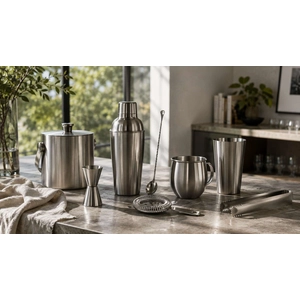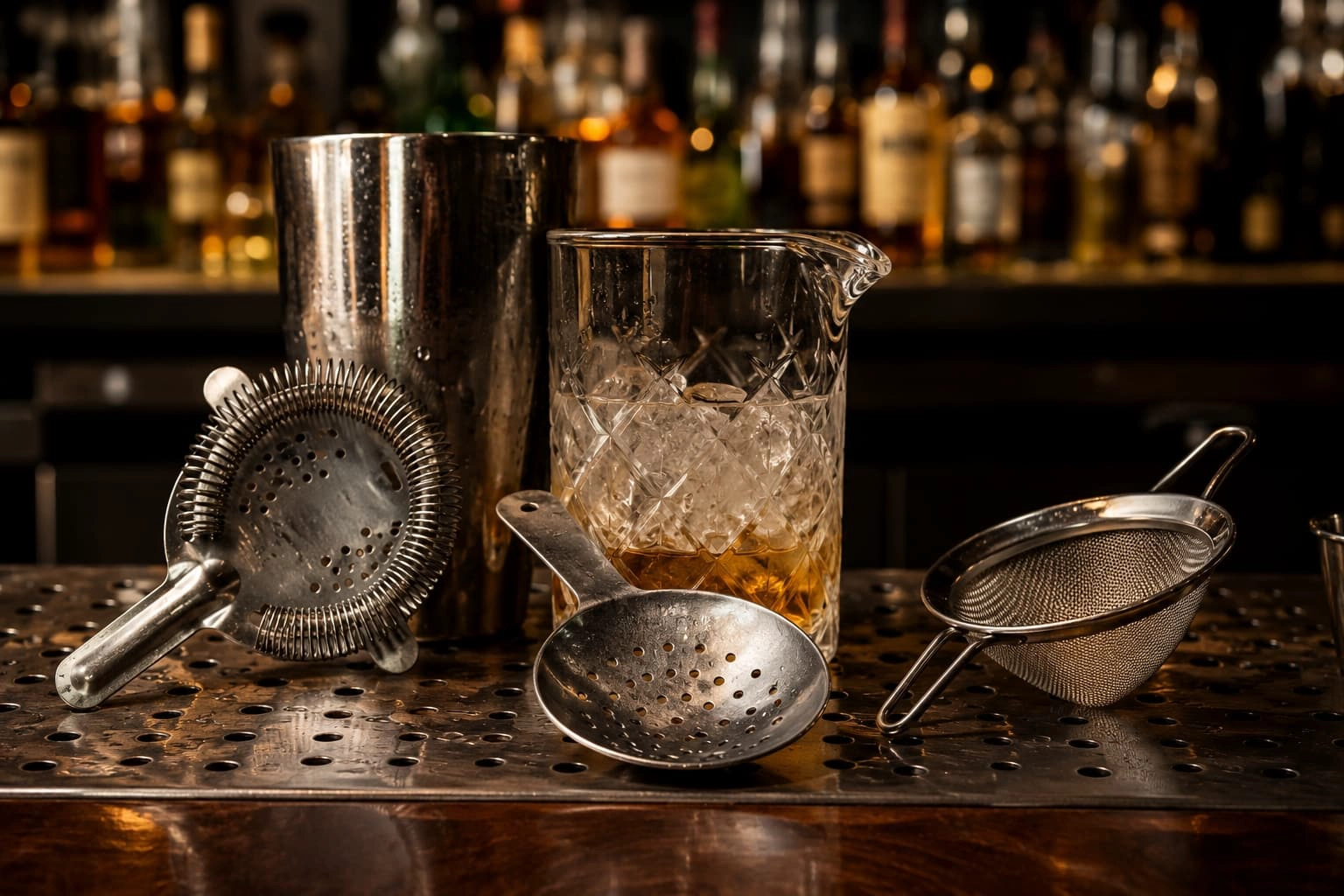
For most commercial cocktail stations, the practical starting combination is a Hawthorne strainer plus a fine mesh strainer. The Hawthorne controls the main pour and holds back large ice; the fine mesh is added when the drink needs smaller ice chips, pulp or herb fragments removed. Add a Julep strainer when stirred drinks and mixing-glass service are important enough to justify a dedicated tool.
Some bartenders use a Hawthorne for both shaken and stirred drinks. Others prefer how a Julep sits inside a mixing glass, pours and cleans. The buying decision should follow the menu, station vessels and filtration required.
Three Strainers, Three Different Jobs
The three main cocktail strainer types overlap, but they do not manage the same part of the pour. A Hawthorne is primarily a fast ice barrier and coarse strainer. A Julep controls ice when pouring from a mixing glass. A fine mesh strainer removes particles that pass through the first tool.
| Strainer type |
Best working role |
Commercial advantage |
Main limitation |
What buyers should inspect |
| Hawthorne |
Shaken drinks and the first stage of straining |
Fast flow, stable fit on shaker tins and effective control of large ice |
The coil can collect fruit, herbs and pulp; small chips can still pass |
Coil density, fit, support prongs, flow, handle balance and cleaning access |
| Julep |
Stirred drinks poured from a mixing glass |
Sits inside the vessel, gives a controlled pour and is simple to rinse |
Does not remove fine pulp or small ice fragments and has a more specialized role |
Bowl curve, perforations, mixing-glass fit, handle angle and pouring stability |
| Fine mesh |
Second-stage filtration and drinks containing pulp, herbs or small ice chips |
Produces a cleaner texture by catching material left by the first strainer |
Slower flow, easy clogging and the heaviest cleaning workload |
Basket size, mesh integrity, frame and handle joints, balance and cleanability |
A standard shaken drink may only need a Hawthorne. A clear stirred drink may use a Julep. Citrus pulp, muddled fruit or herbs make a Hawthorne and fine mesh combination more useful.
Why Fine Mesh Does Not Make the Hawthorne Redundant
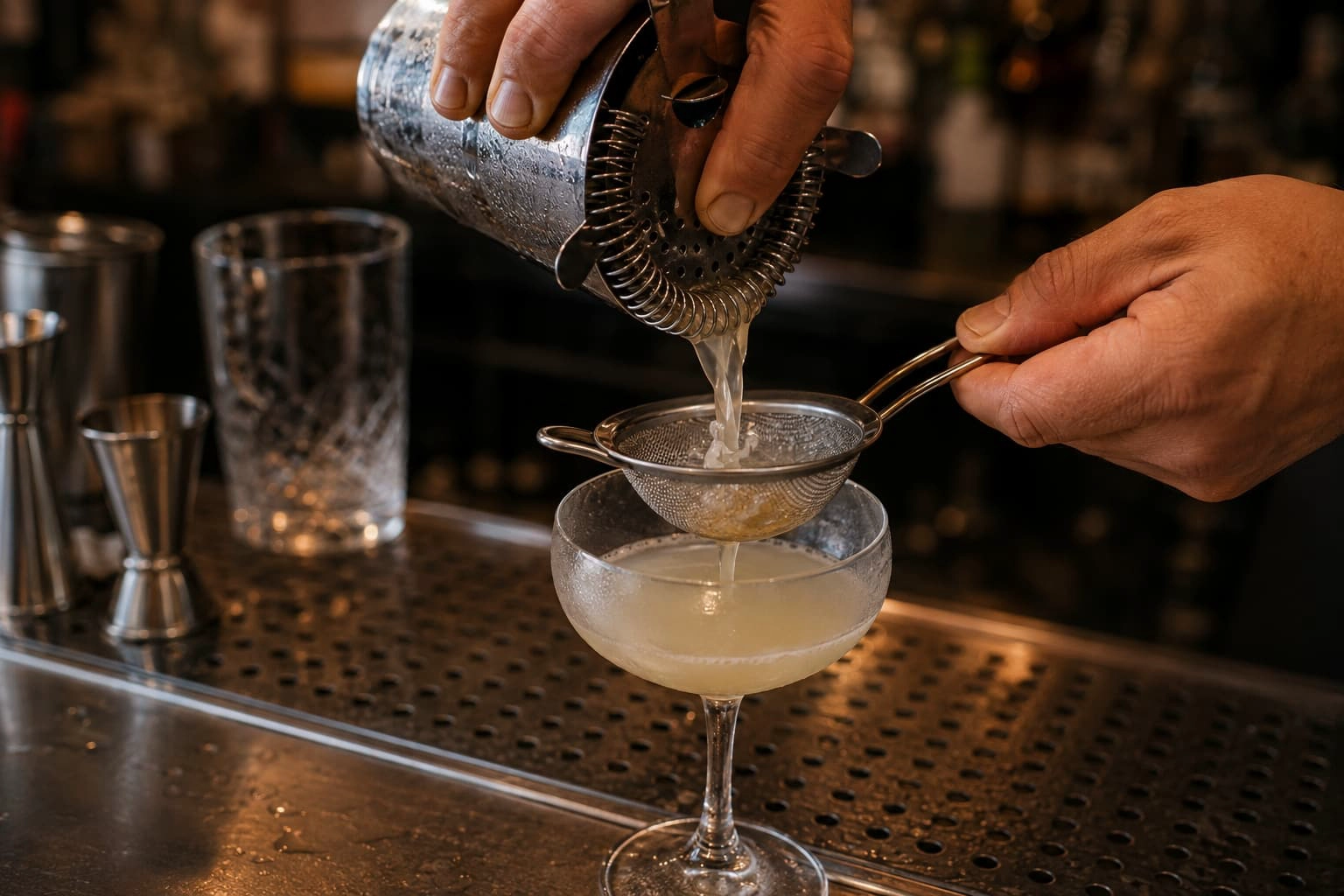
An oversized fine mesh basket can technically catch both large ice and smaller particles. During commercial service, this is slower and harder to control. A Hawthorne holds the main ice load on the shaker, leaving the other hand free to position the glass or hold the mesh. Without it, large cubes can press against the basket, disrupt the stream or spill.
The two tools therefore divide the job. The Hawthorne quickly blocks large ice and some solids. The mesh catches the fine ice chips, citrus pulp, herb fragments and other small material that passes through. Removing the first stage does not remove the work; it transfers the full ice load to the slower and more difficult-to-clean tool.
Cleaning is another reason to keep them separate. Fine mesh traps particles inside many openings and becomes difficult to clean after fruit, herbs or puree. Frequent double straining may require enough mesh strainers to rotate through proper cleaning.
Does a Commercial Bar Really Need a Julep Strainer?
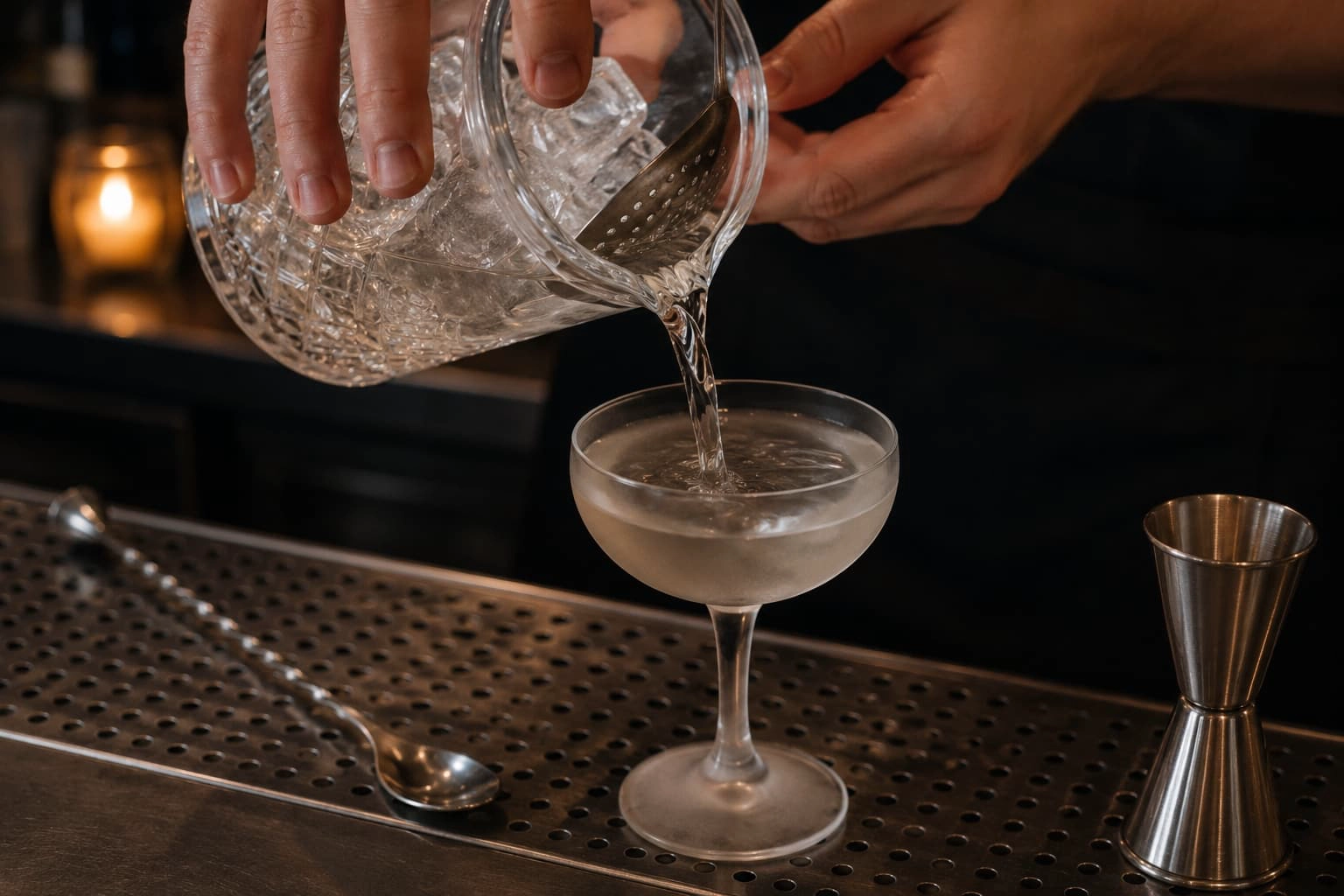
A Julep strainer is not absolutely necessary when the station already has a Hawthorne. Bartenders do use Hawthorne strainers for both shaken and stirred drinks, and a well-matched Hawthorne can hold ice back at the pouring edge of a mixing glass.
The Julep rests against the ice inside a mixing glass, giving a stable pour without a spring around the rim. It rinses easily because there is no coil to hold fruit or herbs. Some bartenders also prefer it for stirred cocktails because they want as few bubbles as possible and feel a Hawthorne creates slightly more disturbance.
Other professionals deliberately avoid the Julep and use a Hawthorne for everything. It gives them enough control, removes more small ice and reduces the number of station tools. This works when it fits the mixing glass and the team prefers one motion for both drink styles.
Add the Julep when stirred drinks are frequent, the mixing glasses suit its shape, or bartenders prefer its pour and easier cleaning. A bar with few stirred drinks can start with Hawthorne and fine mesh strainers.
Mint, Berries and the Cleaning Problem Behind the Choice
One operator described a bar that served shaken drinks containing mint, berries and basil. The main problem was not whether the Hawthorne could stop the ice. Fruit pulp and herb fragments became trapped around its coil. Even after a quick sink rinse, small pieces sometimes remained and later appeared in a Martini that should have been clear.
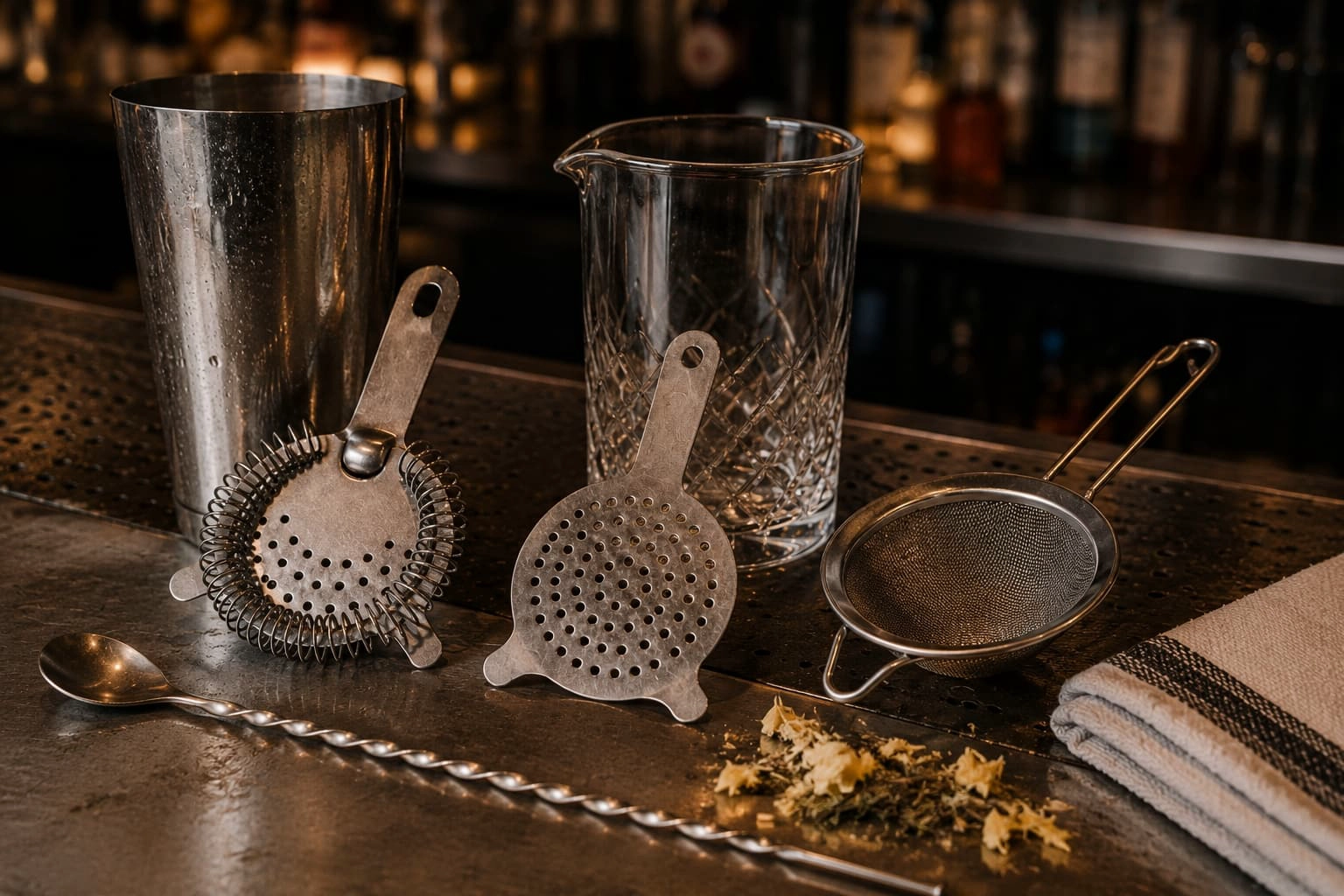
A tight coil may capture more small ice and pulp, but it also gives soft ingredients more places to collect. A menu using muddled berries, mint or basil needs cleaning that reaches the coil and enough strainers to maintain service during that cleaning.
Some bartenders handle these drinks with a Hawthorne followed by a fine mesh strainer. Others use a Julep as the first ice barrier because its perforated bowl does not collect debris in a spring, then pour through fine mesh for the second stage. Both workflows preserve the same principle: the first tool controls the large ice, and the fine mesh removes what remains.
If speed with ordinary shaken drinks is the priority, Hawthorne remains the stronger first tool. If herb and berry debris repeatedly fills the coil, use a Julep for those recipes or keep extra Hawthorne strainers in cleaning rotation.
What Matters When Buying Strainers for Commercial Use
Two Hawthorne strainers can behave differently on one tin, and two Julep strainers can sit differently inside one mixing glass. Check samples with the bar's actual vessels.
Coil density and tension: A tighter Hawthorne coil generally catches more small ice chips and pulp. Buyers should compare that filtration with the required flow and the effort needed to rinse material from the spring.
Vessel fit: The strainer needs stable contact with the intended shaker or mixing glass. Check whether the Hawthorne covers the opening without rocking, whether its support prongs sit securely and whether the Julep bowl fits inside the glass at a useful angle.
Pouring speed and control: Test a normal service pour rather than only placing the dry tool on the vessel. The stream should remain controllable when the container holds ice, and the handle should feel balanced throughout the pour.
Cleaning access: Inspect the spring, perforations, mesh basket, rim and joints. A removable coil can make deeper cleaning easier, while a damaged or distorted mesh basket can trap residue and affect the stream.
Construction and durability: Check the body, handle joint, mesh attachment and any adjustable gate. The tool needs to retain its shape and vessel fit through repeated handling.
Finish and branding come after function. A plated, polished or customized strainer still needs to fit the station vessels and survive the cleaning method. Buyers can review E-BON's stainless steel cocktail strainer and fine mesh strainer examples when preparing a sample comparison.
Choose the Combination by Station and Menu
For a general commercial cocktail station, start with Hawthorne strainers for shaken drinks and fine mesh strainers for recipes that require double straining. This combination covers the largest number of service situations.
Add Julep strainers to stations that produce a meaningful number of Martinis, Manhattans, Negronis and other stirred drinks from mixing glasses. If the team already uses Hawthorne strainers successfully for these drinks, the Julep can remain a specialist tool rather than a compulsory item at every station.
Bars using mint, berries, basil or citrus pulp must plan cleaning and rotation with the strainer choice. Fine mesh cleans slowly, Hawthorne coils may need deeper rinsing, and a Julep can keep debris out of the spring during the first stage.
In multi-station bars, Hawthorne strainers should follow the active shaken-drink stations because borrowing one interrupts service immediately. Julep and fine mesh strainers can be shared only when their use is infrequent and the sharing distance does not slow the pour. Otherwise, they belong at the station where the drinks are made.
Prepare a Strainer Sample Plan Before Ordering
A commercial buyer should send the menu mix, number of active stations, shaker and mixing-glass dimensions, expected quantity, finish, logo and packaging requirements. For herb, fruit or puree-heavy menus, include the recipes that create the most cleaning pressure and state whether the bar uses double straining.
E-BON can then organize the relevant stainless steel barware into a sample plan: Hawthorne fit and flow on the intended tins, Julep fit inside the mixing glass, fine mesh filtration and cleaning access, followed by the required finish and branding review.
The goal is not to force three strainers into every bartender kit. It is to give each station the fastest first-stage tool, the right option for stirred drinks and enough fine filtration for the recipes that actually need it.