








ShenZhen E-BON Industrial Co..Ltd
-Professional manufacturer for the stainless steel products

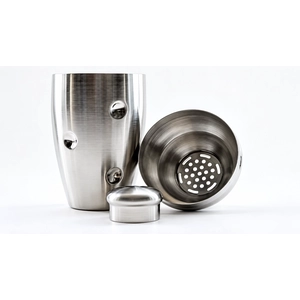
A French shaker seals with nothing but two pieces of steel — no threads, no lugs, no gasket. That means only two things can go wrong: it leaks while you shake, or it locks shut after you do. Both come from the same set of dimensions. This is the engineering behind that joint: why it has to be a shallow cone rather than a press fit, the four values E-BON sets before cutting tooling (8–12 mm engaged length, 2°–3° taper per side, 0.10–0.25 mm interference, 0.5–1.0 mm axial clearance), why roundness rather than diameter is what buyers feel, why the mouth needs a separate sizing die after springback, and why a plated version cannot share the same mouth dimension as an unplated one.
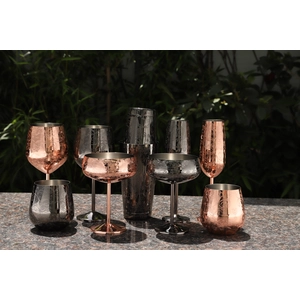
Consolidates the etched-tumbler cluster from the 40-topic pool (production checklist, artwork requirements, defect prevention) into one buyer-facing guide: what etching is and how it differs from printing/debossing/embossing, artwork file requirements before quoting, defect-prevention checkpoints specific to etched surfaces (etching depth, edge deburring, pattern registration, cross-finish consistency), and MOQ/packaging using the real egg-shaped 20oz 304 stainless tumbler as a reference spec.
Explains the material difference between 304 and 201 stainless steel, why 201 shows up in aggressively priced barware quotes, where the difference actually shows up after an order ships (corrosion, finish stability, the unreliable magnet-test shortcut), and gives buyers a concrete way to confirm grade in writing before comparing supplier quotes.

Gives B2B barware buyers a practical way to tell a manufacturer from a trading company, explains what ISO 9001, Sedex 4-Pillar, and BSCI audits actually verify, and covers third-party testing and export documentation to confirm before sending an RFQ.
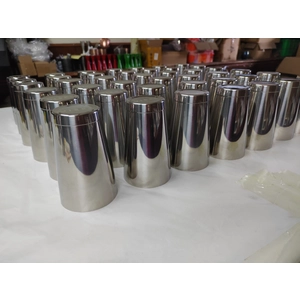
A bulk-order guide to etched stainless steel tumblers: how etching differs from printing, debossing and embossing, what artwork to prepare before quoting, the defect checkpoints specific to etched surfaces (etching depth, edge deburring, pattern registration, finish consistency), and MOQ and packaging, using a 20 oz egg-shaped 304 tumbler as the example.
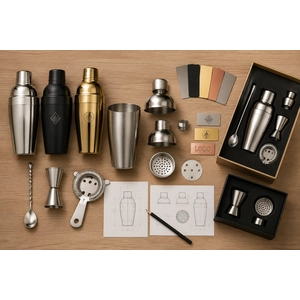
For private label barware brands: how to specify, sample and quote a custom cocktail shaker set, and how to keep its components, finish, branding, packaging and repeat orders consistent as one product.
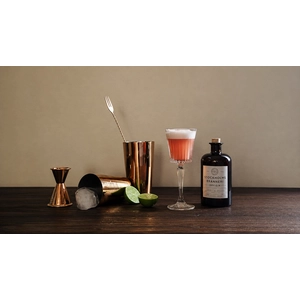
A BOFU guide for private label barware brands defining how to specify, sample and quote a custom cocktail shaker set while keeping its components, finish, branding, packaging and repeat orders under one product system.

French press sediment does not come from one cause. This article separates normal metal-filter silt from excess sludge and visible grounds, then shows how grind distribution, mesh fineness, filter layers, edge fit and plunger resistance help identify the source.
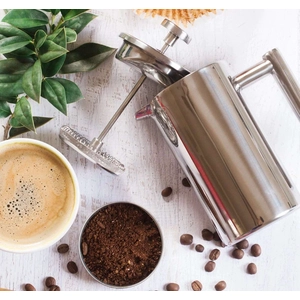
A practical French press answer page with an interactive ratio calculator, water-based ratio chart, six-step daily method, ratio and brew-time adjustments, grind guidance, and direct fixes for bitter, weak, sour, muddy, or sediment-heavy coffee.
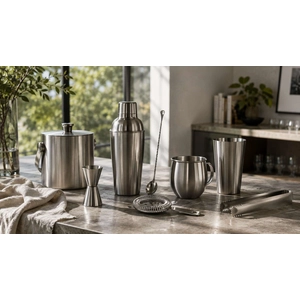
A practical framework for turning multiple shakers, jiggers, strainers, mugs and accessories into one recognizable barware collection through shared design anchors, controlled variation and range-level sample approval.
Start with a 1:15 coffee-to-water ratio: 30 g of coffee for 450 ml of water. Use a coarse, even grind, water at about 195–205°F / 90–96°C, and a four-minute steep. Press slowly and pour everything out of the brewer immediately. That is a dependable starting recipe, not a universal perfect ratio.
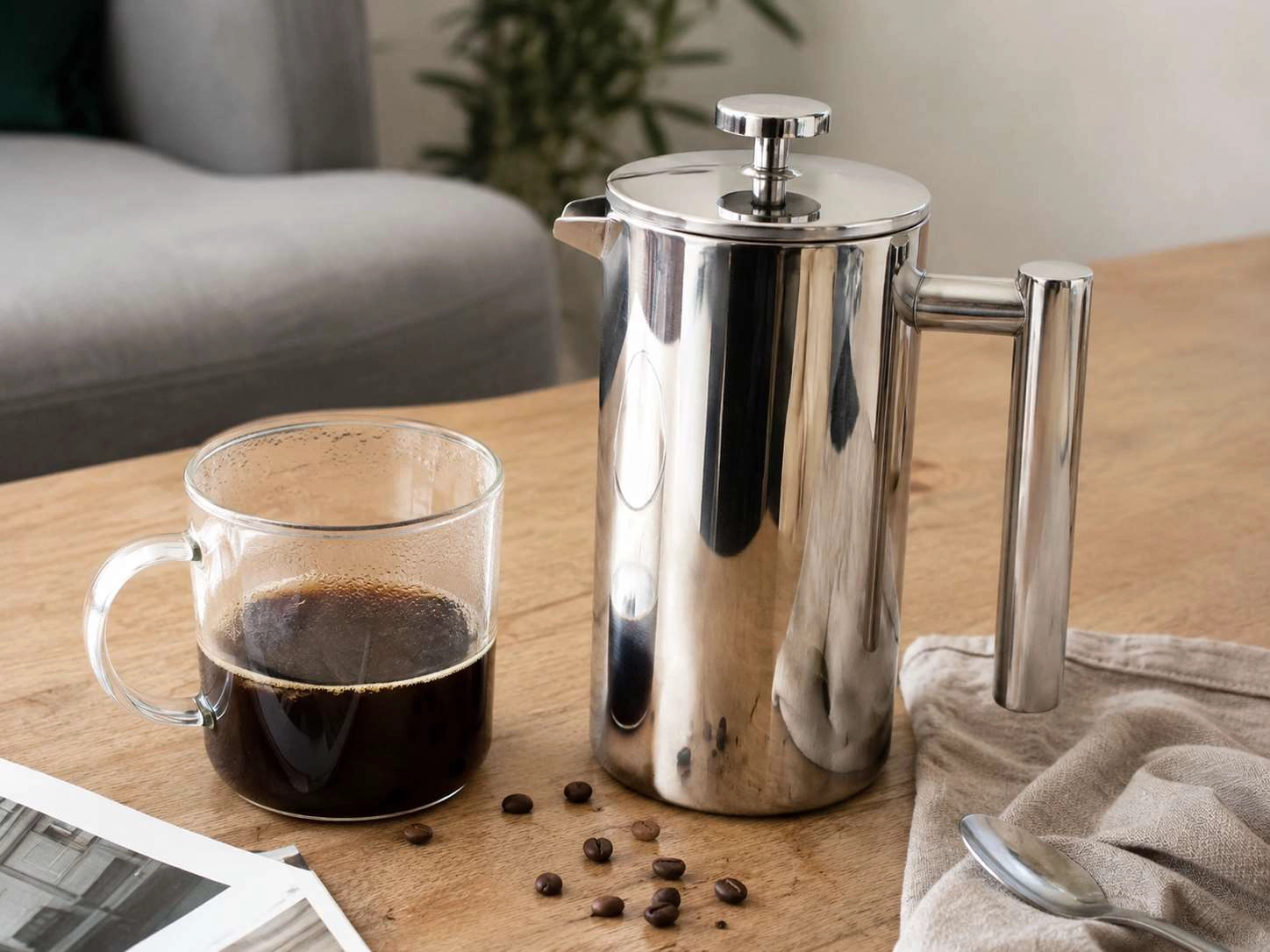
Enter the water you will actually pour, then choose the cup strength you prefer.
The result is rounded to the nearest gram. Switching units converts the current water amount automatically.
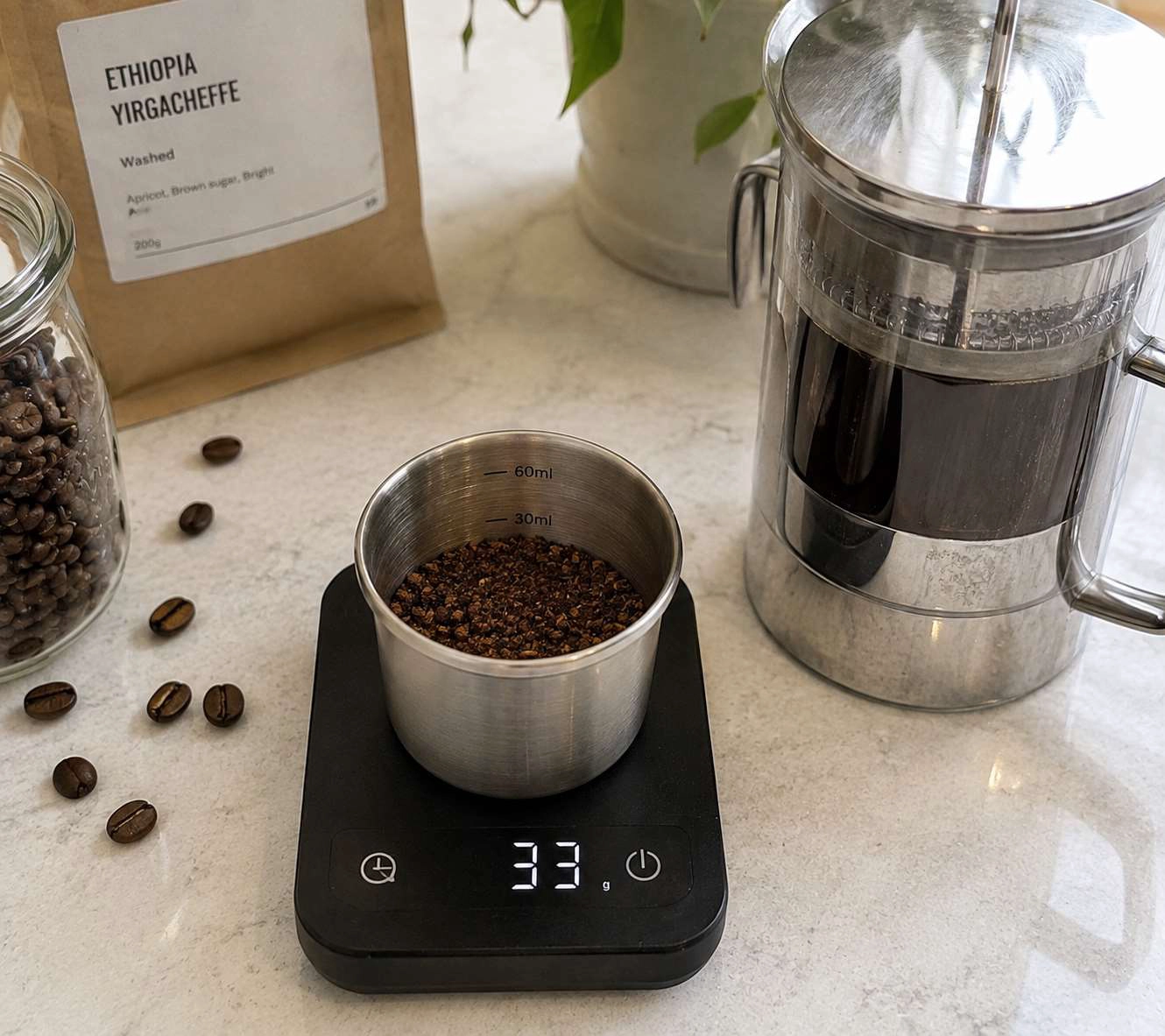
French press recipes often sound more certain than they really are. One guide starts at 1:14, another uses 1:15, and another is close to 1:18. The useful question is not which number wins. It is which starting point gives you a cup you enjoy, and how you change it without losing control of the result.
For most people, 1:15 sits in the practical middle: enough coffee for a full body without making the first attempt unnecessarily heavy. Weighing both coffee and water makes the result repeatable. If you only have a spoon, use the spoon estimate as a temporary starting point, because roast level, bean density, and grind shape can change how much coffee fits in one scoop.
The ratio is written as coffee to water. A 1:15 recipe means one gram of coffee for every 15 grams of water. For everyday brewing, one milliliter of water is close enough to one gram to make the calculation easy.
Do not calculate from “3-cup” or “8-cup” alone. Those labels often use small manufacturer cup measurements rather than an 8 oz drinking cup. Check the brewer’s ml or oz capacity, then use the water you actually pour. Coffee grounds and safe headspace can also reduce the usable volume below the capacity printed on the box.
| Water Used | Strong 1:12 | Balanced 1:15 | Mild 1:17 |
|---|---|---|---|
| 350 ml / 12 oz | 29 g coffee | 23 g coffee | 21 g coffee |
| 500 ml / 17 oz | 42 g coffee | 33 g coffee | 29 g coffee |
| 600 ml / 20 oz | 50 g coffee | 40 g coffee | 35 g coffee |
| 750 ml / 25 oz | 63 g coffee | 50 g coffee | 44 g coffee |
| 1 L / 34 oz | 83 g coffee | 67 g coffee | 59 g coffee |
No scale? Begin with roughly one heaped tablespoon of coarse coffee per 120 ml of water. That gives about four tablespoons for 350 ml, five to six for 500 ml, and ten to eleven for 900–1,000 ml. Treat these as rough estimates. A tablespoon of dense light-roast coffee and the same spoonful of a darker roast will not necessarily weigh the same.
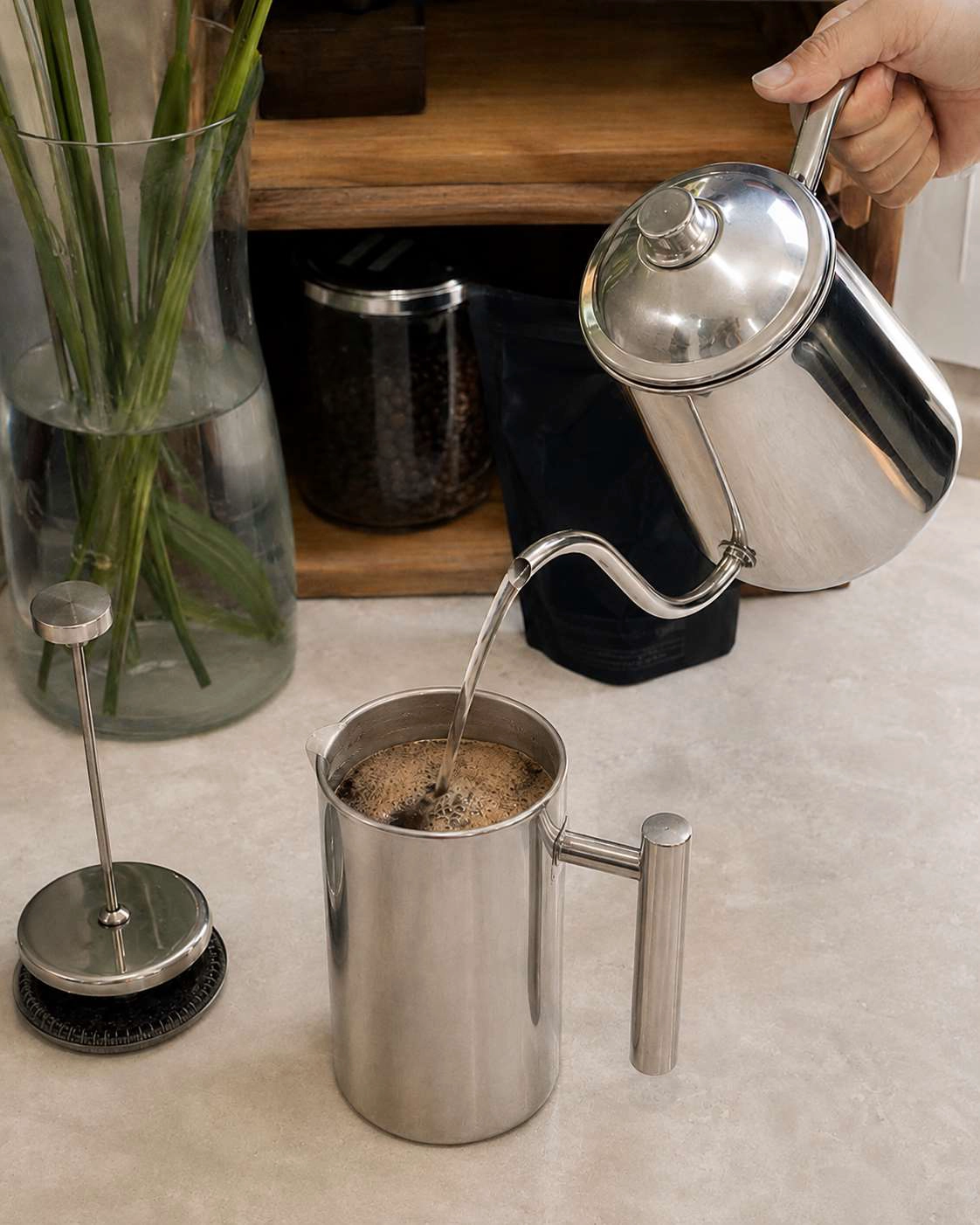
This simple route is the best place to begin because it reveals which variable needs work. If the first cup is weak, do not simultaneously add more coffee, grind finer, and wait longer. Change one thing, taste again, and write down the result.
1:12–1:14: Choose this range when you want a stronger, heavier-bodied cup or when a 1:15 brew tastes thin to you.
1:15–1:16: This is the most useful starting range for a balanced daily brew. It is easy to strengthen or lighten after one tasting.
1:17–1:18: Use more water when you prefer a lighter cup with less weight, or when a concentrated recipe masks the character of the coffee.
Strength and extraction are related, but they are not the same problem. If the coffee tastes pleasantly extracted but simply too intense, add water or move from 1:15 to 1:16. If it tastes sour and hollow, adding water usually makes the problem larger; the brew may need more contact time, a slightly finer grind, or hotter water.
The same distinction helps with a cup that tastes bitter. A 1:12 brew can be strong without being unpleasant. Bitterness points first toward excessive extraction, an unsuitable roast-and-temperature combination, too many fine particles, or coffee left in the press after plunging. Diagnose the taste before changing the dose.
A coarse and even grind is the easiest setting for the standard four-minute method. It gives the metal filter a better chance of holding back grounds and keeps the plunger moving smoothly. A blade grinder often creates a mixture of large fragments and powder; the large pieces can under-extract while the powder makes the cup muddy. A burr grinder usually improves consistency before any new recipe does.
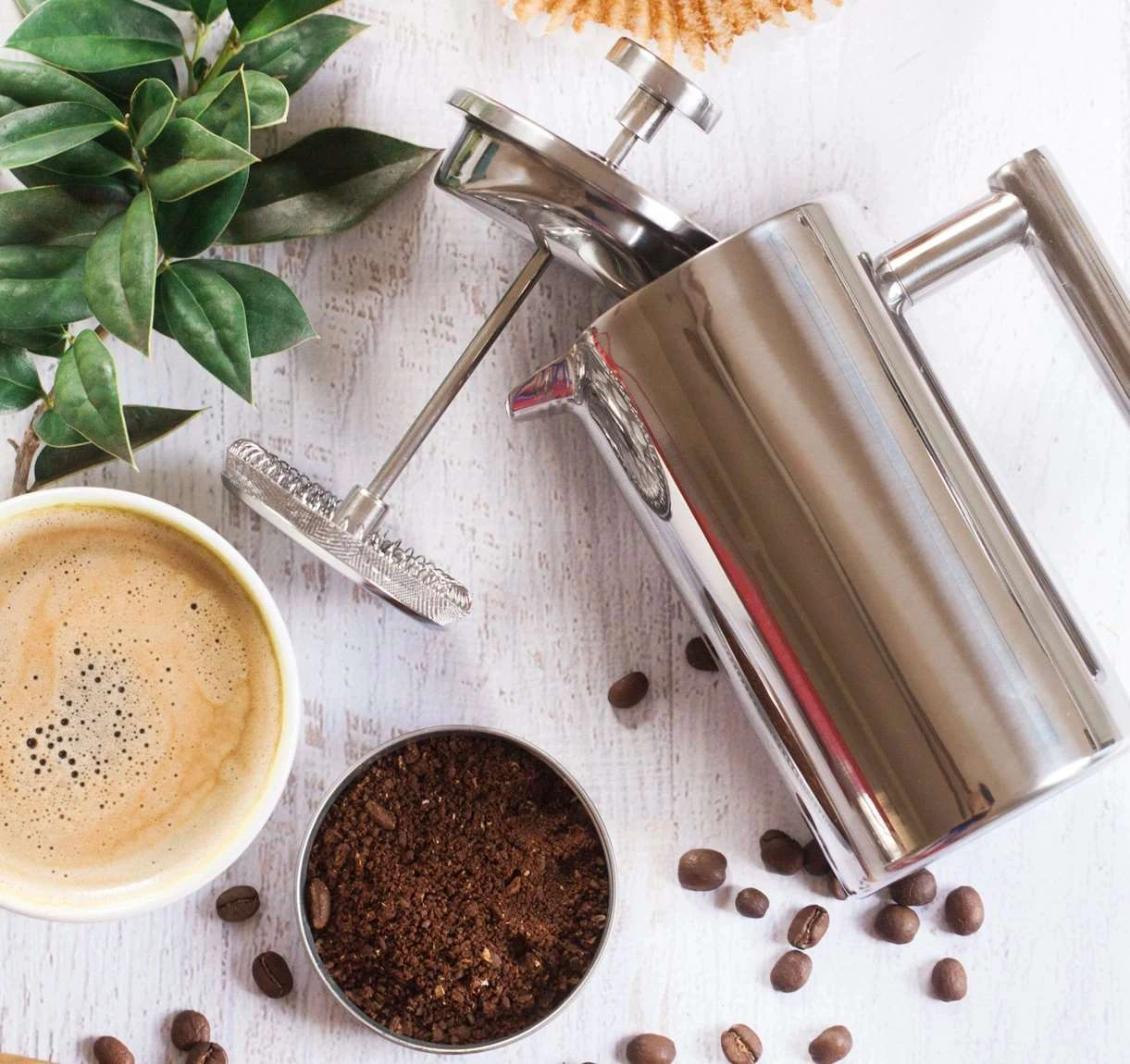
“Coarse” is still a range, not a single universal grinder number. If the coffee is weak while the ratio and water temperature are correct, move slightly finer before making a large dose change. If the plunge is hard, the cup is gritty, or a thick layer of silt settles at the bottom, move coarser and press more gently.
Starbucks at Home places French press water in the 195–205°F / 90–96°C range and uses about four minutes as its standard method. If you do not use a thermometer, taking the kettle off the boil and waiting roughly 30 seconds is a practical routine.
Roast level changes the useful end of that range. Dark roasts that become harsh easily often respond to slightly cooler water, a coarser grind, or a shorter 3.5–4 minute steep. A light roast that tastes sour or empty may need hotter water, a slightly finer grind, or 4.5–5 minutes. Adjust one variable first so you know what fixed the cup.
The standard method is popular because four minutes is fast, repeatable, and usually close enough to show the next adjustment. It is not a rule that every bean must obey. The timer tells you what happened; your taste tells you whether to repeat it.
If you like French press body but dislike sediment, try a longer settling method instead of forcing all recipes into the four-minute plunge. The approach widely associated with James Hoffmann’s French press technique uses about 60–70 g of coffee per liter as a working range, breaks the crust after four minutes, removes the floating foam and grounds, then allows the fine particles to settle for several more minutes.
The total process takes roughly nine to twelve minutes, so it is slower than the daily method. The trade-off is often a cleaner cup with less disturbed sediment. Blue Bottle’s no-press guide takes the same settling idea even further. Choose the longer route when clarity matters more than speed; keep the four-minute method when you want a straightforward morning brew.
| Problem | Most likely cause | First change to try |
|---|---|---|
| Bitter or harsh | Grind too fine, water too hot for the roast, steep too long, or coffee left in the press | Grind slightly coarser or shorten the steep; pour immediately |
| Weak or watery | Too little coffee, grind too coarse, or contact time too short | Move from 1:17 toward 1:15, then reassess |
| Sour or hollow | Under-extraction | Use hotter water, brew 30–60 seconds longer, or grind slightly finer |
| Muddy texture | Too many fine particles or an uneven grind | Use a more even, coarser grind; avoid disturbing the settled bed |
| Too much sediment | Fine grind, fast plunging, or pouring the final silty liquid | Press slowly and leave the last small amount behind |
| Too strong but otherwise clean | Ratio is too concentrated for your preference | Move toward 1:16–1:17 or dilute the finished cup |
| Plunger is hard to push | Grind too fine or filter loaded with fines | Stop forcing it; lift slightly, then press gently and grind coarser next time |
The most common “recipe failure” is changing several variables at once. Keep the coffee, water, ratio, and method fixed, then change only grind or time. Two or three notes are usually more useful than copying a new recipe every morning.
Start at 1:15. Move toward 1:12–1:14 for more strength and body, or toward 1:16–1:18 for a lighter cup. The best ratio is the one you can repeat and adjust for the coffee you are using.
For 350 ml / 12 oz of water, use about 23 g at 1:15, 29 g at 1:12, or 21 g at 1:17.
For a full 1 liter / 34 oz of water, use about 67 g at 1:15. If your press cannot safely hold a full liter after adding grounds, weigh the water you actually use and divide it by 15.
As a rough fallback, begin with one heaped tablespoon per 120 ml of water. Use a scale when possible because tablespoons change with bean density and grind size.
Four minutes is the standard starting point. Try 3.5–4 minutes for a dark roast that becomes bitter easily, or 4.5–5 minutes when a lighter coffee tastes under-extracted. A settling method can take nine to twelve minutes because the extra time is used to let fines sink.
Use a coarse, even grind for the standard method. Some longer settling techniques use a somewhat finer grind, but that works because the method, agitation, and final pour are also different.
You can, but pre-ground coffee is often finer than ideal for a French press. Expect more resistance and sediment. Press gently, avoid pouring the final silty liquid, and choose a coarse-ground option next time.
Making French press products part of a coffee-service or private-label range?
Review our stainless steel coffee tools and double-wall stainless steel French press. Send us your target capacity, construction, finish, logo, packaging, quantity, and destination market so we can evaluate a suitable product and sampling route.