











ShenZhen E-BON Industrial Co..Ltd
-Professional manufacturer for the stainless steel products
A jigger is a small bar tool for measuring spirits and other cocktail ingredients. Most jiggers are double-sided: two metal cups of different sizes joined in the middle, shaped like an hourglass. The classic US jigger holds 1.5 oz (about 44 ml) on the large side and 1 oz or 0.75 oz on the small side. Many modern jiggers use other pairs, such as 1 oz / 2 oz or 30 / 60 ml, so the marks on your jigger matter more than the name.
When an old recipe says "one jigger," it usually means 1.5 oz. Wiktionary gives the large end as typically 1½ fl oz, and Merriam-Webster puts a jigger at 1 to 2 ounces.
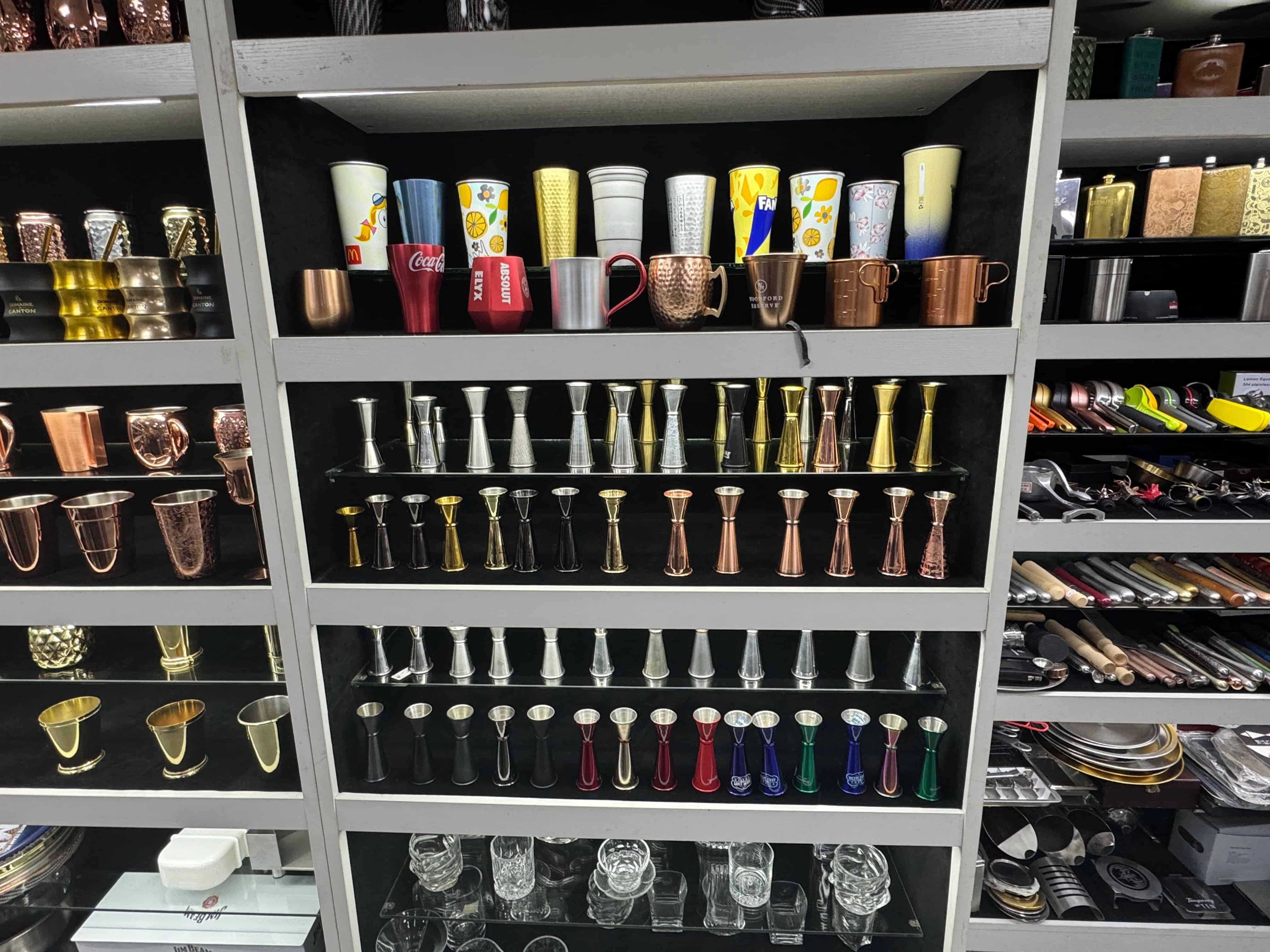
The tool itself comes in many sizes. These are the pairs you will see most often, converted at NIST's 29.57 ml per US fluid ounce:
| Marked on the jigger | In the other unit | Where you see it |
|---|---|---|
| 0.75 / 1.5 oz | 22.18 / 44.36 ml | Classic US jigger |
| 1 / 2 oz | 29.57 / 59.15 ml | Japanese-style jiggers, recipes built in whole ounces |
| 15 / 30 ml | 0.51 / 1.01 oz | Metric half and full measure |
| 25 / 50 ml | 0.85 / 1.69 oz | Bars that pour the UK 25 ml measure |
| 30 / 60 ml | 1.01 / 2.03 oz | Metric jiggers sold as the "1 / 2 oz" size |
Many jiggers also have lines inside the cups for smaller amounts, such as 0.5 oz or 15 ml. Check whether each marked size is at the rim or at a line before you pour.
A cocktail is a balance of strong, sour and sweet. A daiquiri with a little too much lime tastes sharp, and one with a little too much syrup tastes flat. Measuring each ingredient makes the drink taste the same every time you make it, and it lets you follow a recipe the way it was written.
For a bar, a jigger also controls cost. Every overpour is spirit the bar paid for and did not charge for, and it adds up over a night. Experienced bartenders can free pour with a pour spout and a count, but it takes practice to stay accurate. A jigger gets you there on the first drink.
Holding the jigger between your index and middle finger makes it easy to flip from one side to the other.
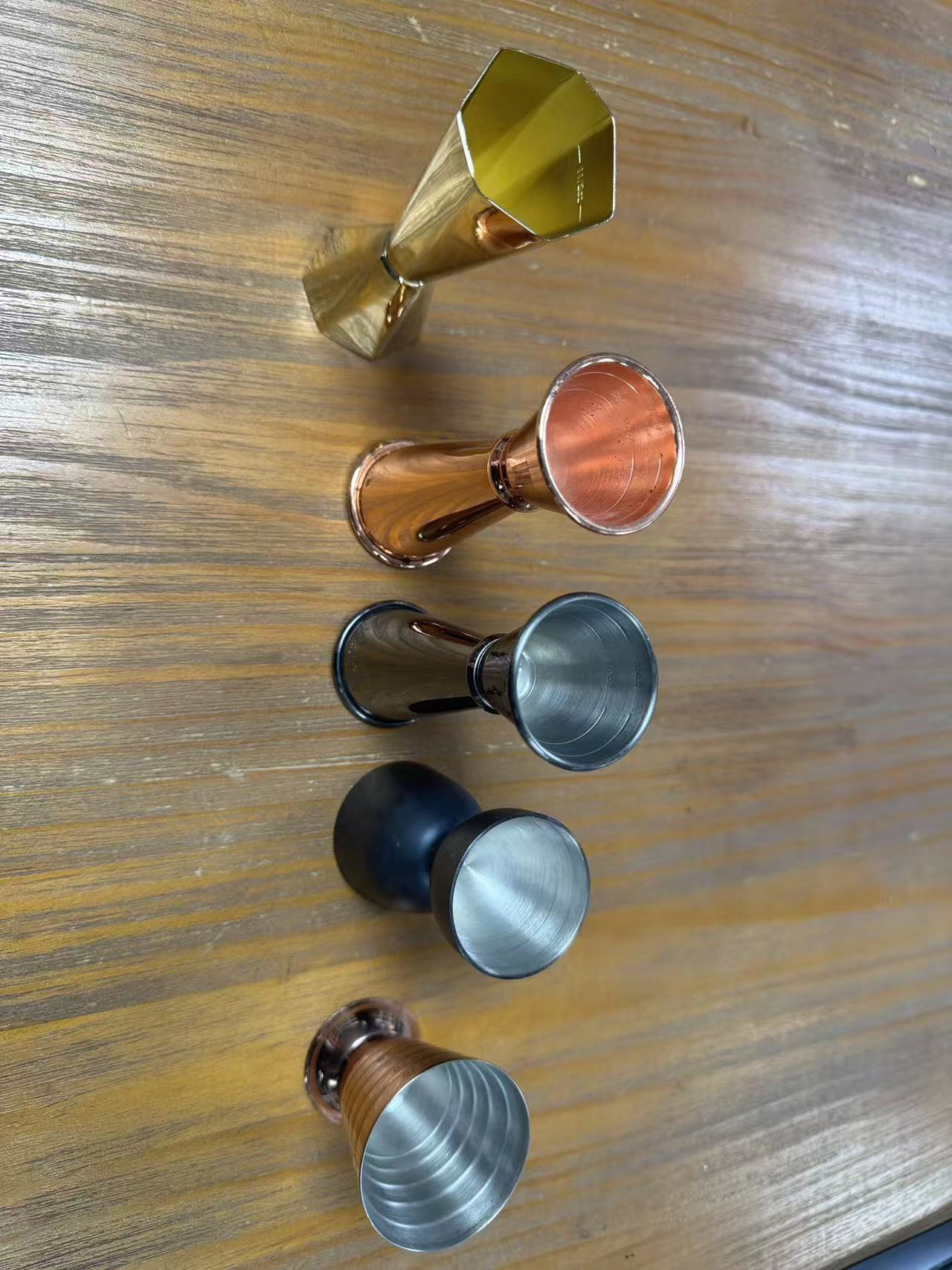
I would start with a Japanese or bell jigger in the size your recipes use most, because both make an overpour easy to see. Add a graduated one if you often need odd amounts.
A jigger is a measuring tool. A shot glass is a glass you drink from. Some shot glasses have accurate lines and can stand in for a jigger, but many decorative ones were made for looks and do not hold a set amount. If you use a shot glass to measure, check it first with water and a measuring cup.
Nobody knows for sure. Some accounts tie the word to sailors' slang, others to "thingamajig." The double-cone design has a clearer history: on July 29, 1893, Cornelius Dungan of Chicago filed a US design patent for a liquor measure made of two hollow cones placed point to point. You can see the drawing in US Design Patent D22,768.
No. 1.5 oz is the traditional jigger pour, but jiggers are sold in many sizes. Go by the marks on the tool.
There is no single answer. A "shot" means different amounts in different countries and bars, and jiggers come in many pairs. Go by the marked capacity.
For small amounts, yes. A US tablespoon is about 15 ml, according to NIST, so two tablespoons make roughly 1 oz. It gets slow for drinks with several ingredients.
Only if the rim is the measure you need. If the amount is marked by a line inside the cup, fill to the line.
Put the empty jigger on a kitchen scale, set it to zero, and fill it with room-temperature water to the line you want to check. One gram of water is about one milliliter, so a 30 ml line should read about 30 g and a 1 oz line about 30 g. If a line is well off, stop using it.
Our Japanese jigger (1 oz / 2 oz, 30 / 60 ml) is verified by third-party testing to a tolerance of ±0.5 ml. On a kitchen scale, that means each line reads within 0.5 g of its target, which also works as a pass line when you check incoming samples.
If you are ordering jiggers for a bar group or your own brand, put these on the RFQ: the unit system, both capacities, whether each one is at the rim or a line, every inside line you need, and how the lines are marked. We confirm each capacity with you before the sample is made. Our jigger buying guide covers sourcing in more detail, and you can see the Japanese jigger as a current reference.