
ShenZhen E-BON Industrial Co..Ltd
-Professional manufacturer for the stainless steel products
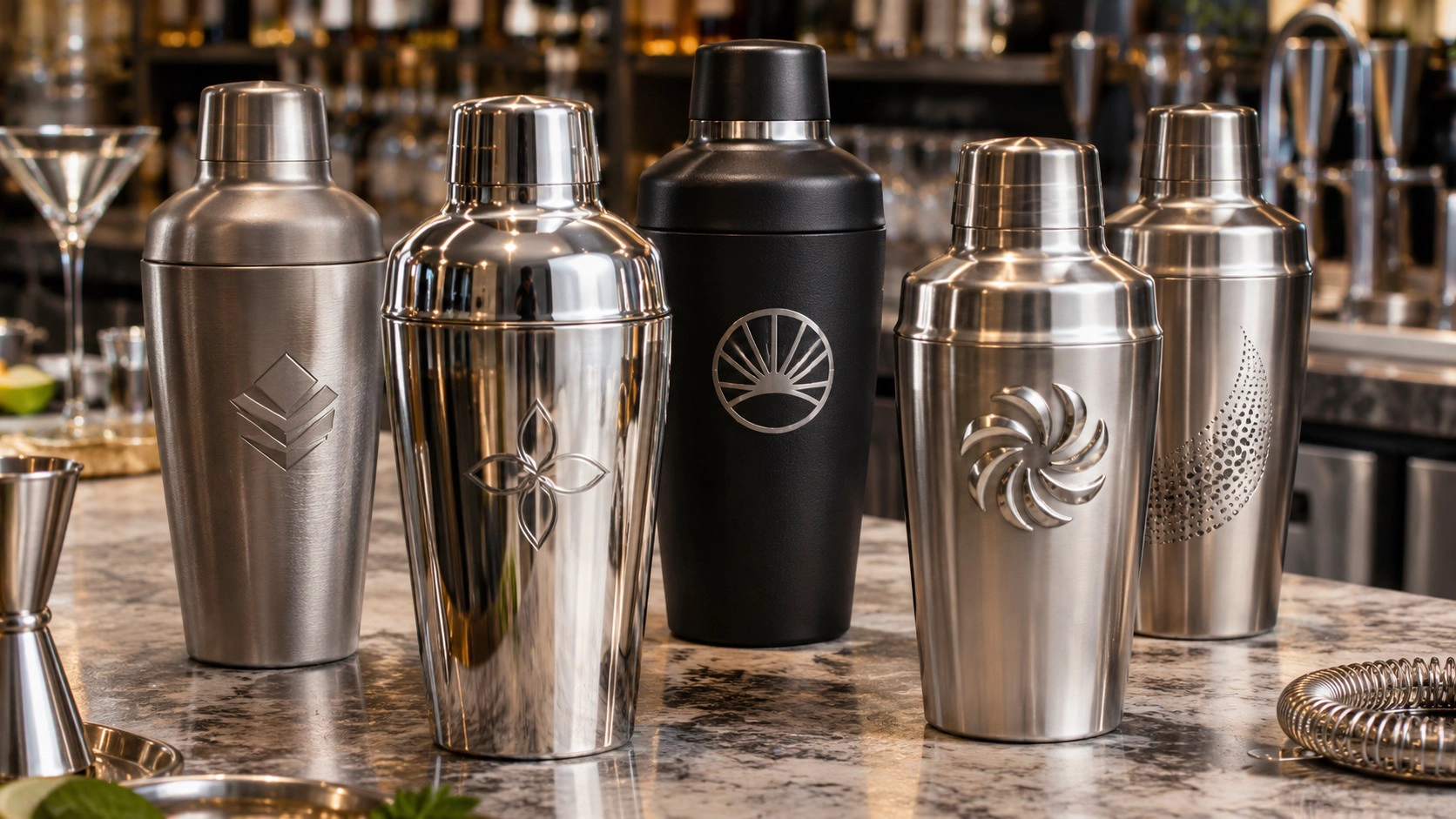
Most buyers open a custom cocktail shaker inquiry with the same question: which logo method lasts the longest? Wrong starting point. On the production floor, there is no universal "best" process, only the right fit for your surface finish, your wash cycle, and your order volume.
Pick a process without weighing those three factors and you either burn budget on metal dies you will never amortize, or watch sharp brand ink peel off after a few busy weeks behind a bar. The same pairing logic applies across metal barware when matching surface finishes with logo methods: the steel finish controls contrast, the dishwasher controls survival, and the run size controls what setup fees make sense.
Use the table below to narrow your shortlist before sampling.
| Your situation | Use this method | Why |
|---|---|---|
| Working bar, dishwasher every night | Laser engraving or chemical etching | The mark is in the steel, not on it |
| Mirror polish, want crisp contrast | Laser engraving | Cuts a clean frosted or dark mark that reads sharply against a reflective wall |
| Brushed/matte finish, understated branding | Chemical etching | Creates a slightly recessed, tone-on-tone mark that blends naturally into satin steel |
| Powder-coated or colored body, silver contrast logo | Laser through the coating | Strips the color layer cleanly to expose bright raw stainless underneath |
| Full-color artwork, gradients | Decal (water transfer) | Reproduces blends and detailed graphics without stacking per-color screen fees |
| One- or two-color logo, gift/promo use, hand wash | Silk screen | Delivers exact solid Pantone colors at a practical unit cost for simple artwork |
| Long-term program at repeat volume | Embossing or relief in tooling | Builds the logo directly into the metal geometry for permanent tactile branding |
If these shakers are going into a commercial bar, stop at the first two rows. Everything below them is for retail gift sets, promotional runs, and multi-year spirit programs.
Laser engraving earns the top slot for commercial work: dishwasher-proof, fast to sample, and zero tooling fees starting at our 100-unit minimum. A focused beam oxidizes or ablates a shallow layer of the stainless surface, or burns cleanly through a painted, plated, or powder-coated finish, leaving your logo directly in the metal.
Because no ink sits on top of the wall, high-temperature commercial dishwashers, citric acid, and bar sanitizer have nothing to peel away. On raw stainless steel, the mark outlasts the shaker. On a colored or powder-coated body, the beam removes the coating to reveal bright stainless underneath, so the logo stays legible even after the surrounding finish picks up knocks from ice scoops and rail wear.
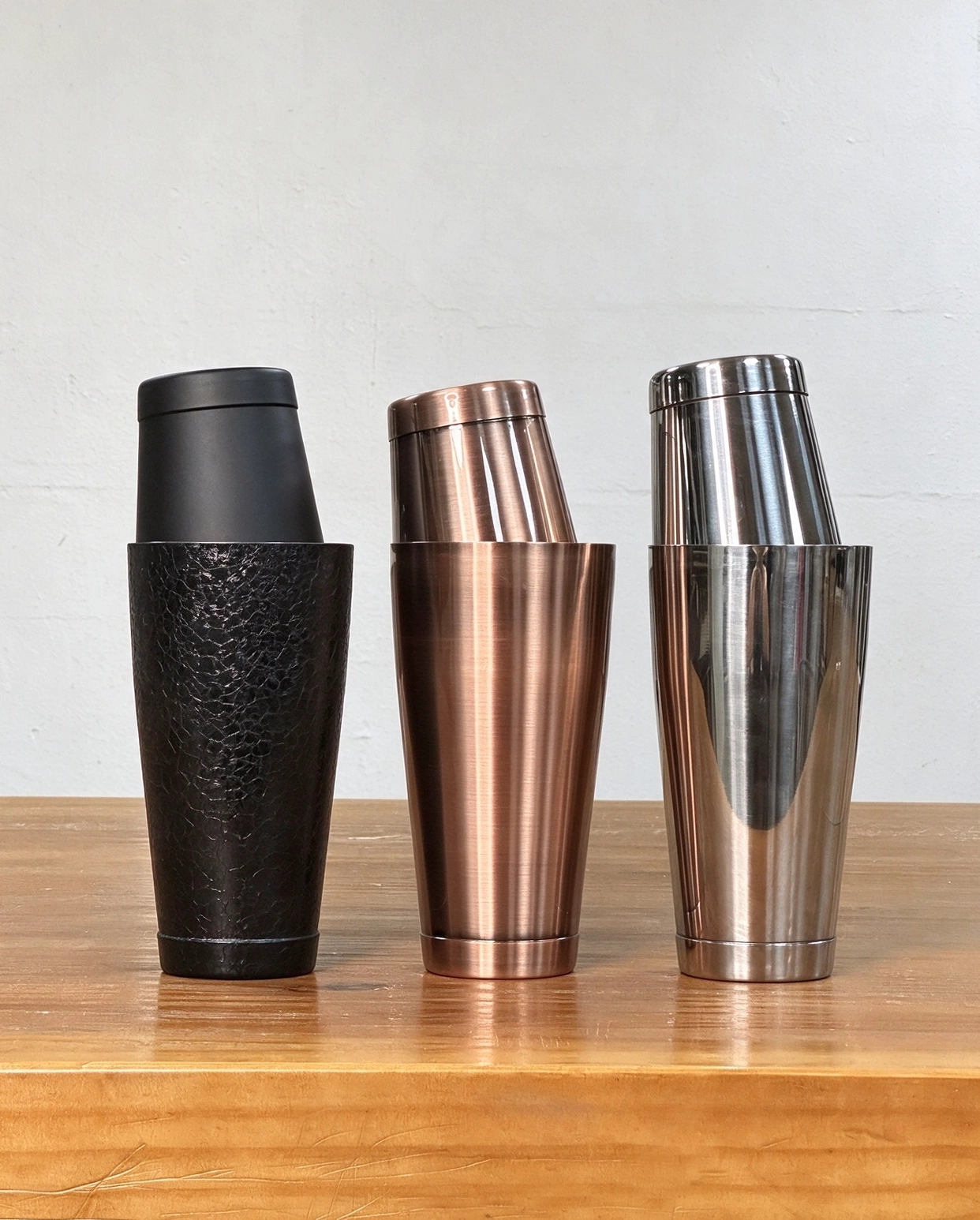
What buyers often overlook is how dramatically the base finish shifts contrast. On mirror-polished steel, laser engraving pops: a dark-annealed or frosted gray mark reads clearly from across the counter. Put that exact same light pass on a heavy brushed finish and the logo can disappear at oblique angles unless we dial in a darker marking setting. That is why a digital render tells you almost nothing about real legibility. The other hard limit is color. Laser gives you shades of gray, charcoal, or raw silver through a coating, never solid Pantone reds or blues.
On cost, laser is the easiest entry point we run. No screens, no chemical masks, no steel dies. You pay for machine cycle time, which keeps small runs at 100 units straightforward and makes splitting an order across multiple SKU designs painless.
Choose it when your custom cocktail shaker is built for commercial dishwashers, uses a colored coating where you want a bright silver mark, or starts at a lower test quantity.
Skip it when your brand guide requires exact Pantone color matching or multi-color artwork.
Reach for chemical etching when you want a quieter, recessed mark with tactile depth, especially on brushed or matte stainless steel where laser contrast can look flat. We apply a protective resist film carrying your logo onto the shaker body, expose the open areas to an etching solution that dissolves a thin layer of metal, then strip the resist away.
Like laser engraving, chemical etching modifies the steel itself rather than bonding pigment to the surface. Commercial bar dishwashers, harsh detergents, and nightly wet handling will not lift it off. Run a thumb over an etched wall and you feel a crisp recessed edge; look at it under warm bar lighting and the soft frosted cavity catches light without shouting. Hospitality groups and spirits brands rely on that same quiet permanence when ordering bulk etched stainless steel drinkware built for years of back-bar rotation.
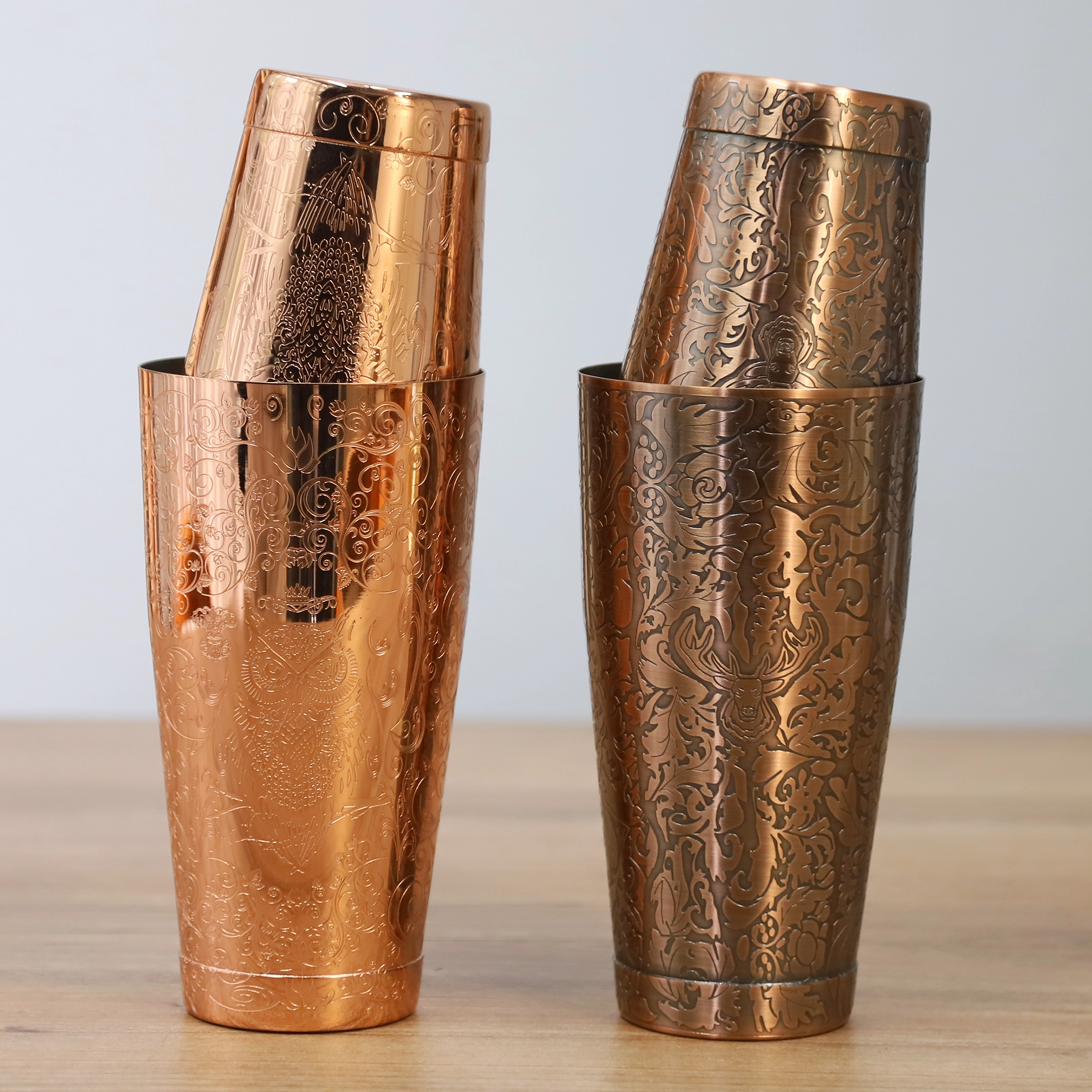
Artwork geometry matters more here than with a fiber laser. Etching bites slightly sideways as it cuts downward, so ultra-thin hairlines or tightly packed serif fonts can lose crispness unless we open up the line spacing before making the film mask. Some buyers ask for paint-filled etched logos to get both depth and color, and we can do it. Keep one expectation grounded: the recessed metal stays forever, while the paint inside will still wear before the steel does.
Setup sits between laser and metal tooling. You cover mask prep and batch tank processing, which remains practical at a 100-unit MOQ while keeping repeat per-piece pricing disciplined on larger commercial orders.
Choose it when you want dishwasher-safe permanence with physical depth and understated tonal contrast on brushed or matte steel.
Skip it when your logo relies on multiple brand colors, micro-fine typography, or quick one-off name variations.
Silk screen exists for one reason: your brand demands exact solid Pantone colors on a retail, gift, or promotional shaker meant for hand washing. In production, ink is pressed through a tensioned mesh stencil, one dedicated screen per color, onto the curved shaker body and then cured to bond with the surface.
Now the honest catch, and any straight supplier will say it out loud: silk screen ink sits on top of smooth, non-porous stainless steel. Hand wash it with mild soap and it stays vivid for home bar use and corporate gift sets. Run it through a commercial under-bar dishwasher every shift, and high heat plus alkali detergent will attack that surface bond first. That is not poor workmanship; it is simply what happens to surface ink on slick metal under commercial chemistry.
Cost scales directly with color count. Each color requires its own mesh screen and registration pass, so one or two flat colors stay economical even near 100 pieces, whereas a four-color crest stacks setup fees and tightens alignment tolerances. We walk through screen charges and labor drivers in detail in our breakdown of how custom barware pricing works.
Choose it when you need one or two exact Pantone colors for a hand-wash retail line, gift box, or promotional giveaway.
Skip it when the shakers will see nightly commercial dishwashers or your artwork includes gradients.
Water-transfer decal earns its place when your custom cocktail shaker carries full-color illustrations, wraparound patterns, or smooth gradients that silk screen cannot reproduce cleanly. The full graphic is printed onto specialized transfer paper, floated onto the steel in water, positioned by hand, and baked or sealed with a clear protective coat.
Durability mirrors silk screen with one extra catch: because a decal applies a continuous printed film layer, sharp metal-on-metal scrapes can nick the film edge. For seasonal retail editions, decorative gift packaging, and home-use promos washed by hand, it holds up well and delivers visual punch no single-color method can touch. Behind a high-volume cocktail bar where tins are slapped apart all night and cycled through commercial washers, a decal will chip and cloud.
From a budgeting angle, decal avoids stacking individual mesh screens for every hue, making complex four-plus color art workable without paying for multiple registration setups. Hand application on tapered steel still takes skilled labor, so unit cost runs higher than a one-color screen print.
Choose it when your design depends on gradients, photographic detail, or multi-color illustration for a hand-wash retail or promo program.
Skip it when the product needs commercial bar durability or an understated, all-metal aesthetic.
Commit to embossing only when you have a proven shaker SKU you plan to reorder consistently across multiple runs. A custom steel die stamps your logo straight into the stainless wall during forming, raising the artwork out of the metal itself.
Durability is a non-issue; you cannot wash, scratch, or chip away shaped steel. The real decision is capital commitment, not performance. Cutting custom dies requires upfront tooling investment, and stainless steel resists tight radii, meaning delicate script and crowded crests soften during stamping. Bold, clean geometry holds its edge. Brands building multi-season custom cocktail shaker sets spread that tooling cost across repeat purchase orders until unit branding cost drops close to zero; a one-off batch never earns the die back.
Choose it when you run a repeat-volume flagship SKU and want permanent, zero-consumable branding built into the steel.
Skip it when you are testing a new design at 100 units or expect a brand refresh soon.
Relief makes sense when standard embossing feels too shallow and you want deep, sculptural, multi-level branding that defines the silhouette of the tin. Deeper multi-stage tooling, or a separately formed metal relief emblem mounted cleanly to the body, creates raised contours you feel the second you pick up the shaker.
Because the mark is solid metal, commercial washing will not strip it away, though tighter recessed pockets around heavy lettering do need thorough rinsing so syrups and citrus pulp do not collect in the corners. Compared with standard embossing, relief demands heavier tooling, tighter forming control, and longer mold lead times, raising the upfront commitment before per-unit economics level out. It belongs on flagship spirits displays where physical weight sells the brand.
Choose it when a heavy, sculptural emblem anchors a long-term program with predictable repeat volume.
Skip it when fast launch timelines, tight tooling budgets, or low initial order volumes drive the project.
Most logo headaches we solve on the factory floor trace back to a rushed sample approval, not a bad machine. Before signing off on mass production for a custom cocktail shaker, lock down five specifics.
If you already have a logo file and a target finish in mind, send both over along with how your buyers will wash the shakers. Because we handle design, forming, polishing, all six logo processes, and packaging inside our own factory, customizing material, size, color, logo, and packaging from a 100-unit MOQ, we will come back with a straightforward process recommendation and produce a sample on your actual finish to approve before mass production. Browse our cocktail shaker lineup to pick your base shape, or review our in-house OEM customization capabilities when you are ready to start sampling.