When sourcing stainless steel cutting boards for retail, food service, or hospitality distribution, the difference between a reliable supplier and a problematic one usually comes down to three things: material grade, manufacturing consistency, and supply chain transparency. This guide covers what buyers actually need to evaluate before placing a bulk order.
Material Grade: Why 304 vs. 201 Matters for Your Margins
Not every "stainless steel" board on the market is what it claims to be. The two most common grades in kitchenware manufacturing are 304 and 201.
304 stainless steel contains roughly 18% chromium and 8% nickel, giving it strong corrosion resistance and stability against acidic foods. It costs more per ton than 201, but it holds up better over years of commercial use and carries less risk of discoloration or pitting.
201 stainless steel substitutes manganese for some of the nickel content, which lowers raw material cost but also reduces corrosion resistance, particularly with prolonged exposure to salt, acid, or moisture. Some suppliers label 201 product as 304 to win price-sensitive orders. Buyers who plan to resell into markets with food-safety inspections or retail compliance requirements should ask for mill certificates or third-party test reports (such as SGS or equivalent) rather than relying on the supplier's labeling alone.
For buyers, the practical question isn't "which grade is better" — it's "which grade fits the price point and use case for your end customer." A board destined for a budget retail channel may reasonably use 201 if priced and marketed accordingly; a board sold as premium or food-service grade should be verified 304.
Construction Factors That Affect Durability
Beyond the steel grade itself, a few construction details affect how the board performs over its service life:
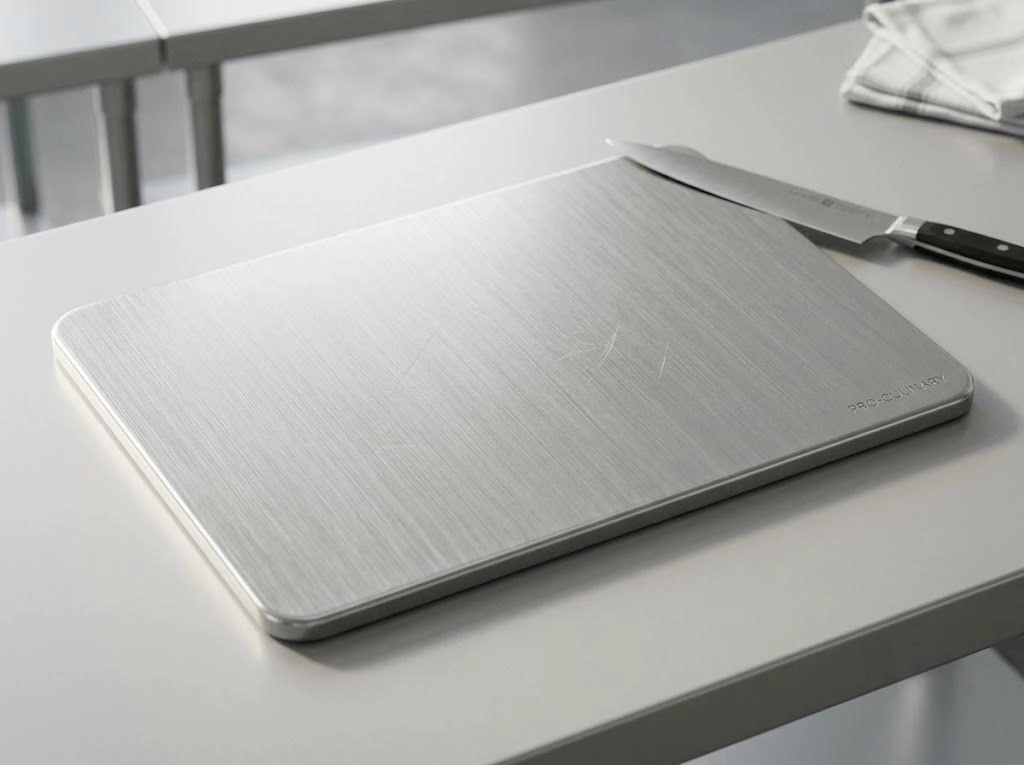
Surface finish and gauge thickness influence both scratch resistance and how the board feels in hand. Thinner gauge steel is more prone to warping, especially in boards with a hollow or composite core.
Boards combining a stainless steel layer with a PP (polypropylene) cutting surface are common in the mid-market segment — the steel provides rigidity and a hygienic backing or juice groove, while the PP surface is gentler on knife edges than solid steel. This two-material construction is worth understanding because it changes how the product should be marketed: it is not a solid stainless cutting surface, and claims should reflect that accurately to avoid returns or complaints from end users who expect an all-metal surface.
Edge sealing and rivet/weld quality matter more for repeat business than almost any other spec — this is where cheaper manufacturing shortcuts show up first, typically within the first few months of food service use.
Hygiene and Compliance Considerations
Stainless steel's non-porous surface is genuinely easier to sanitize than wood and resists staining and odor absorption better than most plastics. That said, scratches from repeated knife use can still develop on any cutting surface over time, including steel, and scratched surfaces of any material can harbor bacteria if not cleaned properly. The realistic claim to make to your buyers is that stainless steel requires less maintenance and tolerates high-heat sanitizing (dishwasher-safe, in most solid-steel or steel-PP combination designs) — not that it is immune to wear.
For buyers supplying restaurants or food processing facilities, this maintenance advantage often matters more than raw hygiene claims, since dishwasher compatibility and fast turnaround between uses directly affects kitchen labor costs.
Sample Lead Time and Minimum Order Quantity
For buyers evaluating fit before committing to a bulk order, we provide physical samples within 10–20 business days of confirming specifications (board dimensions, steel grade, surface finish, packaging). Custom branding or tooling adjustments fall within the same window unless new mold development is required, in which case timeline is quoted separately.
Minimum order quantity for customized runs (logo, packaging, or dimension changes) starts at 500 units. Standard catalog items may be available below this threshold — confirm with your sales contact based on current production scheduling.
What Wholesale Buyers Should Ask Suppliers
A few questions separate serious manufacturers from trading companies repackaging unknown stock:
Can you provide mill certificates confirming actual steel grade (304 vs. 201)? What is your minimum order quantity, and does it scale with customization (logo, packaging, sizing)? What is standard lead time for a first order versus repeat orders? Do you support OEM/ODM development, and what is the sampling process and cost? What export packaging do you use, and what is your defect/breakage rate on container shipments?
Suppliers who answer these directly, with documentation, are generally lower-risk partners than those who pivot back to generic product benefits.
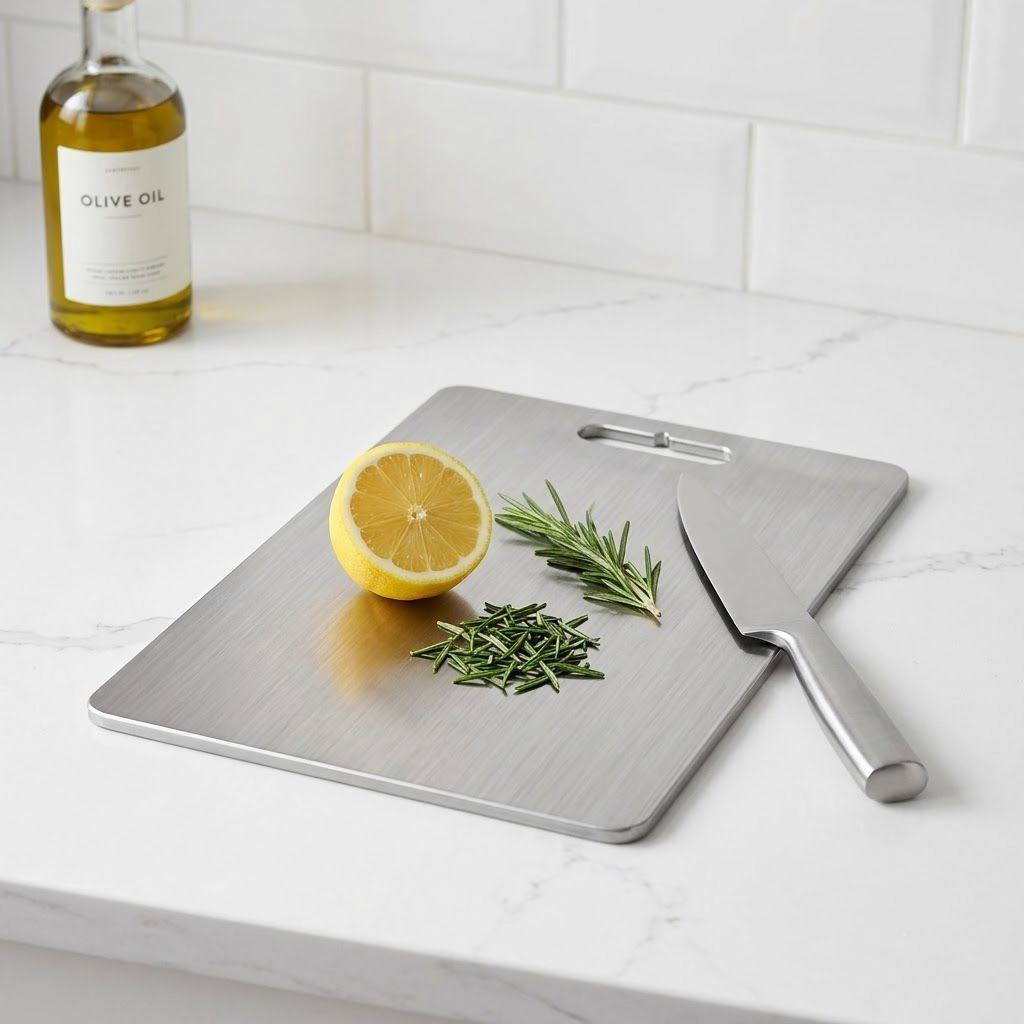
Submit Your Specifications for a Sample Quote
If you're evaluating stainless steel cutting boards for your product line, send over your target dimensions, steel grade preference, and order volume. With a 10–20 day sample turnaround and a 500-unit MOQ on customized orders, most buyers can move from initial inquiry to a confirmed sample in hand within the same sourcing cycle — submit your specs or BOM to get a tiered quote started.