










English English 한국어 한국어
ShenZhen E-BON Industrial Co..Ltd
-Professional manufacturer for the stainless steel products

How to Properly Maintain Your Hip Flask

Home > News > Industry News  > How to Properly Maintain Your Hip Flask

News

Etched Stainless Steel Tumbler Bulk Orders: Artwork, Finish, and Defect-Prevention Checklist

Etched Stainless Steel Tumbler Bulk Orders: Artwork, Finish, and Defect-Prevention Checklist

2026-09-14 11:03:55

Consolidates the etched-tumbler cluster from the 40-topic pool (production checklist, artwork requirements, defect prevention) into one buyer-facing guide: what etching is and how it differs from printing/debossing/embossing, artwork file requirements before quoting, defect-prevention checkpoints specific to etched surfaces (etching depth, edge deburring, pattern registration, cross-finish consistency), and MOQ/packaging using the real egg-shaped 20oz 304 stainless tumbler as a reference spec.

304 vs 201 Stainless Steel Barware: What to Confirm Before You Compare Quotes

304 vs 201 Stainless Steel Barware: What to Confirm Before You Compare Quotes

2026-09-10 12:24:55

Explains the material difference between 304 and 201 stainless steel, why 201 shows up in aggressively priced barware quotes, where the difference actually shows up after an order ships (corrosion, finish stability, the unreliable magnet-test shortcut), and gives buyers a concrete way to confirm grade in writing before comparing supplier quotes.

How to Evaluate a Barware Supplier: Factory Visit, Audit Support, Third-Party Testing, and Export Documents

How to Evaluate a Barware Supplier: Factory Visit, Audit Support, Third-Party Testing, and Export Documents

2026-09-07 10:50:09

Gives B2B barware buyers a practical way to tell a manufacturer from a trading company, explains what ISO 9001, Sedex 4-Pillar, and BSCI audits actually verify, and covers third-party testing and export documentation to confirm before sending an RFQ.

Cocktail Shaker Quality Control Checklist for Importers and Private Label Brands

Cocktail Shaker Quality Control Checklist for Importers and Private Label Brands

2026-09-02 15:02:24

A practical quality control checklist for importers and private label brands inspecting cocktail shaker samples and bulk lots. It covers approved references, Boston and Cobbler fit, leak testing, formed edges, dimensions, capacity, finishes, logos, function, packaging, defect records and lot release.

Cocktail Shaker OEM vs ODM: Which Is Better for Your Project?

Cocktail Shaker OEM vs ODM: Which Is Better for Your Project?

2026-08-28 11:55:09

This BOFU comparison helps cocktail shaker buyers choose OEM, ODM or a hybrid route by identifying who owns the product definition, what must be developed, how samples differ and what information a manufacturer needs for an accurate quotation.

Custom Cocktail Shaker Sets for Private Label Barware Brands

Custom Cocktail Shaker Sets for Private Label Barware Brands

2026-08-28 11:16:08

A BOFU guide for private label barware brands defining how to specify, sample and quote a custom cocktail shaker set while keeping its components, finish, branding, packaging and repeat orders under one product system.

Why Does French Press Coffee Have Sediment? How Filter Design, Grind Size & Plunger Fit Affect the Cup

Why Does French Press Coffee Have Sediment? How Filter Design, Grind Size & Plunger Fit Affect the Cup

2026-08-19 15:39:31

French press sediment does not come from one cause. This article separates normal metal-filter silt from excess sludge and visible grounds, then shows how grind distribution, mesh fineness, filter layers, edge fit and plunger resistance help identify the source.

How to Make French Press Coffee: The Right Ratio, Grind & Brew Time

How to Make French Press Coffee: The Right Ratio, Grind & Brew Time

2026-08-14 14:38:17

A practical French press answer page with an interactive ratio calculator, water-based ratio chart, six-step daily method, ratio and brew-time adjustments, grind guidance, and direct fixes for bitter, weak, sour, muddy, or sediment-heavy coffee.

How to Build a Custom Barware Collection That Looks Like One Brand—Not 12 Unrelated Products

How to Build a Custom Barware Collection That Looks Like One Brand—Not 12 Unrelated Products

2026-08-08 11:23:25

A practical framework for turning multiple shakers, jiggers, strainers, mugs and accessories into one recognizable barware collection through shared design anchors, controlled variation and range-level sample approval.

Boston Shaker vs Cobbler Shaker for Commercial Bars: Which One Should You Buy?

Boston Shaker vs Cobbler Shaker for Commercial Bars: Which One Should You Buy?

2026-08-04 10:38:20

For most high-volume commercial bars, a tin-on-tin Boston shaker is the stronger primary tool. This article compares service speed, cleaning, straining, menu fit and bulk-order checks, while showing where a Cobbler still makes operational sense.

Contact us

Add: 1006-1008, Huatong Building, Sungang East Road, Luohu District, Shenzhen City,China Tel: +86-755-33221366  +86-755-33221388  +86-755-33221382  +8...

How to Properly Maintain Your Hip Flask

2026-01-24 11:22:00

A stainless steel hip flask is designed for short-term drink storage, easy carrying, and repeated use. Whether it is used for whiskey, outdoor events, promotional gifts, retail sets, or private label projects, proper cleaning and storage can help keep the flask fresh, odor-free, and ready for use.

In this guide, we'll explain how to clean a stainless steel hip flask before first use, how to remove odors, why drink choice affects cleaning difficulty, and how to store your flask properly between uses.

1. Rinse Before First Use

Before using a new stainless steel hip flask, rinse it thoroughly with warm water. This helps remove dust, light residue, or any particles that may remain from manufacturing, packaging, or shipping.

If needed, you can use a small amount of mild dish soap. After cleaning, rinse the flask several times with clean water to make sure no soap residue remains inside.

Avoid abrasive cleaners, bleach, chlorine-based cleaners, and harsh chemicals, as they may damage the surface finish or affect the taste of your drink.

2. Clean Your Flask After Each Use

After each use, empty the flask and rinse it with warm water. This simple step helps prevent odor buildup and keeps the interior clean for the next use.

For stronger odors or light stains, add warm water and a small amount of baking soda, then shake the flask gently and rinse thoroughly.

You can also use a diluted white vinegar solution occasionally. Do not soak the flask for too long, and always rinse it several times afterward to remove any remaining smell.
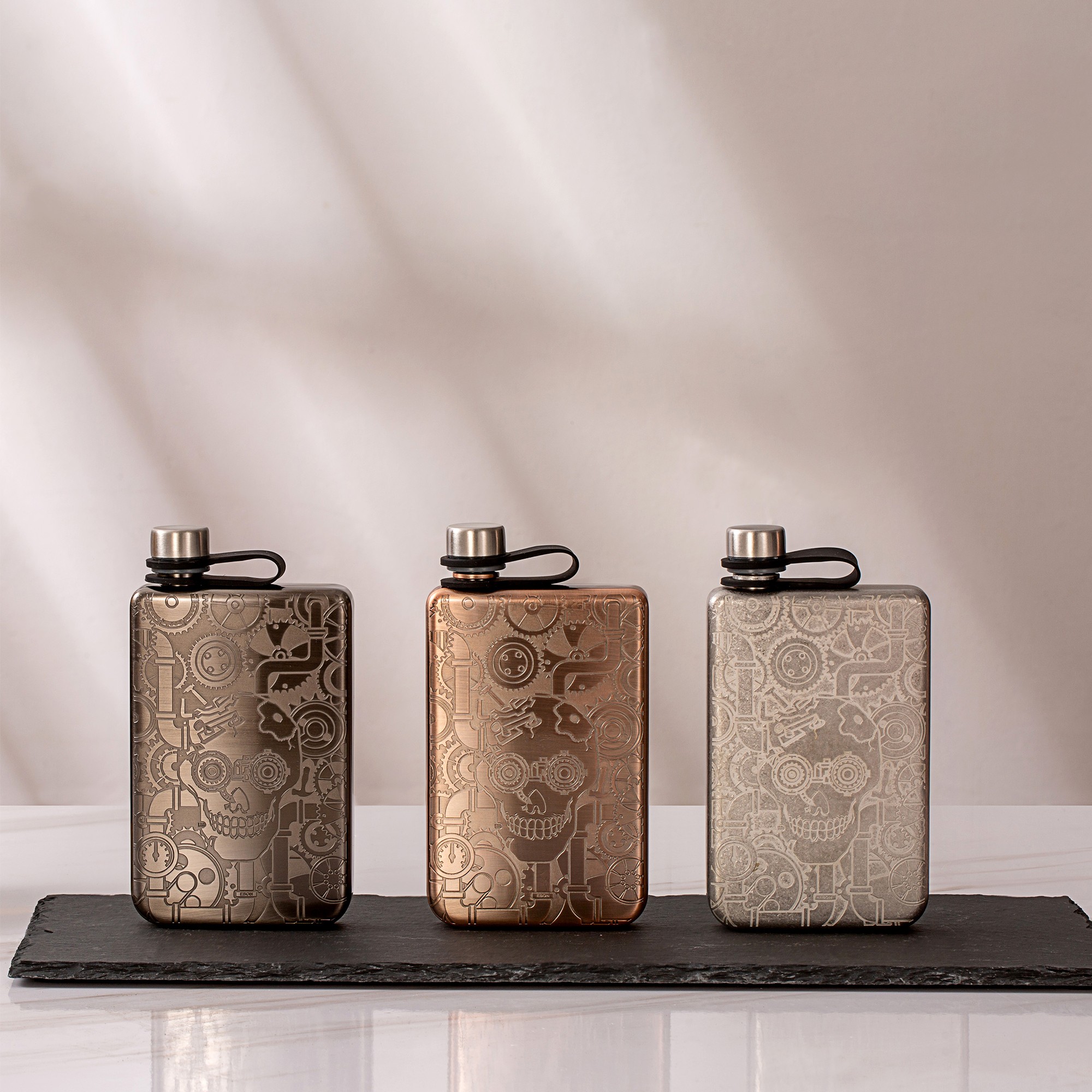
Stainless Steel Hip Flask Care

3. Dry Thoroughly Before Storage

After cleaning, leave the flask open and allow it to air dry completely before storing it. Although stainless steel is corrosion-resistant, trapped moisture inside a closed flask may cause unwanted odors over time.

For best results, place the flask upside down on a drying rack or clean towel until the inside is fully dry. Store it in a clean, dry place with the cap open or loosely closed to allow any remaining moisture to escape.

4. Why Drink Choice Affects Cleaning

Some drinks are easier to clean out of a hip flask than others. Choosing the right beverage can save you time and effort, and help avoid lingering odors or residue.

Easier to clean (straight spirits):

  • Whiskey
  • Bourbon
  • Scotch
  • Rum
  • Brandy

Harder to clean / best avoided:

  • Carbonated beverages — can build up pressure inside a sealed flask
  • Cream-based cocktails — leave residue that's difficult to rinse out fully
  • Sugary mixed drinks — can cause sticky buildup and stronger odors
  • Fruit juice-based drinks — prone to leaving residue and odor
  • Highly acidic beverages stored for extended periods — more likely to leave lingering smells

Portable Stainless Steel Hip Flask

5. Don't Leave Drinks Inside for Too Long

A stainless steel hip flask is designed for short-term storage, not long-term aging. Leaving alcohol inside for too long — especially without proper cleaning between uses — can affect flavor and make odors harder to remove.

For the best results: fill the flask shortly before use, empty and rinse it after the event, and dry it fully before putting it away.
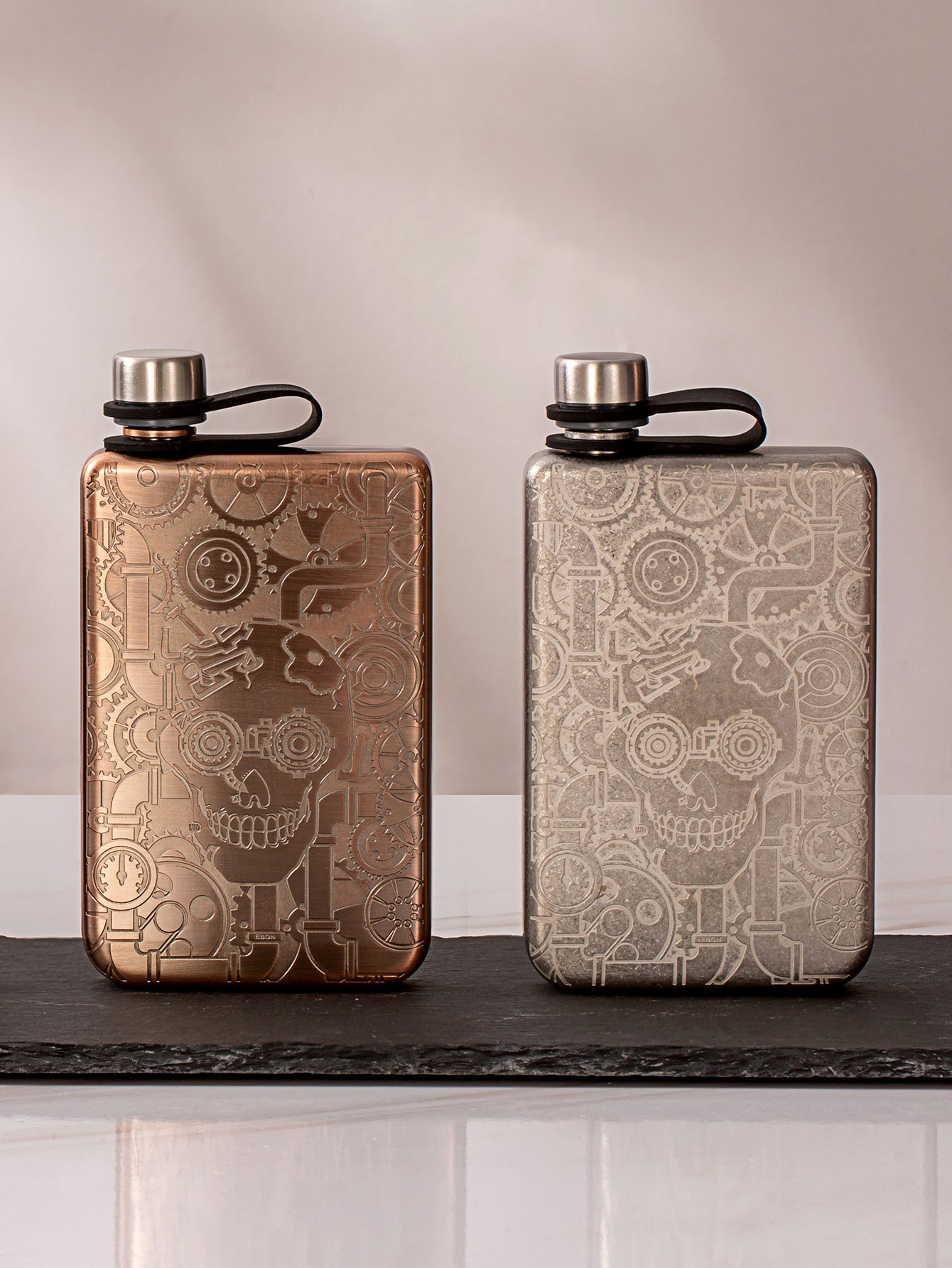
Outdoor Stainless Steel Hip Flask

Final Tips

A properly maintained stainless steel hip flask can stay clean, odor-free, and ready for repeated use. The key is simple: rinse before first use, clean after each use, dry thoroughly, and avoid letting unsuitable drinks sit inside for long periods.

If you're looking for custom stainless steel hip flasks for retail, promotional gifts, corporate events, or private label projects, our team can help with OEM and wholesale manufacturing solutions.