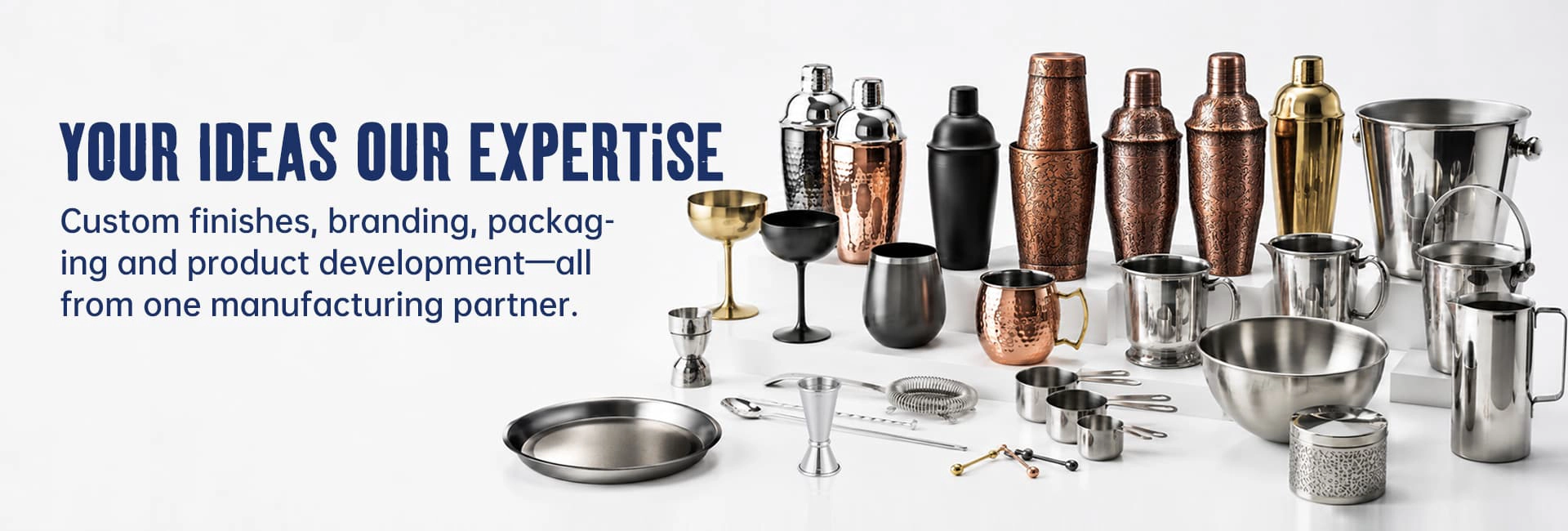
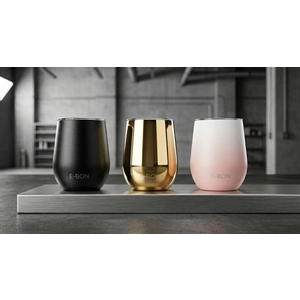
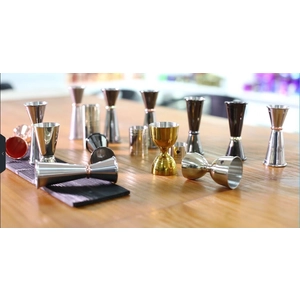
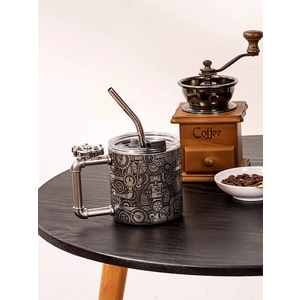
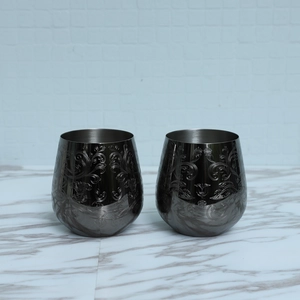
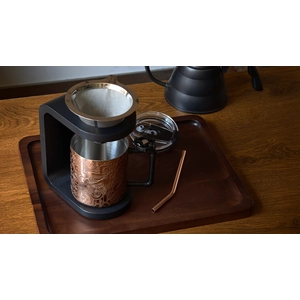
定制酸蚀不锈钢酒吧用具是需要在商用酒吧工具和酒具上永久印制食品级标志的品牌的标准配置——因为图案是通过化学方法刻蚀到钢材本身,而不是印刷或涂层在表面。本指南将解释制造工艺、技术规格和质量标准,采购团队在批量订购前应核实这些标准。
大多数品牌酒吧用具的失败都源于同一个问题:表面处理。产品照片上看起来清晰醒目的标志,在实际使用六十天后就开始褪色。罪魁祸首几乎总是同一个——表面印刷或喷涂层,其设计之初并未考虑到工业洗碗机的洗涤、柑橘酸的侵蚀,以及酒吧日常使用的摩擦。
化学蚀刻在制造阶段就解决了这个问题。当图案嵌入钢基材而非印制在其表面时,标识便成为产品永久性的结构特征——不会剥落、碎裂或褪色,因为它没有单独的涂层。对于那些将定制酒吧用具作为长期资产进行投资的品牌而言,了解蚀刻和表面印刷之间的区别是采购决策中最重要的质量标准。
什么是不锈钢酒吧用具的化学蚀刻?
化学铣削,或称光化学蚀刻,是一种减材制造工艺,它利用可控的酸溶液选择性地从不锈钢基材上去除材料,从而制造出深度一致、边缘清晰的高精度图案。与表面热处理不同,化学蚀刻能够控制深层材料去除,确保凹槽设计永久存在,且完全不受机械磨损或工业清洗工艺的影响。
该工艺首先在钢材表面涂覆光刻胶掩模。需要保持原状的区域受到保护;暴露区域则浸入根据钢材牌号和目标蚀刻深度校准的酸浴中。蚀刻完成后,去除光刻胶,对表面进行中和和钝化处理,最终将图案永久固定在金属上。
两种方法:标准蚀刻与反向蚀刻
- 标准酸蚀工艺:将图案区域暴露于酸液中。图案低于周围表面,形成凹陷的标志,表面光滑,触感舒适。
- 反向蚀刻:将背景暴露于酸液中,使图案凸出于凹陷的底面之上。这产生了更明显的立体浮雕效果——标志清晰醒目,在定向光照下阴影对比度更高。
Both methods are permanent. The distinction is which element is proud of the surface: in standard etching, the background; in reverse etching, the design itself.
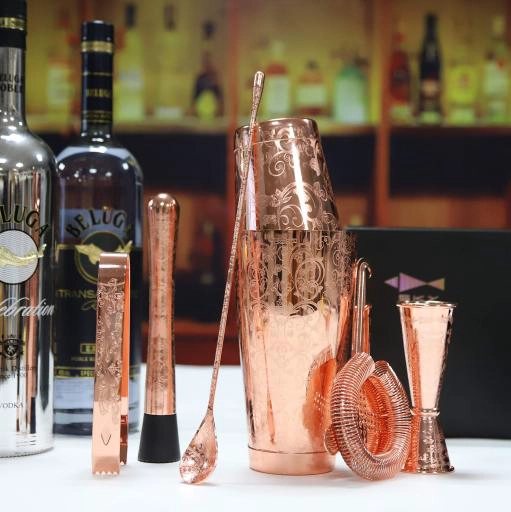
Chemical Etching vs. Laser Engraving: A Technical Comparison
Procurement teams frequently encounter both methods described as "permanent" by suppliers. The distinction matters because the two processes produce different outcomes in commercial use — particularly regarding food safety, finish consistency across batch production, and long-term appearance under daily wear.
| Engineering Feature |
Chemical Acid Etching |
Laser Engraving |
| Process type |
Cold chemical removal (no heat) |
Thermal ablation (localised heat) |
| Edge definition |
Smooth, burr-free edges |
Micro-burring possible at edges |
| Surface roughness post-process |
Controlled, consistent Ra value |
Higher Ra; increased bacterial retention risk |
| Batch consistency |
Manual mask setup; consistent at scale with process control |
Automated, highly repeatable per unit |
| Minimum feature size (1.0mm substrate) |
0.6 – 1.1 mm line width |
0.1 – 0.3 mm line width |
| Curved surface suitability |
High — mask conforms to surface |
Moderate — requires rotary fixture |
| Heat-affected zone |
None |
Present; may alter local grain structure |
| Post-process passivation required |
Yes — critical for corrosion resistance |
Recommended for food-contact applications |
| Commercial dishwasher durability |
Indefinite — no surface layer to degrade |
Indefinite — no surface layer to degrade |
| Relative unit cost at scale |
Higher setup; cost-effective at mid-to-high volume |
Lower setup; cost-effective at all volumes |
The food safety consideration is frequently raised in buyer evaluations. Laser engraving creates micro-grooves with higher surface roughness values than chemical etching. In applications involving direct food contact, higher roughness can increase the surface area available for biofilm retention between cleaning cycles. Chemical etching, when followed by a proper passivation step (typically citric acid or nitric acid treatment per ASTM A380), produces a chromium oxide layer that is chemically inert and resistant to microbial adhesion.
The question is not which process is "permanent" — both are. The question is which produces a finish that performs correctly in the specific commercial environment where the product will be used.
Electroplating vs. PVD Coating: Surface Finish Options for Custom Barware
Branded barware frequently requires a coloured finish in addition to the etched pattern — copper, gunmetal black, antique brass, or matte finishes that align with brand identity. Two manufacturing methods dominate the commercial barware market: wet electroplating and physical vapour deposition (PVD). They are not interchangeable, and the correct specification depends on the end use environment.
| Engineering Feature |
PVD Vacuum Coating |
Electroplating / Wet Plating |
| Process environment |
High-vacuum chamber 10⁻² to 10⁻⁴ Pa |
Aqueous chemical electrolyte bath |
| Surface hardness |
1,000 – 2,500 HV |
200 – 500 HV |
| Coating thickness |
Ultra-thin: 0.5 – 3 μm |
Thicker buffer layer: 10 – 30 μm |
| Bonding mechanism |
Atomic-level adhesion (molecular vaporisation) |
Ionic deposition (mechanical bond) |
| Dishwasher compatibility |
High — resistant to aggressive commercial detergents |
Moderate — requires hand washing to avoid pitting |
| Finish character |
Uniform, precise, modern |
Rich, heavy, authentic patina possible |
| Etched pattern interaction |
Thin film may partially fill shallow etch grooves |
Thicker deposit accentuates depth contrast |
| Typical application |
High-frequency commercial tools, hospitality chains |
Premium gift sets, vintage-style, brand merchandise |
Choose PVD when —
- Tools enter a commercial dishwasher daily
- Venue requires absolute scratch resistance
- Brand requires long-term colour consistency
- Higher upfront cost is acceptable for lower replacement rate
- Application: high-frequency cocktail shakers, speed pours, muddlers
Choose electroplating when —
- Product is hand-washed or low-frequency use
- Aesthetic requires authentic copper weight and patina
- Brand campaign needs high-volume production at cost
- Vintage or antiqued appearance is a design requirement
- Application: gift sets, brand activations, promotional merchandise
Material Specification: Steel Grade and Wall Thickness
Surface treatment selection is secondary to substrate specification. The steel grade and wall thickness determine whether a product can physically accept acid etching without perforation, and whether it will maintain structural integrity under the thermal cycling of commercial use.
Steel grade
304 (18/8) food-grade stainless steel. The 18% chromium content ensures the passive oxide layer reforms after etching. 201-grade steel is commonly used in lower-cost barware but has reduced corrosion resistance in acidic environments (citrus, alcohol) — not recommended for etched applications.
Minimum wall thickness for etching
0.6 – 0.7 mm for barware applications. Industrial etch ratio standards specify that minimum feature width must be ≥ 1.0–1.1× material thickness. At standard barware substrate thickness of 0.6 – 1.0 mm, the minimum achievable line width is 0.6 – 1.1 mm. Thinner substrates (ultra-thin foil) can achieve 0.15 mm, but are not structurally suitable for bar tools.
Corrosion resistance standard
ASTM B117 salt spray testing. A 72-hour continuous salt spray test confirms that etched micro-grooves and exposed metal surfaces resist pitting and oxidation under high-humidity and high-acidity conditions. Request test reports when evaluating suppliers.
Food safety compliance
FDA 21 CFR (USA), EU Regulation 1935/2004 (Europe), LFGB (Germany/EU). These cover food-contact materials and confirm that the finished product does not transfer harmful substances. Post-etch passivation is a prerequisite for compliance — verify that the supplier performs this step as standard.
Quality management certification
ISO 9001 establishes the quality management system requirements. Combined with SEDEX 4-Pillar audit (labour standards, health and safety, environment, business ethics), ISO 9001 forms the standard compliance framework for Tier 1 global corporate procurement channels.
Surface finish options
8K mirror polish (highest reflectivity, multi-stage grinding), satin/brushed finish (uniform linear micro-abrasion, low-reflective texture that masks fingerprints and operational marks in daily use).
Artwork and Design File Requirements
The most common cause of production delays in custom etched barware projects is artwork submission that does not meet the technical requirements for photomask generation. Understanding these requirements at the brief stage reduces approval cycles significantly.
Positive and negative artwork capability
Advanced photochemical processing supports both positive and negative image reproduction, as well as double-sided aligned etching. By varying the photoresist mask design, engineers can achieve selective half-etching — producing distinct tactile relief or textured background grids that maintain structural integrity of complex brand typography on curved surfaces.
File requirements checklist
- Format: Vector files required — AI (Adobe Illustrator) or EPS preferred. PDF accepted if all type is outlined. Raster files (JPG, PNG) are not suitable for mask generation at production scale.
- Minimum line weight: 0.6 mm minimum for standard barware substrate thickness. Lines thinner than the substrate thickness will not etch cleanly.
- Colour separation: Artwork must be submitted as single-colour (black and white), clearly indicating which areas etch and which areas remain. For multi-depth or reverse etch designs, provide separate layers.
- Curved surface mapping: For cylindrical tools (shaker bodies, bar spoons), confirm the artwork has been mapped to the correct cylinder diameter before submission. A flat artwork file on a 75mm diameter surface requires different scaling than on a 55mm diameter surface.
- Pre-production sample: Request a physical pre-production sample before batch release. This is standard practice for first orders and allows verification of etch depth, finish quality, and logo registration before full payment is released.
Surface Finish Options and Polishing Standards
Industrial stainless steel surface treatment includes mechanical polishing to achieve specific surface roughness profiles that affect both aesthetics and hygienic performance.
- 8K mirror polish: Achieved through multi-stage abrasive polishing, representing the highest theoretical reflectivity for stainless steel. Maximises visual impact of etched patterns but shows fingerprints and handling marks in daily use.
- Satin/brushed finish: Uniform linear micro-abrasion producing a low-reflective texture. Naturally conceals fingerprints and daily operational marks. Industry-standard specification for commercial bar tools used in active service environments.
- Electroplated finishes: Copper (traditional patina, authentic weight feel), gunmetal black (matte, modern), antique brass (aged warmth). Each finish interacts differently with etched patterns — deeper etching produces stronger contrast against plated backgrounds.
Common Quality Failures and How to Evaluate Them Before Ordering
Buyers with prior barware sourcing experience consistently identify the same failure modes across low-specification suppliers. Understanding these failure modes enables more precise evaluation of supplier capability during the sample approval stage.
Logo fade and coating peel
The most reported failure. Products described as "etched" by suppliers are often surface-printed or pad-printed. The distinction is detectable on sample inspection: run a fingernail across the logo. A printed finish is flush with the surrounding surface; a chemically etched pattern is physically recessed or raised, with tactile definition. If the logo feels identical to the surrounding surface, it is a coating — not an etch.
Flash rust in dishwasher environments
If a supplier performs chemical or electrochemical etching without a subsequent passivation step, residual acid can remain in the micro-grooves of the etch pattern. Under commercial dishwasher conditions, this residual acid retains moisture and initiates localised pitting corrosion — visible as rust spots in the etched areas. Request ASTM B117 salt spray test documentation to confirm the supplier's post-etch passivation process is correctly implemented.
Etch bleed and halo effect
In batch production, poor photoresist adhesion causes acid to migrate under the mask edges, producing irregular line definition, soft edges, and a "halo" of unintended etching around the design perimeter. This is a process control failure detectable on a pre-production sample. Examine logo edges under magnification — crisp, clean edges indicate correct resist adhesion; diffuse edges indicate inadequate process control.
Metal gauge substitution
Suppliers sourcing steel from lower-cost mills mid-production may switch to thinner-gauge material without notification. The result is a product with reduced structural integrity, poor seal performance in Boston shakers, and an inability to accept the same etch depth as the approved sample. Specify steel grade (304) and wall thickness (minimum 0.6 mm) as contractual requirements in the purchase order, not merely as sample specifications.
Applicable Sourcing Scenarios
Hotel and hospitality chain procurement
Multi-location hospitality groups require standardised product specifications across properties. Custom etched barware with consistent logo registration, matched finish specifications, and documented food safety compliance (FDA/LFGB) provides procurement teams with the audit trail required for Tier 1 corporate supply chain approval. Key specifications: ISO 9001 certification, SEDEX 4-Pillar audit compliance, confirmed batch consistency documentation.
Spirits and beverage brand merchandise
Craft distilleries, wine producers, and beverage brands use branded barware as physical brand touchpoints in tasting rooms, retail gift sets, and event activations. The requirement is visual fidelity to brand guidelines at scale — colour-matched finishes, consistent logo registration, and packaging that supports a premium retail presentation. Key specifications: pre-production colour-matched sample, minimum order quantities aligned to campaign volume, lead time confirmation prior to campaign launch date.
Bar chain and venue brand identity
High-volume bar operators use branded tools as both operational equipment and ambient brand reinforcement. The secondary benefit — branded tools that guests remove from the venue as souvenirs — converts what would otherwise be stock loss into a brand distribution channel. Key specifications: commercial-grade dishwasher durability, heavy-use structural integrity (minimum 0.7 mm wall thickness), bulk pricing at ongoing replenishment volumes.
Corporate gifting and brand activation
Marketing and brand teams procuring custom barware for corporate gifting programmes require a supplier capable of delivering matched sets — cocktail shaker, jigger, bar spoon — with consistent finish and logo registration across all components, packaged for premium retail presentation. Key specifications: full set customisation capability, packaging design support, confirmed lead time against event deadline.
Frequently Asked Questions
Does laser or chemical etching affect the food safety of stainless steel barware?
Chemical etching, when followed by a proper passivation step per ASTM A380, produces a chromium oxide layer that is chemically inert and compliant with FDA 21 CFR and EU 1935/2004 food-contact standards. Laser engraving creates micro-grooves with higher surface roughness values, which can increase bacterial retention risk in direct food-contact applications if the surface is not subsequently passivated. Confirm with your supplier that post-process passivation is performed as a standard step — not an optional one.
How do I distinguish real deep etching from a surface print or coating?
Run a fingernail across the logo on a sample. A chemically etched pattern is physically recessed or raised — you can feel the depth change. A surface print or pad print sits flush with the surrounding steel: no tactile difference between logo and background. For electroplated finishes over an etched base, the plating will fill the etch slightly, but the relief should still be detectable. If there is zero tactile difference, the product is coated, not etched.
Will etched patterns cause the stainless steel to corrode or show flash rust in commercial dishwashers?
Properly manufactured etched barware does not corrode in commercial dishwasher environments. Flash rust in etched products is a manufacturing defect — specifically, the failure to perform acid neutralisation and passivation after the etching step. Residual acid retained in the etch grooves initiates localised pitting under repeated washing. Request ASTM B117 72-hour salt spray test documentation from your supplier to confirm that passivation is part of their standard production process.
Does custom etching affect the weight balance or seal performance of Boston shakers?
Acid etching removes a controlled amount of material from the surface layer only — typically 0.05 – 0.15 mm in depth for barware applications. This does not measurably alter the weight distribution of a commercial shaker tin. Seal performance (the press-fit between large and small tin) is determined by the manufacturing tolerances of the tin dimensions, not the surface finish. A shaker that seals poorly was not manufactured to correct dimensional tolerances — this is a separate quality issue from the etching process.
What are the actual design limitations and file requirements for curved metal barware?
For cylindrical surfaces, the minimum line width is 0.6 mm at standard barware substrate thickness (0.6 – 1.0 mm). Submit artwork as vector files (AI or EPS with all type outlined) in single-colour format — black indicating etch areas, white indicating masked areas. For curved surfaces, artwork must be mapped to the correct cylinder diameter; flat artwork scaled without diameter compensation will produce proportional distortion on the finished product. Always request a pre-production sample before batch release.
What is the typical MOQ and lead time for custom etched barware?
Minimum order quantities and lead times vary by product type, finish specification, and customisation complexity. Standard lead time for custom etched orders following artwork approval is typically 25 – 45 days depending on volume and finish type. PVD-coated products may carry longer lead times than electroplated finishes due to process scheduling. Contact the production team with your product specification, volume, and required delivery date to confirm feasibility before committing to a campaign timeline.
Request a Specification Review
Ready to Source Custom Etched Barware?
请将您的设计稿、数量要求和目标规格发送给我们的生产团队,以便进行技术审核和样品制作周期评估。
发送询价