












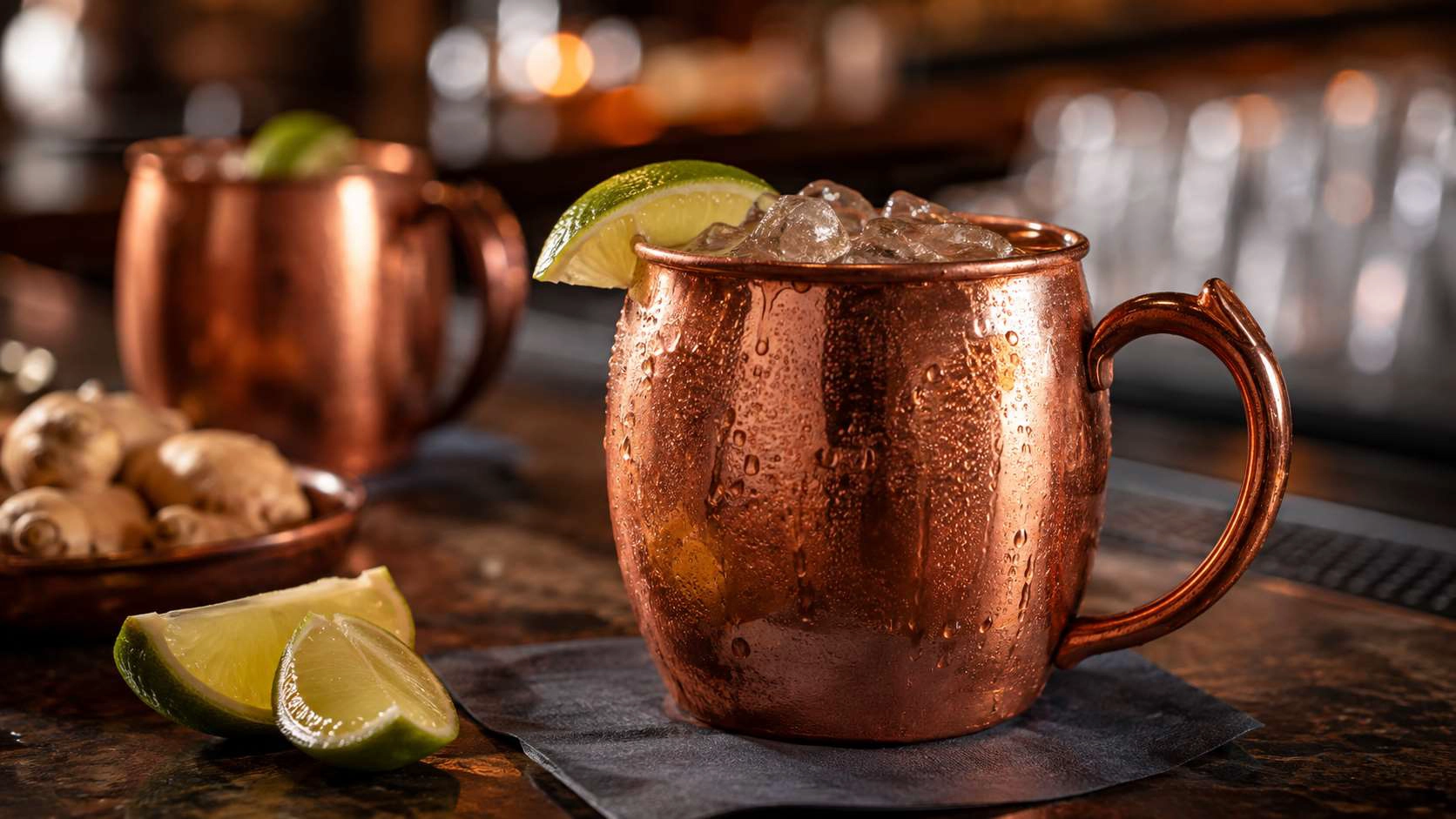
Moscow Mules are served in copper mugs because the mug became part of the cocktail's identity in the 1940s, then proved unusually effective at delivering a cold, recognizable and memorable drinking experience. The copper surface chills quickly against ice, the color makes the drink identifiable across a room, and the handle completes a service ritual that glassware never quite replaced. Copper does not make the recipe work, however, and it should not be treated as a magic insulator or flavor enhancer.
The Copper Mug Became Part of the Drink's Identity
The Moscow Mule emerged in the United States during the 1940s, when vodka still needed a stronger introduction to American drinkers. Accounts of the exact people present do not agree in every detail, but the durable part of the story is clear: vodka, ginger beer, lime and a distinctive copper mug were promoted together.
John Martin, associated with Smirnoff vodka, and Jack Morgan of the Cock 'n Bull are central to the history. The Copper Development Association's account describes the mug as part of the combination that helped turn slow-moving products into a recognizable cocktail. Martin later used photographs of bartenders posing with the drink and the vodka bottle as sales material. Long before a cocktail could spread through social media, the bright metal mug gave the Moscow Mule a visual signature that travelled from bar to bar.
That history matters because the mug was never an accessory added after the drink became famous. It was built into the way the cocktail was introduced. A Moscow Mule in a rocks glass can contain the same ingredients, but it loses the object that tells the guest what has arrived before the first sip.
What Copper Changes When the Drink Is Served
Copper has high thermal conductivity, so a metal surface exposed to ice and a cold drink changes temperature quickly. That is why the rim and wall of a Mule mug feel cold almost immediately. Condensation forms on the outside, the handle keeps the guest's palm away from the chilled body, and every sip begins with a cold metal edge.
This is a sensory effect, not the same thing as insulation. A single-wall copper mug is not a thermos. High conductivity allows heat to move in either direction, including from the surrounding air into the drink. The strongest contribution is the immediate cold sensation and frosted presentation, while the ice, serving temperature, dilution and time on the table still govern the drink itself.
The same distinction applies to copper-plated stainless steel. The exterior can still cool quickly and deliver the familiar appearance, even when the beverage touches stainless steel rather than copper. For many hospitality projects, that combination preserves the service signal without relying on an exposed copper interior.

Does the Mug Change the Taste?
The copper mug changes how the drink is experienced more reliably than it changes the recipe. Cold contact at the rim can make the ginger beer feel sharper and the cocktail more refreshing. The visual expectation also matters: guests associate the mug with ginger, lime, ice and the characteristic kick of a Mule.
Claims that copper directly improves the flavor should be treated carefully. Many commercial mugs have a lining or a stainless steel food-contact surface, so the liquid does not touch copper at all. In those mugs, any difference comes from temperature, aroma, carbonation, dilution and presentation rather than a copper-and-cocktail reaction. A well-balanced Moscow Mule served in glass is still a Moscow Mule; the copper mug makes it more immediately recognizable.
Why Bars Still Use Copper-Colored Mugs
For a bar or restaurant, recognizable serveware has operational value. A copper-colored mug separates a Mule from highballs, spritzes and other ice-filled drinks at a glance. The bartender can scan the pass more quickly, servers can identify the order, and the guest receives the presentation promised by the menu.
The mug also gives the drink a stronger presence in photographs and on a busy table. That does not mean every venue needs an ornate or highly polished cup. A high-volume bar may prefer a simple form that is easier to handle and replace, while a hotel, branded venue or private-label program may use a hammered surface, shaped handle or custom mark to make the serve more distinctive.
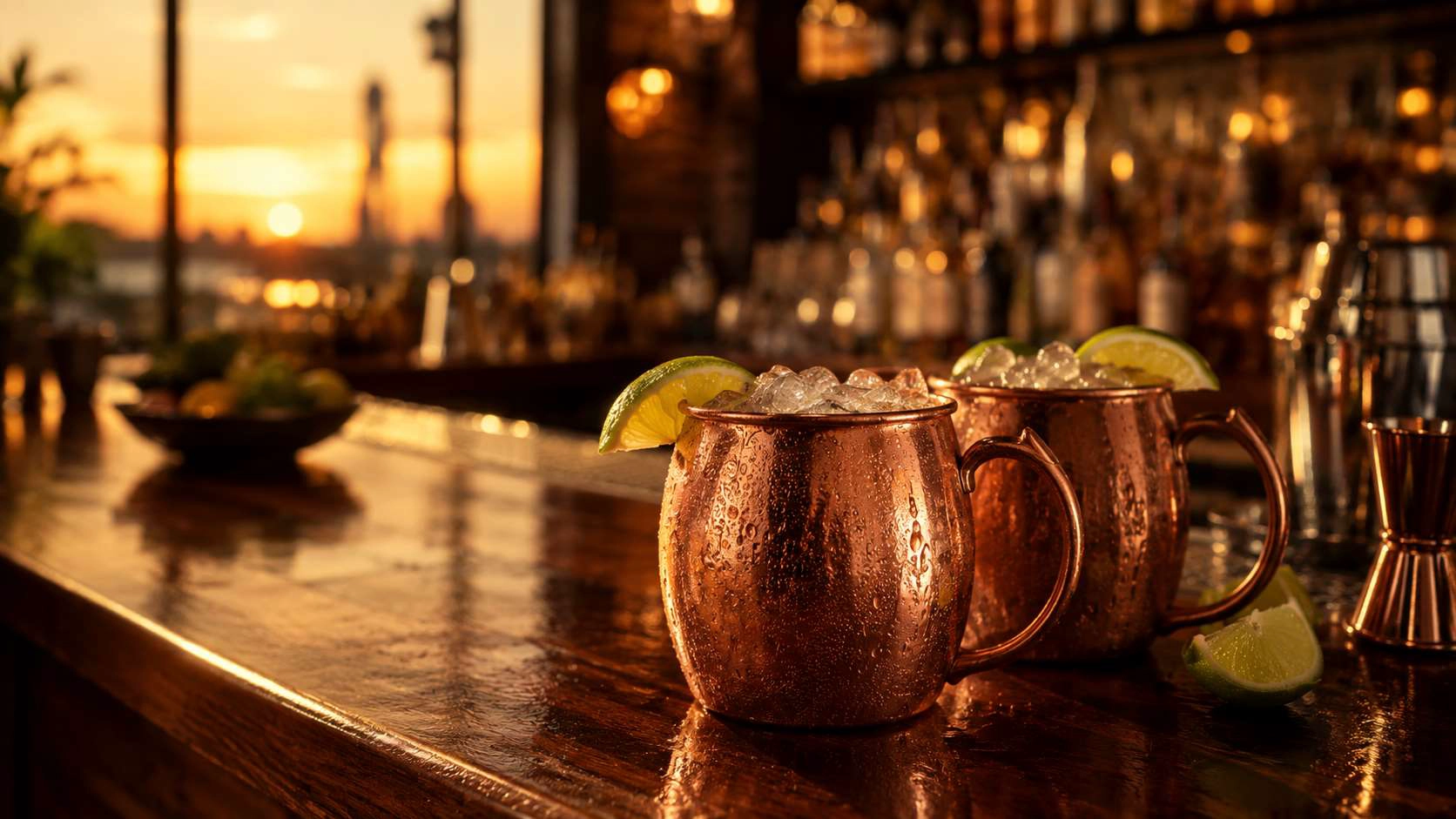
This is why copper-colored Mule mugs survived after the original promotion ended: the vessel still does useful work in the guest experience. It identifies the cocktail, supports a consistent presentation and gives a straightforward three-ingredient drink its own piece of theatre.
Copper Color Does Not Tell You the Mug Construction
Two mugs can look almost identical while placing different materials against the drink. One may be unlined copper, another may use an internal lining, and another may be stainless steel with a copper-colored exterior finish. That distinction affects food-contact review, care instructions, surface ageing and the specifications a commercial buyer needs to approve.
The Moscow Mule contains lime juice, so exposed copper deserves specific attention. The current FDA Food Code, a model used by retail food jurisdictions in the United States, restricts copper and copper alloys from contact with foods below pH 6, apart from a defined brewing exception. Buyers should therefore verify the actual food-contact surface and the rules adopted in the intended market instead of choosing from exterior color alone.
This article does not need to turn that point into a full material or regulatory guide. The immediate lesson is simpler: the tradition belongs to the copper appearance, but purchasing decisions belong to the complete construction.
The Practical Answer for Buyers and Operators
So, why are Moscow Mules served in copper mugs? Because history made the mug inseparable from the cocktail, the cold metal surface strengthens the first impression, and the appearance still helps bars deliver a recognizable serve. The mug is part history, part sensory design and part operational signal.
For commercial use, we would choose the construction before choosing the decoration. Confirm the food-contact material, intended cleaning method and target market first; then decide whether the program needs a smooth, hammered or custom copper-colored finish. That order protects the function of the mug while leaving room for the visual character that made it famous.
Explore E-BON's Moscow Mule mug collection, or send us your intended market, material preference, capacity, quantity and branding requirements. We can use those details to define the right construction and sample direction for your project.