





ShenZhen E-BON Industrial Co..Ltd
-Professional manufacturer for the stainless steel products

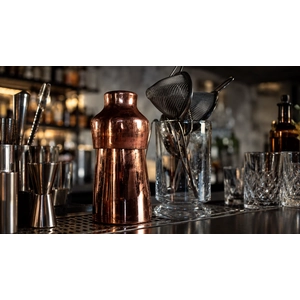
A French shaker seals with nothing but two pieces of steel — no threads, no lugs, no gasket. That means only two things can go wrong: it leaks while you shake, or it locks shut after you do. Both come from the same set of dimensions. This is the engineering behind that joint: why it has to be a shallow cone rather than a press fit, the four values E-BON sets before cutting tooling (8–12 mm engaged length, 2°–3° taper per side, 0.10–0.25 mm interference, 0.5–1.0 mm axial clearance), why roundness rather than diameter is what buyers feel, why the mouth needs a separate sizing die after springback, and why a plated version cannot share the same mouth dimension as an unplated one.
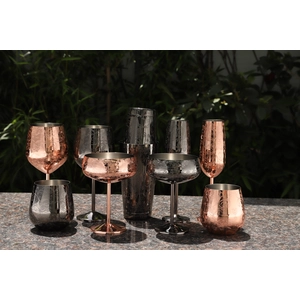
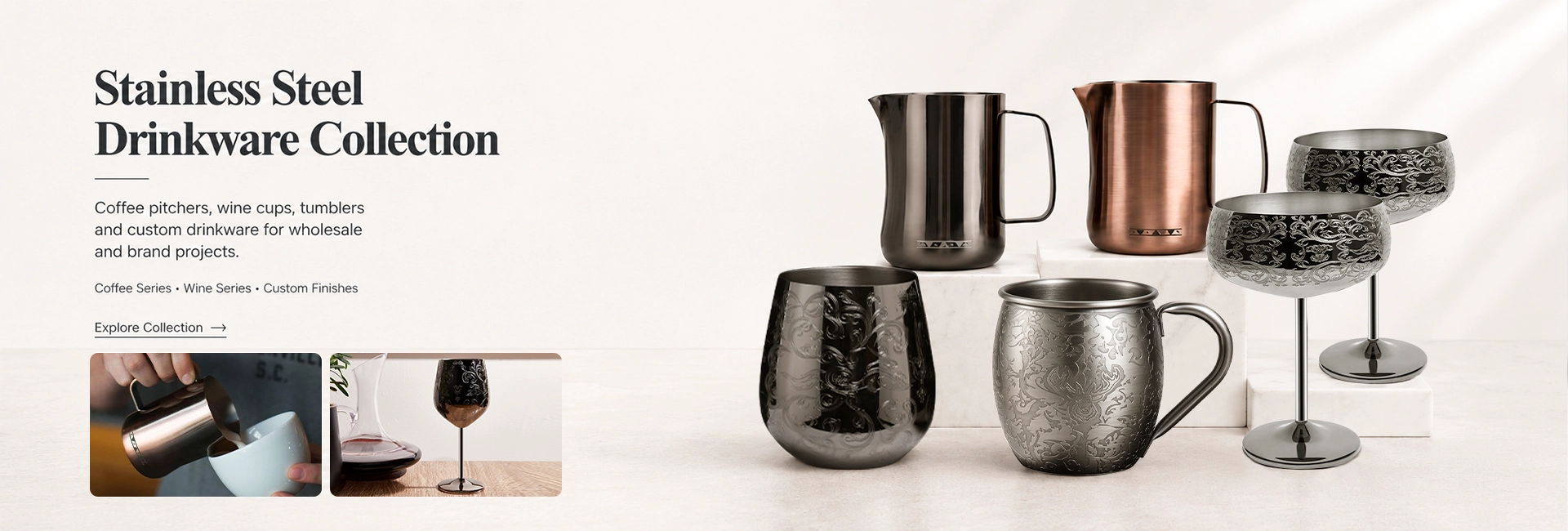
Consolidates the etched-tumbler cluster from the 40-topic pool (production checklist, artwork requirements, defect prevention) into one buyer-facing guide: what etching is and how it differs from printing/debossing/embossing, artwork file requirements before quoting, defect-prevention checkpoints specific to etched surfaces (etching depth, edge deburring, pattern registration, cross-finish consistency), and MOQ/packaging using the real egg-shaped 20oz 304 stainless tumbler as a reference spec.
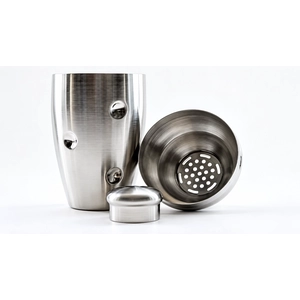
Explains the material difference between 304 and 201 stainless steel, why 201 shows up in aggressively priced barware quotes, where the difference actually shows up after an order ships (corrosion, finish stability, the unreliable magnet-test shortcut), and gives buyers a concrete way to confirm grade in writing before comparing supplier quotes.

Gives B2B barware buyers a practical way to tell a manufacturer from a trading company, explains what ISO 9001, Sedex 4-Pillar, and BSCI audits actually verify, and covers third-party testing and export documentation to confirm before sending an RFQ.
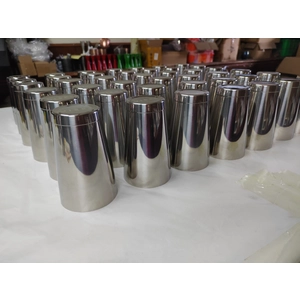
A practical quality control checklist for importers and private label brands inspecting cocktail shaker samples and bulk lots. It covers approved references, Boston and Cobbler fit, leak testing, formed edges, dimensions, capacity, finishes, logos, function, packaging, defect records and lot release.
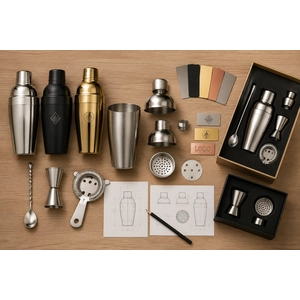
This BOFU comparison helps cocktail shaker buyers choose OEM, ODM or a hybrid route by identifying who owns the product definition, what must be developed, how samples differ and what information a manufacturer needs for an accurate quotation.

A BOFU guide for private label barware brands defining how to specify, sample and quote a custom cocktail shaker set while keeping its components, finish, branding, packaging and repeat orders under one product system.

French press sediment does not come from one cause. This article separates normal metal-filter silt from excess sludge and visible grounds, then shows how grind distribution, mesh fineness, filter layers, edge fit and plunger resistance help identify the source.
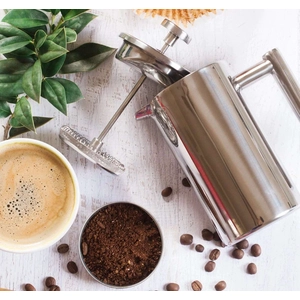
A practical French press answer page with an interactive ratio calculator, water-based ratio chart, six-step daily method, ratio and brew-time adjustments, grind guidance, and direct fixes for bitter, weak, sour, muddy, or sediment-heavy coffee.
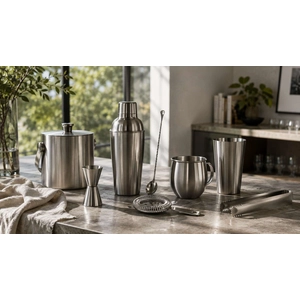
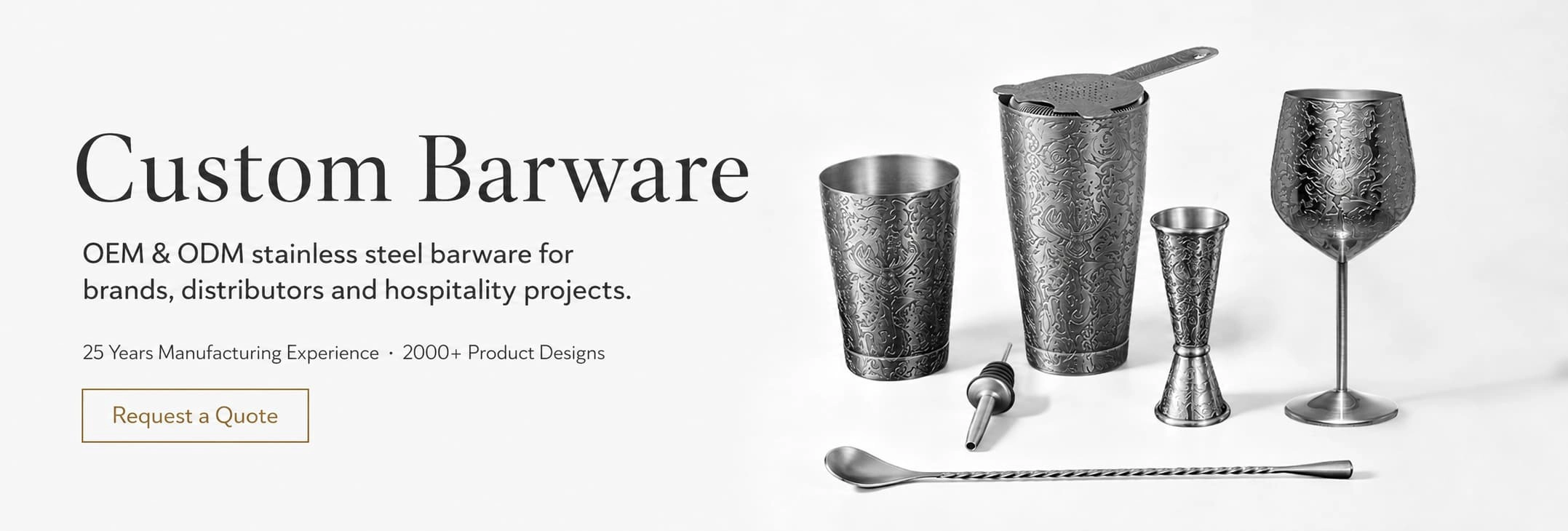
A practical framework for turning multiple shakers, jiggers, strainers, mugs and accessories into one recognizable barware collection through shared design anchors, controlled variation and range-level sample approval.