












For most high-volume bars, hospitality programs and private-label orders, a stainless steel Moscow Mule mug with a controlled copper-colored exterior is the practical default. It keeps the traditional visual signal while giving the buyer a defined stainless steel food-contact surface and simpler day-to-day care. Choose a copper mug when the material itself is central to the story and the operator accepts the required finish care. Choose plain stainless steel when durability, a modern appearance and broader drink use matter more than the classic copper look.
Start with the Construction, Not the Color
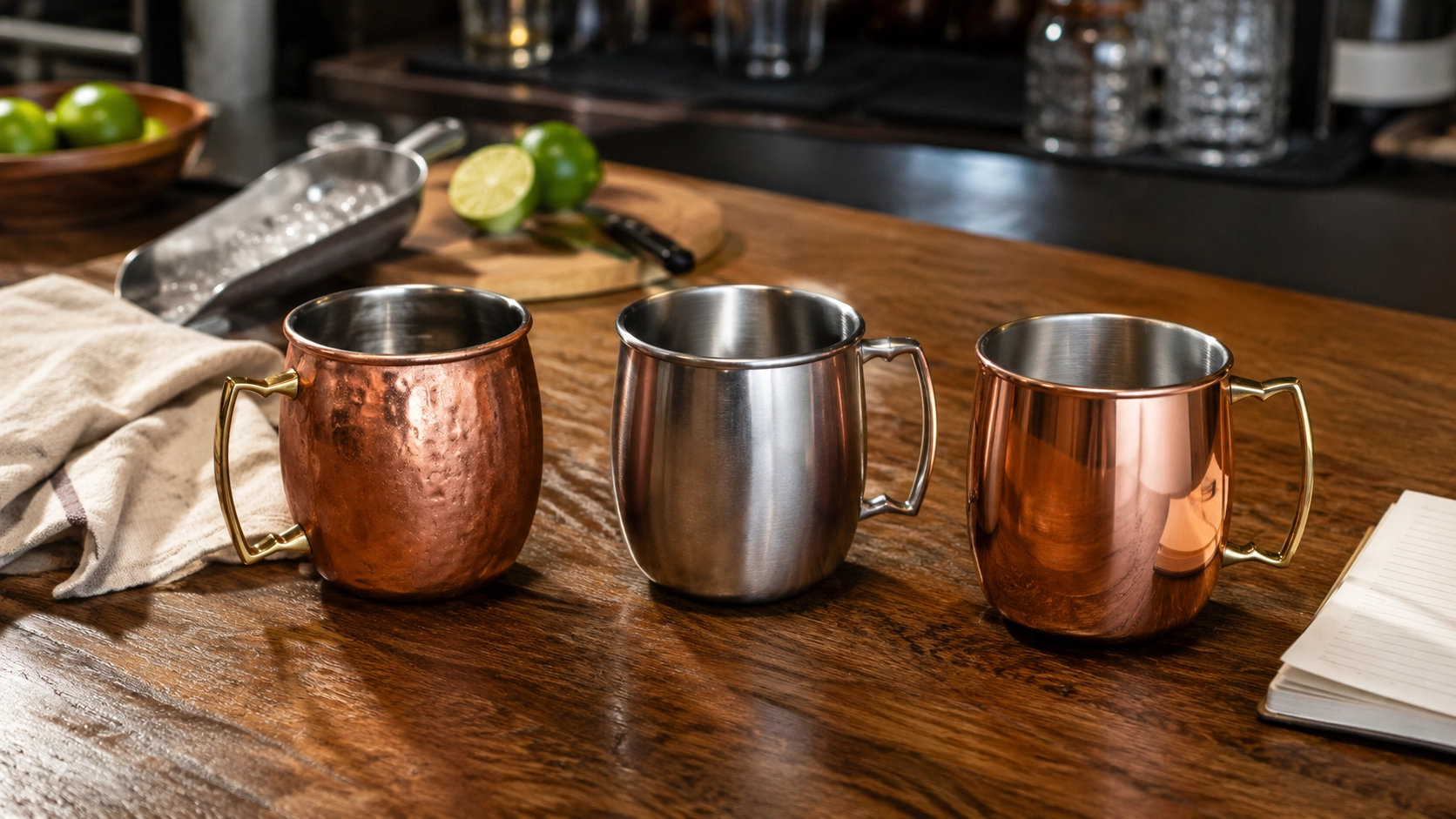
“Copper mug” can describe several different products: an unlined copper vessel, a copper mug with another metal lining, or a stainless steel mug with a copper-colored exterior. “Stainless steel mug” can mean a natural silver finish or a stainless body finished in copper, gold, black or another color.
This distinction changes the comparison. A copper-colored stainless steel mug is still stainless steel at its structural core and, when the interior is left unplated, at the food-contact surface. It should not be evaluated as if the drink touches copper. Likewise, a lined copper mug should be assessed by both the copper body and the material and coverage of its lining.
For a buyer, the first useful question is therefore not “Which color do I prefer?” It is “What is the body material, and what material touches the drink?” Once those two facts are fixed, appearance, cleaning and branding decisions become much easier.
Copper vs Stainless Steel at a Glance
| Decision factor | Copper construction | Stainless steel construction |
|---|---|---|
| Traditional identity | Strongest connection to the original copper-mug story | Natural steel looks modern; copper-finished steel preserves the familiar Mule appearance |
| Cold surface response | Copper changes surface temperature very quickly | Still feels cold in service, but the response is less immediate than copper |
| Appearance over time | Unprotected copper naturally changes and may require polishing | Natural steel avoids copper patina; plated or coated exteriors need finish-specific care |
| Dent and handling resistance | Copper is relatively soft; gauge and forming quality matter | Usually the stronger commercial base, subject to grade, thickness and construction |
| Food-contact control | Requires confirmation of exposed copper or lining material | Allows the order to specify a stainless steel food-contact surface |
| Best fit | Heritage-led service, premium presentation and controlled care | High-frequency service, branded programs and repeatable bulk specifications |
Cold Feel, Presentation and Service
Copper has high thermal conductivity, so its surface responds quickly when the mug is filled with ice and a cold drink. The rim and wall become cold almost immediately, creating the frosted, tactile presentation associated with a Moscow Mule. That immediate sensation is copper's clearest functional difference.

It should not be confused with insulation. A single-wall copper mug moves heat readily in both directions. Stainless steel also cools in contact with the drink, and wall thickness, ice load, starting temperature and service time all affect what the guest experiences. Neither material turns a single-wall mug into a vacuum-insulated vessel.
Presentation often matters more than the small difference in surface response. Traditional copper is instantly recognizable. Natural stainless steel gives the same handled silhouette a cleaner, more contemporary character and can move across Mules, iced cocktails, mocktails and general cold beverage service without making every drink look like the same signature serve. Copper-finished stainless steel sits between them: classic color outside, stainless steel inside.
Care, Wear and Replacement
Copper changes appearance as it reacts with air, moisture and handling. Some operators value that ageing; others need every mug to maintain the same bright finish. A polished copper program therefore needs a clear cleaning and appearance standard, particularly when new and older mugs remain in service together.
Natural stainless steel does not develop copper patina and is usually easier to manage in a high-frequency operation. Still, “stainless” does not mean indestructible. Thin walls can dent, handles can loosen if the joint is poorly executed, and aggressive cleaning can mark a polished surface.
A copper-plated stainless steel mug moves the maintenance question from the body material to the exterior finish. The buyer should confirm how the surface was prepared, whether the approved sample shows even color around the rim, handle joint and base, and which cleaning method applies. Plating gives the mug its color; it does not hide dents, rough polishing or uneven welded areas underneath.
For this reason, we would not approve a commercial mug from a beauty photograph alone. A sample needs to be handled, filled, cleaned and compared under consistent lighting. The goal is to see how the complete construction behaves, not simply whether the first image looks copper-colored.
Food-Contact Surface and Market Requirements
Moscow Mules contain lime juice, so the material touching the drink is a purchasing decision, not a footnote. The FDA Food Code, used as a model for retail and foodservice regulation in the United States, restricts copper and copper alloys from contact with foods below pH 6 apart from a specified brewing exception. Buyers serving or selling in the United States should check the rules adopted by the relevant jurisdiction; other markets require their own review.
A stainless steel interior gives a project a clearly specified steel food-contact surface while the exterior can remain silver or receive a copper-colored finish. A lined copper mug can also separate the beverage from copper, but the lining material, coverage and condition become part of inspection and care.
The detailed safety question deserves its own analysis. At this comparison stage, the correct action is to put body material, interior contact material and exterior finish on separate lines in the product specification. That prevents a sample described only as “copper mug” from being interpreted three different ways by the buyer, supplier and testing laboratory.
Which Mug Should a Commercial Buyer Choose?
Choose copper when the authentic material story is part of the offer. It suits a controlled premium service where the operator understands the interior construction, accepts appearance changes or polishing, and can maintain a consistent care routine.
Choose natural stainless steel when the classic copper color is unnecessary. It is the clearer option for modern bar concepts, mixed-use drinkware, outdoor service and programs that value straightforward replacement and a neutral metal finish.
Choose copper-finished stainless steel for the most balanced commercial specification. It retains the visual language of the Moscow Mule while supporting a defined stainless steel interior, repeatable logo placement and broader shape and finish options. The exterior still needs cleaning instructions matched to the approved finish, so it should not be purchased as if it were bare stainless steel.
Before requesting a quotation, state the body material, food-contact surface, capacity, target market, intended washing method, quantity, logo method and packaging requirement. Those inputs matter more than choosing from a supplier's “copper” or “stainless” label.
For the history behind the serve, read why Moscow Mules are served in copper mugs. You can also explore E-BON's Moscow Mule mug range, or send us your material, capacity, quantity, target market and branding requirements so we can define a suitable sample direction.